


ZIMBABWE has grain reserves to meet national food requirements for the next 10 months while the Government has intensified the drilling of boreholes and provision of stock feed to Matabeleland and Masvingo provinces to mitigate the impact of depleting pastures and water shortages.
Some affected communities have started receiving food aid from Government which has also come up with intervention measures to save the national herd as an estimated 5 000 cattle have already died due to shortage of pastures and water.
Addressing the media during a post Cabinet media briefing yesterday, Information, Publicity and Broadcasting Services Minister, Dr Jenfan Muswere, said the grain stock reserves will last Zimbabwe until early October next year.
He said Lands, Agriculture, Fisheries, Water and Rural Development Minister Dr Anxious Masuka presented the situational report before Cabinet on the country’s food security and measures being implemented to address the adverse effects of the prevailing weather conditions.

Dr Anxious Masuka
“The nation is informed that as at 10 December, 2023, the Grain Marketing Board had in stock a total of 235 095 tonnes of grain, comprising 188 353 tonnes of maize and 46 742 tonnes of traditional grains.
“At the prevailing monthly consumption rate of 23 000 tonnes per month, the available grain will last 10,2 months,” said Dr Muswere.
He said the country’s wheat stocks stand at 242 508 tonnes and will cover 11,5 months at a monthly drawdown rate of 21 000 tonnes.
Minister Muswere said while the country has adequate food stocks, the private sector imported a total 313 719 tonnes of wheat and maize between April 1 and December 3.
He said the private sector imported 186 341 tonnes of maize, 121 549 tonnes of wheat and 5 829 tonnes of wheat flour.
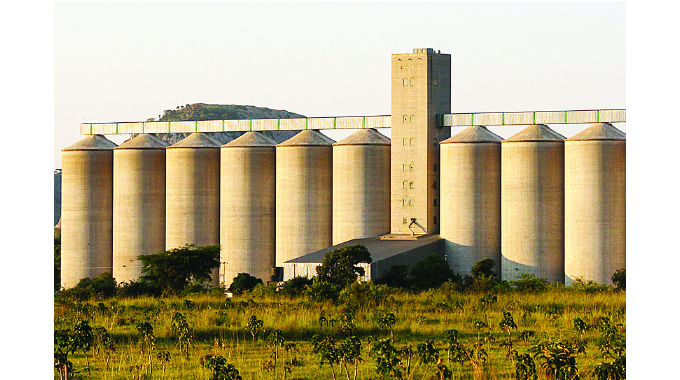
Grain Marketing Board
Dr Muswere said the Government has scaled up measures to mitigate the effects of drought on livestock in Matabeleland region, Masvingo and Midlands provinces.
“In terms of livestock Government has instituted immediate remedial measures including borehole drilling, hay bailing and enhanced disease management to improve the poor livestock condition in drier provinces.
“The worst affected provinces are Matabeleland South, Matabeleland North and Masvingo,” said Minister Muswere.
Dr Masuka last Friday visited Ngwana and Ndiweni villages in Bulilima, Matabeleland, one of the worst affected areas in terms of livestock mortalities and directed relevant authorities to urgently drill boreholes for livestock watering.
Dr Muswere said the country is behind as far as the expected hectarage to be planted is concerned compared to the same period last year.
“Government highlights that rainfall is expected throughout the country during the course of the week. Farmers are therefore advised that the rainfall season has started and is likely to be short,” he said.
“As at 10 December 2023, and due to late commencement of the rainfall season, about 95 156 hectares had been planted compared to 465 707 hectares at the same time last year,” said Dr Muswere.
He urged farmers to plant ultra-early maturity varieties due to the short cropping season.
Dr Muswere said the Pfumvudza/Intwasa model remains critical for climate-proofing purposes considering threats posed by El Nino.
“The country has sufficient seed in stock to meet demand, with 40,8 percent of the available maize seed being of the early to ultra-early maturity varieties.
“Significant progress has been recorded in farmer training and in the preparation of Pfumvudza/Intwasa plots. Farmers have positively responded to climate-proofing interventions with 87 percent of the targeted 11,85 million plots having been prepared,” said Dr Muswere.
He said the country is targeting to plant a total of 2 877 000 hectares inclusive of maize, sorghum, pearl millet, soya beans, sunflower, sugar beans and cotton.
Dr Muswere said both the Government and the private sector will finance the agricultural sector.
“Of the total hectarage, 867 500 hectares will be financed by the Climate–Proofed Presidential Inputs Supply Scheme (Pfumvudza/Intwasa) and the rest by CBZ, AFC, NMB and other banks as well as the private sector and individual farmers,” said Dr Muswere.