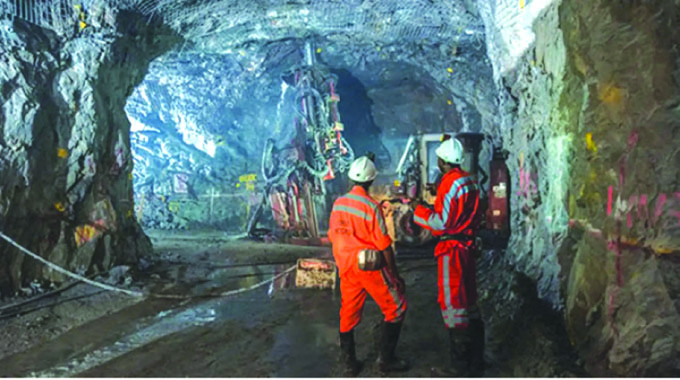
Lithium mining companies have been given a deadline of March 31, 2024, to submit beneficiation plans as the Government seeks to tap into substantial mineral revenues that can be generated from the beneficiation of key minerals.
The Government believes that Zimbabwe, with a significant resource endowment of platinum group metals (PGMs), gold, lithium, and diamonds, can undergo economic transformation and development anchored on beneficiation.
Already, notable milestones have been achieved in the PGMs, with a significant amount of investment in beneficiation plants set for commissioning in 2024.
Finance Economic Development and Investment Promotion Minister Professor Mthuli Ncube said in the 2024 National
Budget that the success story for PGMs should, thus, be replicated for lithium beneficiation within a time frame of not more than five years to yield revenue to the fiscus.
“Within this context, any lithium value addition process that does not result in the production of lithium carbonate is not regarded as beneficiation and, hence, is liable to an export tax,” he said.
Furthermore, he said no licenses shall be granted to a prospective lithium company without the approval of a beneficiation plant.
Minister Ncube noted that the Value Added Tax legislation was already prescriptive on what constitutes beneficiation and defines “un-beneficiated lithium” as lithium exported for use in automotive or other batteries manufacturing outside Zimbabwe, or for the manufacture of lithium carbonate, or for any beneficiation whatsoever outside Zimbabwe.
Zimbabwe, which holds the largest lithium deposits in Africa, is poised to become a global player in the sector upon the completion of several lithium mining projects that are at different stages of implementation.
Experts estimate that 20 percent of the world’s lithium demand can be met by Zimbabwe if it fully exploits its reserves.
As the world moves towards zero net emissions, lithium will drive economic growth in producing countries. In
Zimbabwe’s case, the sector is an integral element of Government plans to grow the sector to a US$12 billion industry by end of the year.
In December 2022, the country banned the export of unprocessed lithium, with exemptions for large producers after increased artisanal miners’ activity within the sector.
However, following the ban on raw lithium exports, several Chinese companies that made multimillion-dollar acquisitions in Zimbabwe are engaged in building up lithium processing plants.
According to Minister Ncube, Prospect Resources Zimbabwe, Bikita Minerals, and Zulu Lithium have successfully constructed lithium processing plants to beneficiate ore to the second stage of concentrate level.
“The aim is to beneficiate lithium up to the carbonate level, the fourth state of beneficiation in the medium term. The ultimate objective is the local manufacturing of lithium batteries for electric vehicles,” he said.
According to the budget, lithium output is expected to increase to 1,1 million metric tons, benefiting from various mines such as Zulu Mine and others that have already been commissioned in 2023, together with additional companies expected to be commissioned in 2024.
The Finance Minister also proposed to introduce a 1 percent levy on the gross proceeds of lithium, black granite, and other cut or uncut dimensional stones and quarry stones, with the funds derived from the levy to be ring-fenced for community development in the area where the mining operations transpire.
He noted that whereas the exploitation of mineral resources has intensified due to new discoveries, in particular lithium, corporate social responsibility within the mining sector has, however, been neglected, despite its importance to mine-community relations.
“The communities affected by mining operations lose the natural inheritance marvels that future generations will never enjoy.
“As a token of remembrance of the mountains that nature offered, local communities should be provided with basic services that include water, health care, electricity, and sanitation, among others,” he said.
According to the budget, the levy will be deposited into a fund administered by the Minister responsible for Finance and utilized in consultation with the relevant stakeholders.
However, the mining sector is expected to grow by 7.6 percent in 2024, driven mainly by ongoing investment in PGMs, gold, coal, and lithium.
Harare