

Zimbabwe’s horticultural sector is rebounding, driven by increased investment, with the country now targeting US$1 billion exports by 2030 after ambitious targets were set for major horticultural crops, a trade group said last week Thursday.
According to the Horticulture Development Council (HDC), a membership-driven organisation representing horticultural producers in the country, achieving the US$1 billion export target will require investments of up to US$1,2 billion and an expansion of cultivated land to 600 000 ha. The roadmap was outlined at a recent investor presentation.
For instance, the avocado sub-sector aims to expand its hectarage to 4 000 ha, generating an annual output of 24 000 tonnes and export revenue of US$48 million.
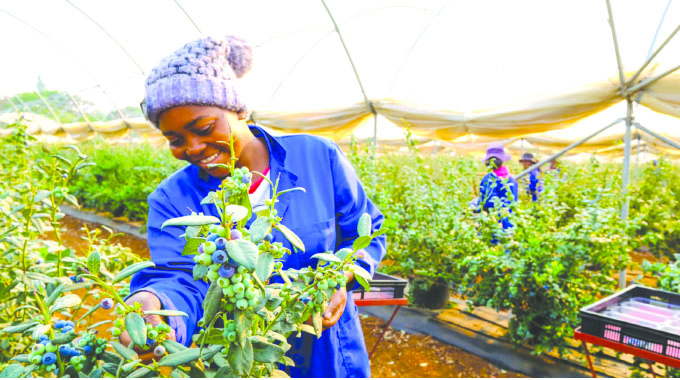
This expansion would require an investment of US$96 million. Production of berries is projected to reach 30 000 tonnes on 1 500 hectares of land, generating US$120 million in export revenue. An investment of US$240 million is needed to achieve this goal.
Citrus cultivation is expected to expand to 8 000 hectares, with an annual output of 80 000 tonnes and export earnings of US$160 million. This expansion would require an investment of US$480 million. Coffee production is aimed to reach 1 800 tonnes on 1 000 hectares of land, generating US$22 million in export revenue.
An investment of US$9,9 million is needed to achieve this goal. Flower production is expected to reach 13 500 tonnes on 800 hectares of land, generating US$80 million. A total of US$70 million is needed to achieve the target.
Macadamia production is projected to attain 15 000 tonnes on 5 000 hectares of land, generating US$75 million. An investment of US$40 million is needed to attain this goal.
Tea production is targeted to reach 18 000 tonnes on 5 500 hectares of land, generating US$45 million in export revenue. An investment of US$45 million is needed.
Fresh and processed produce production is expected to reach 340 000 tonnes on 25 000 hectares of land, generating US$510 million in export revenue. An investment of US$350 million is needed. The targeted investment would see the industry creating 150 000 jobs, according to the HDC.
These lofty targets reflect the private sector and the Government’s commitment to the growth and development of the sector, which is seen as a key driver of economic growth and job creation.
“We have to grow 10 times to reach this goal and obviously it calls for rapid expansion in the sector,” HDC vice president Linda Nielsen told an investor conference.
The sector, which previously peaked at US$140 million in exports in 1998, currently generates US$120 million in export revenue. This decline is attributed to a period of decreased production following the country’s land reform program, which allocated farms to new farmers who lacked the necessary expertise.
However, the sector is now on the path to recovery, due to combined efforts from the private sector and the government. According to the HDC, the country has the potential to produce a wide range of fruits, vegetables, and flowers among other products.
The Government has been working on reviving the industry through facilitation of joint ventures (JVs). According to HDC, over 200 000 ha have been supported for JVs.
They were signed at the Ministry of Lands, Agriculture, Fisheries, Water, and Rural Development to boost confidence in farmers and investors.
To support the sector, the Government issued a sovereign guarantee in respect of a loan facility from the International Fund for Agricultural Development (IFAD) for the Horticulture Enterprise Enhancement Project (HEEP).
The loan amounts to about US$37,1 million and has a tenure of 40 years from the date of approval. It is meant to support horticultural production and marketing by smallholder farmers as well as micro small and medium enterprises engaged in horticulture value chains.
The loan is granted on highly concessional terms and shall be free of interest but bear a fixed service charge as determined by the IFAD from the date of approval.
In addition to the sovereign guarantees issued to the IFAD, the Government also issued five Cash Covered Government Guarantees funded from the Special Drawing Rights (SDR) to CBZ Bank Limited and NBM Bank Zimbabwe Limited in respect of loans amounting to US$2,1 million meant to support horticultural activities.
The cash-covered state guarantees shall remain in place until the debts are fully serviced. The facilities for the horticultural industry are meant for the production and export of chill, sugar snap (peas), and flowers.
The Government also launched the US$30 million Horticulture Export Revolving Fund in 2022 to support the growth and development of the horticulture sector. It is intended to provide farmers with access to affordable financing to boost production and exports.
It is a de-risking mechanism for private funding of the horticulture subspace and targets horticulture production for export markets. A total of six banks (NMBZ, AFC, Ecobank, CBZ, CABS) are participating. The facility provides loans to be paid within a maximum of 36 months. However, HDC said the qualification process is “strenuous.”
It said the current loan structure and targeting were not fostering inclusive growth, as it excludes marginalized groups within the farming community.
The facility primarily targets formal and well-established entities, which explains the absence of individual farmers among the beneficiaries, said HDC. In addition, the HDC also acknowledges the lengthy processing period, often exceeding six months.
Dr Edwin Moyo, the chief executive of Nhimbe Fresh, one of the country’s largest diversified horticultural producers, asserted in an interview with this publication on Friday that the US$1 billion export target was attainable but hinged significantly on viable funding models and sustainable markets.
“There is a need for robust financial systems and continuous monitoring of global market trends to avoid producing commodities lacking demand,” said Dr Moyo. Dr Moyo acknowledged Zimbabwe’s yesterday prominence in cut flower and runner bean production, attributing their decline to shifts in the market environment rather than the widely held perception of the land reform program’s impact.
Herald