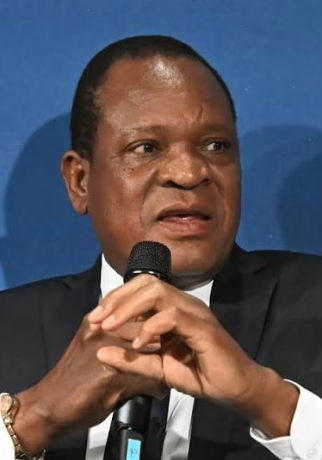
THE diamond sector has significantly improved under Zimbabwe’s tenure as chair of the Kimberly Process, a mandate that the country executed with distinction as it amplified the African voice in the global diamond industry, Vice President Cde Kembo Mohadi has said.
Officially opening the Kimberley Process (KP) Plenary session in Victoria Falls yesterday, VP Mohadi, who was standing in for President Mnangagwa, said Africa contributes at least 65 percent of the rough diamond supply globally hence its voice should be heard at key platforms.
Zimbabwe assumed the KP chair last year and will hand over the rotational seat to the United Arab Emirates (UAE) who have been deputising.
“Zimbabwe is proud to have got the opportunity to chair the Kimberley Process in 2023. It is a task we have assumed with the view of ensuring the interests of the diamond sector are well preserved,” said VP Mohadi.
“Having taken over the chairmanship from Botswana, our neighbours is testament to the awakening of the African continent.
“We want the African voices to be heard in global forums such as the Kimberley Process. I urge all Kimberley Process participants and observers to continue the good work and I encourage you to take into consideration the voices of the rough diamond producers.”
The Kimberley Process Certification Scheme was formed in 2003 with the ultimate goal of eliminating conflict diamonds in the roughs supply chain.
This year’s Plenary Meeting, which started on Sunday and ends on Friday, was preceded by the special forum on the evolving nature of conflict in the context of conflict diamonds.
“The importance of the Kimberley Process cannot be understated and the positive lasting legacy it has created. It is our hope that the organisation continues to pursue its mandate,” said VP Mohadi.
“It is pleasing to note that the organisation has achieved this with control of 99.8 percent of the global diamond supply. This is a remarkable feat, which is commended.
“Zimbabwe is extremely honoured to be hosting this conference as we celebrate the 20th Anniversary of the Kimberley Process. As part of measures to create harmony in the diamond sector, the State diamond producer, the Zimbabwe Consolidated Diamond Company (ZCDC) was formed,” he added.
The ZCDC is the biggest diamond producer in the country and is implementing the Sustainable Community Enterprises and Development (SCED) programme in the Chiadzwa community in Manicaland where it has set aside US$1.2 million for Corporate Social Responsibility projects.
Other diamond companies include Anjin Investments and Rio Zim Murowa Diamonds.
As such, VP Mohadi said it is important that the communities where mines are located see the benefits of the diamonds from their regions.
He called for peaceful coexistence of mining companies and communities to keep the diamond sector on an upward trajectory.
“Responsible mining initiatives should be initiated to ensure that mining companies extract mineral resources in a sustainable manner.
“Government has taken the matter of sustainable mining as a key priority and we had a Responsible Mining Audit conducted countrywide in May and June 2023,” said VP Mohadi.
“This is part of initiatives aimed at creating harmony between Government, mining companies and the community.”
He said the rough diamond sector is changing with advancements in technology that have witnessed the growth of Lab Grown Diamonds (LGDs), which are both threats and opportunities to rough diamond producers.
VP Mohadi said there is a need to ensure the natural diamonds market is protected from the threat of LGDs.
“The transformation at community and national level that natural diamonds have contributed should be continuously protected.
“As a finite resource we will strive to keep the natural diamond market alive for the betterment of the communities and citizens of nations with the resource,” he said.
The diamond sector is seized with the proposal for segregation measures, which will further augment the Kimberley Process.
VP Mohadi said this should be done in consultation and with the cooperation of the producers of rough diamond supply because of the impacts this will have on the producing nations.
He implored the KP to find solutions to challenges facing the sector. The VP said Zimbabwe had realised significant growth in the diamond sector in the past decade despite challenges.
“This has culminated in the chairmanship we have witnessed in 2023. This is a vote of confidence that the Kimberley Process has in our abilities. The Government of Zimbabwe will continue to create an enabling environment for mining companies to work in a business-friendly environment,” he said.
“As part of the Government of Zimbabwe’s initiatives for continued compliance to the Kimberley Process, we have a vibrant Kimberley Process Technical Committee composed of the three pillars of the Kimberley Process. To derive the maximum value from its mineral resources, Zimbabwe is engaged in a mineral beneficiation drive and policies have been developed towards beneficiation and value addition.”
Herald