There was a diplomatic furore when the United States of America Embassy in Harare posted some messages on Twitter that Zimbabwean officials saw as interference in the country’s internal affairs, and in particular the electoral processes.
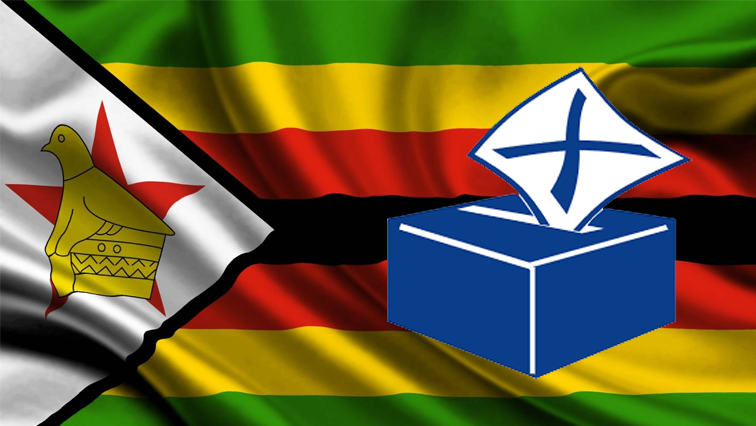
August 23 has been pronounced as the date for harmonised elections in Zimbabwe to elect representatives at various levels in local government, House of Assembly and Presidential polls. The US is keen to influence these elections – something that the superpower has tried to do since at least two decades ago in recent times.
The US imposed sanctions on Zimbabwe in the same period, trying to force regime change in the country. Under its sanctions regime, the US on the other hand punishes, undermines, isolates and restricts the Government and the ruling party through business and personal restrictions, while on one hand giving funds to the opposition and civil society to prop them up as alternative regimes.
The tweet by the United States Embassy in Harare, calling for Zimbabweans to go and register and “protect the vote” was seen as a clear sign of meddling in the affairs internal to Zimbabwe; and much worse a code-word to cause political anarchy by the opposition in the name of “protecting the vote”.
This got authorities in Harare concerned.
Presidency spokesperson George Charamba said in a tweet that the government didn’t take the tweet lightly and that “matters could come to a head, including disallowing American observer teams”. Subsequently, Zimbabwe’s acting secretary for foreign affairs and international trade, Rofina Chikava, summoned the Chargé d’affaires for the US Embassy in Harare, Elaine French, who is the most senior US official in Harare representing Pamela Tremont who was nominated by President Joe Biden to become the ambassador to Zimbabwe.
According to the ministry spokesperson, Livit Mugejo, during the meeting with French, Chikava had pleaded with the Americans to stay away from posting political messages out of respect for diplomatic etiquette.
“Ambassador Chikava said the conduct by the US Embassy was unacceptable as it deviated from conventional diplomatic norms and values enshrined in the Vienna Convention on Diplomatic Relations (1961),” he said. “The ministry also called on the US Embassy to refrain from posting such messages in the spirit of re-engagement between our two countries.”
Zimbabwe’s Ministry of Foreign Affairs clarified that the social media posts were “bordering on activism and meddling in Zimbabwe’s internal affairs” and revealed that the US had agreed to “improve its communication in line with expected diplomatic conduct”.
Zimbabwe reiterated that it wanted to hold free, fair, and credible elections.
US coercive diplomacy undermine Zimbabwe elections
Zimbabwe is holding elections under the shadow of US and Western sanctions which seek to weaken the incumbent. Various efforts have been made by Zimbabwe to have these removed, under the framework of “re-engagement”, but America has remained steadfast, increasing the sanctions, even.
Sanctions distort the playing field, and the US and Western countries have consistently refused to endorse elections that have gone against their favoured parties in Zimbabwe.
The US justifies its interference in Zimbabwe on its promotion of democracy and human rights. That, essentially, is what partly defines coercive diplomacy.
According to a report released last month titled, “America’s Coercive Diplomacy and Its Harm”:
“The promotion of the so-called democracy and human rights is a common trick of the US to carry out political coercion and interfere in the internal affairs of other countries…interfered in the internal affairs of other countries, and attempted to shape other countries and world order with its own values and political system.”
The report explains that the US uses interfere with and subvert the legitimate government of other countries in order to weaken rivals, pass on crisis, create chaos, and undermine stability.”
The report stresses that targets of US political coercion are all-encompassing. Be it an adversary or an ally, a developed or a developing country, a large corporation or a small organization, coercion is always the option for the US, as long as the US considers it profitable and the targets won’t bend to the will of the US.
The US, under the banner of “promoting democracy,” carried out the “Neo-Monroe Doctrine” in Latin America, provoked the “color revolution” in Eurasia, and planned the “Arab Spring” in West Asia and North Africa. The US has been fingered in some of protest actions in Zimbabwe that have led to chaos and bloodshed. Psyching up voters to “defend the vote” essentially means that the US is priming for post-election violence that will mar the process and subvert the constitutional order, as the basis for another illegal regime change. This is based on the fact that the US and its agents provocateur can cook up false results or accuse authorities of manipulating the vote as basis of violence in the name of “defending the vote”. This happened last time in 2018 when false accusations were made that the electoral authority was delaying announcing results and engaging in “rigging”.
The US further supports an infrastructure of non-governmental and civil society organizations and media, which are appendages to the opposition. These could be used to support anarchy in the name of defending the vote.
Given the above, the US interference and coercive diplomacy thus become a danger to Zimbabwe’s home-grown processes; and authorities were right to raise this issue in the manner they did.
Positive Eye