GOVERNMENT will have to play a balancing act amid calls to consider reviewing withdrawal limits or injecting higher-value Zimbabwean dollar notes to enhance transacting convenience for members of the public while ensuring that this does not fuel inflationary pressures, economic analysts have said.
Following the depreciation of the Zimbabwean dollar in recent months, and the $100 note being the highest banknote in the country introduced in April last year, consumers now find it hard to carry large chunks of banknotes for small transactions, including pay transport fares.

Together with the $50 notes, the bank notes are still widely used by the public and transporters accept local currency charges of between $5 000 and $6 000 for a single trip. This means that per day, commuters need to carry at least $12 000.
In its monthly economic review report for May, the Zimbabwe Coalition on Debt and Development (Zimcodd) said higher denomination banknotes were long overdue.
“Given prevailing galloping inflation, higher denomination banknotes are now long overdue. These will help increase the public’s transacting convenience, which is key in building market confidence,” reads part of the report.
Although the local currency is regaining value against the USD, which is hovering around US$1:ZWL$5 739 from last Thursday when compared to US$1: ZWL6 326 two weeks ago, the margin is still higher considering the withdrawal limit of ZWL$15 000 per week and the eroded spending power.
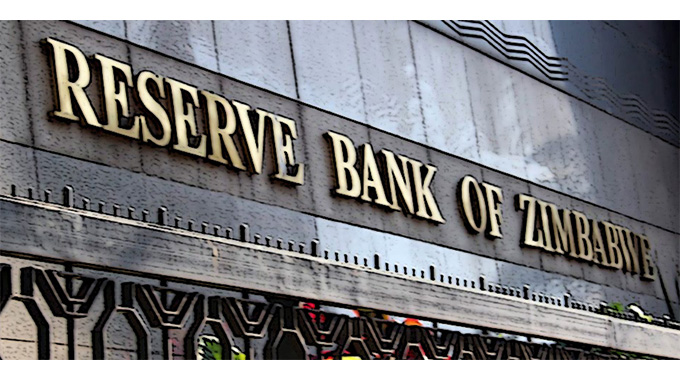
Reserve Bank of Zimbabwe (RBZ)
Commenting on the issue, economist with the National University of Science and Technology (Nust) Department of Banking and Investment Promotion, Mr Stevenson Dlamini, said while it was prudent to introduce higher banknotes, there are dangers of increasing money supply.
“The introduction of higher denominations will surely make transactions easier for the public, especially when it comes to meeting daily demands such as transport,” said Mr Dlamini.
“However, inflation is primarily fuelled by an increase in money supply. Therefore, introducing higher denominations will essentially further fuel money supply growth, which will exacerbate the current inflationary pressures.
“This poses a policy dilemma for the fiscal and monetary authorities, whether to appease the public and risk further inflation or to swallow the bitter pill of a stringent monetary policy stunt of mopping liquidity.
“So, I would argue that introducing higher denominations now would undermine efforts to tighten money supply growth in the very short run.”
Banking expert and Bulawayo businessman, Mr Morris Mpala, weighed in saying higher denominations are a convenient way of doing business not necessarily building confidence.
“Transacting public wants convenience and as at current it is crucial,” he said.
However, he noted that higher denominations come at a cost to the Government as there will be a need for public awareness and doing away with smaller notes.
“Maybe we need to think about doing away with some zeros for convenience. It’s an emotional exercise but we need to consider it,” he said.
A Bulawayo resident, Miss Sipho Makhalima, said introduction of a $500 note would not fuel inflation.
“It is now evident that it is now difficult for most people to do significant transactions with the lower denominations such as the $50 and $100 bills. So, if we have high denominations, it will improve convenience to the transacting public. In my view, the Government should consider introducing a $500 note and I don’t expect the $500 to fuel inflation,” she said.
However, the Reserve Bank of Zimbabwe (RBZ), has said it will stay the course of a tight monetary policy stance to restore and maintain macro-economic stability.

Mr Morris Mpala
This comes as the central bank has been rolling out policy pronouncements, which include liberalisation of the foreign currency, to arrest exchange rate volatility and price increases.
The bank attributes the exchange rate volatility to behavioural factors at a time inflation has also been increasing and alternative value preservation instruments remain limited.
According to the Central Bank, the full implementation of recent stabilisation measures will go a long way in restoring demand and confidence in the local currency, and stabilise the exchange rate, and inflation,
Chronicle