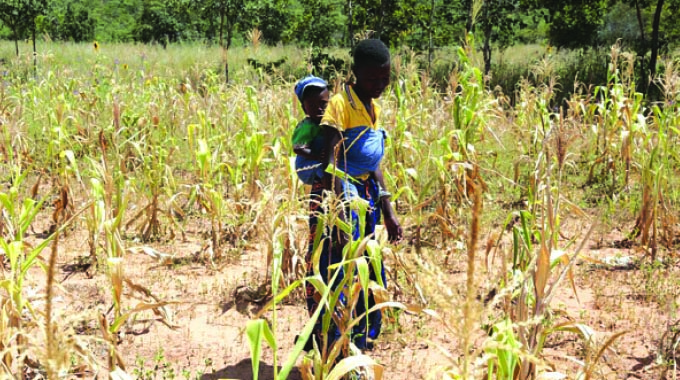
Zimbabwe imported 410 667 tonnes of maize worth US$128 million in the first three months of this year to cover a deficit occasioned by the El Nino weather phenomenon.
The Government has partnered with the private sector to mitigate the effects of the drought.
Figures from the Zimbabwe National Statistics Agency (ZimStat) show that the country imported 136 084 tonnes of maize worth US$41,95 million in January.
This was followed by a further 145 354 tonnes valued at US$43,7 million in February, while US$42,4 million was spent on 129 229 tonnes of maize in March.
The country spent an average of 5,98 percent of its import bill on maize.
The Grain Millers Association of Zimbabwe (GMAZ) expects to import one million tonnes of grain between now and March 2025.
It is likely that Zimbabwe will spend more on importing grain in the coming months.
Economist Tinevimbo Shava said: “Zimbabwe’s proactive approach to addressing the food deficit through increased maize imports demonstrates a commitment to ensuring food security for its citizens, especially in the face of challenges like the El Nino-induced drought.”
“The Grain Millers Association of Zimbabwe’s initiative to import one million tonnes of grain underscores the proactive measures being taken to prevent drought-induced hunger, reflecting a concerted effort to safeguard the well-being of the population.”
President Mnangagwa declared the drought a national disaster in March this year. Malawi and Zambia, Zimbabwe’s neighbours, have also separately declared the drought a State of National Disaster.
El Niño refers to a cycle of warming and cooling events that happens along the equator in the Pacific Ocean, leading to an increase in sea surface temperatures across the Pacific. The warming phase of the phenomenon — El Niño Southern Oscillation (ENSO) stimulates drought conditions.
ENSO creates both dry and hot conditions that negatively affect food crops. The cooling part of the cycle is called La Niña and has the opposite effect.
Severe drought in Southern Africa left millions in need of relief food. President Mnangagwa said Zimbabwe needed US$2 billion to address food security needs for millions of its citizens.
“No Zimbabwean must succumb or die from hunger,” the President told a press conference. “To that end, I do hereby declare a nationwide State of Disaster, due to the El Nino-induced drought.”
He revealed that over 2,7 million people, or around a sixth of the country’s population, did not have adequate access to food this year due to low yields caused by the drought.
The Government granted companies and individuals permission to import maize, rice, and cooking oil — free from duty with effect from July 2024 to avert looming food shortages emanating from El Nino effects.
Economic analyst Namatai Maeresera believes that the collaboration between the Government and the private sector to import maize is a commendable step towards mitigating the effects of the drought and ensuring a stable food supply chain in Zimbabwe.
“The Government’s decision to grant duty-free importation of essential food items like maize, rice and cooking oil demonstrates a responsive approach to addressing looming food shortages, highlighting a commitment to meeting the basic needs of the population during challenging times,” he said.
Other measures taken by the Government to beef up stocks includes the purchase of local grain at an import parity price of US$390 per tonne to mop up excess local grain.
Speaking during a post-Cabinet media briefing in March, the Minister of Information, Publicity and Broadcasting Services, Dr Jenfan Muswere said the importation of genetically modified grain would be for stockfeed production.
“The Government has okayed a duty waiver on the importation of rice and potato seed, and the importation of genetically modified maize for stock feed, under strictly supervised milling and distribution,” the Minister stated.
The Minister of Lands, Agriculture, Fisheries, Water and Rural Development, Dr Anxious Masuka added that rice and potatoes would be regarded as key staples to ensure national food security.
Herald