ZIMBABWE and China are on course to further deepen economic ties this year, underlining the growing relations between the two countries under the comprehensive strategic partnership of cooperation framework.
Last year ended on a high, with trade volumes estimated at over US$2,5 billion — a new record.
As of October, trade between Harare and Beijing had increased by 39,4 percent to US$2,4 billion compared to the same period in 2022.
Zimbabwe’s exports to China achieved a US$29 million trade surplus in the period.
The Asian giant underlined its importance as it has become the country’s third-largest export destination, with neighbouring South Africa as the largest and the United Arab Emirates as the second-largest export market.
Figures from the Zimbabwe National Statistics Agency (ZimStat) indicate that China is Zimbabwe’s second-largest source market after South Africa.
As increased economic activity is forecast in 2024, trade between the two countries is likely to breach the US$3 billion mark — another new record. This would be one of the many milestones to be achieved as a result of the good diplomatic and economic cooperation between the traditional “all-weather friends”.
China continues to import more high-quality products from Zimbabwe.
And political stability following last year’s elections would likely see more economic activity, especially in manufacturing, further driving trade between the two countries.
This ultimately leads to improved economic activity and better living standards for the people.
Agricultural and new frontiers
China remains a key supporter of Zimbabwe’s agriculture sector. Last year, the US$1,36 billion in exports Zimbabwe made to China were dominated by tobacco.
Merchants from the Asian giant have invested in contract farming and buying leaf tobacco. China also issued a protocol allowing Zimbabwe to export citrus fruit to the country last year, which represented a huge boost for local farmers.
There are expectations that trade in agricultural produce will expand amid interest in products such as blueberry, macadamia nuts and avocadoes, among others.
Given China’s huge size, the market for local produce exists. However, the challenge is on local farmers to increase output and meet the required standards. There is enough political willpower between the two governments to allow for increased unimpeded trade. There are several opportunities that are presented by technical support from China, which has dispatched a new batch of agricultural experts under the “demonstration villages” concept.
China has over 50 such villages in Africa and these are set to help improve the capacity of local farmers through new technologies and advanced agricultural knowledge.
Foreign Direct Investment
China is Zimbabwe’s biggest source of foreign direct investment (FDI).
As of last year, Zimbabwe had licensed over 427 Chinese companies in various sectors of the economy, according to the Zimbabwe Investment and Development Agency (ZIDA).
These investments are mainly tilted towards the mining, manufacturing, services, construction, transport, energy, agriculture and tourism sectors. Zimbabwe already boasts of huge investments by large companies such as Tshingshan Group, Sinomine Resource Group, Zhejiang Huayou Cobalt, Chengxin Lithium Group, Eagle Canyon group, among others. Further investments are expected in renewable energy, including the age-defining US$1 billion floating solar plant proposed for Kariba Dam.
Chinese giants Sinomine Resource Group, Zhejiang Huayou Cobalt, and Chengxin Lithium Group have since 2022 acquired lithium mines and invested in projects worth a combined US$678 million in Zimbabwe.
They are presently at various stages of developing the mines.
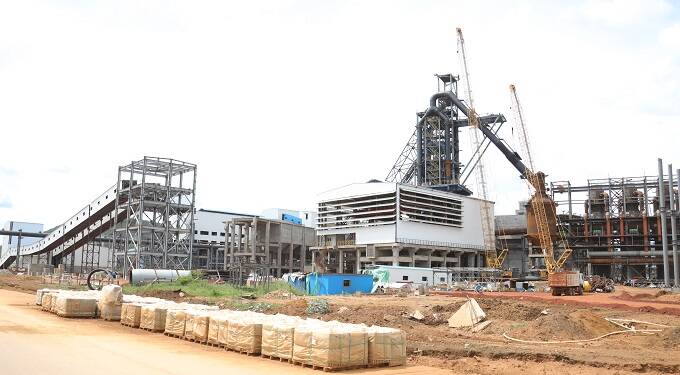
In the first quarter of 2024, the Manhize steel plant is also set to commence production for the first phase of what will become Africa’s largest steel plant. More exciting news beckon.
According to ZIDA, 180 new investments worth US$3,4 billion were licensed from the Asian country in the third quarter of 2023, meaning more projects financed by Chinese capital might materialise this year. Chinese companies are now the biggest employers in the country, accounting for over 100 000 jobs.
The figure is forecast to increase in 2024.
At the same time, Chinese-supported projects, such as the expansion of airports, power and telecommunications, will create jobs and contribute to the economy in both upstream and downstream activities.
Exploring new opportunities
The growth of economic cooperation between Harare and Beijing is being supported by a number of investment activities being undertaken by players to increase awareness on opportunities that exist on both sides.
Last year saw Chinese companies hosting platforms such as the Job Fair and the Stanbic China Day, both of which exposed Zimbabweans to the opportunities presented by Chinese businesses, including in the import and export businesses.
On the other hand, local businesses participated at the 6th China International Import Expo (CIIE) in Shanghai in November.
There were also other events in China throughout the year where Zimbabwean companies in sectors such as leather industry, processed foods, arts and crafts, telecommunications, mining, energy and tourism participated.
Going forward, there is need to broaden investments into new areas, especially in the digital economy, transport and logistics, renewable energies and health, that will incorporate more players from both sides, especially younger and futuristic investors. This calls for more innovative thinking on the part of policymakers. It is also believed that if financial services become more involved, this would boost the flow of business between the two countries.
Shelton Dzapasi is a researcher with Ruzivo Media & Resource Centre, a local think-tank that analyses global and local issues
Sunday Mail