By Aldridge Dzvene
Zimbabwe’s retail and commercial property landscape is set for a potentially significant transformation following the unveiling of the US$100 million Mall of Zimbabwe project by WestProp Holdings and its South African investment partner, Exemplar REITail, in a development that places renewed attention on the country’s capacity to attract large-scale private capital, expand modern retail infrastructure and deepen regional business partnerships.
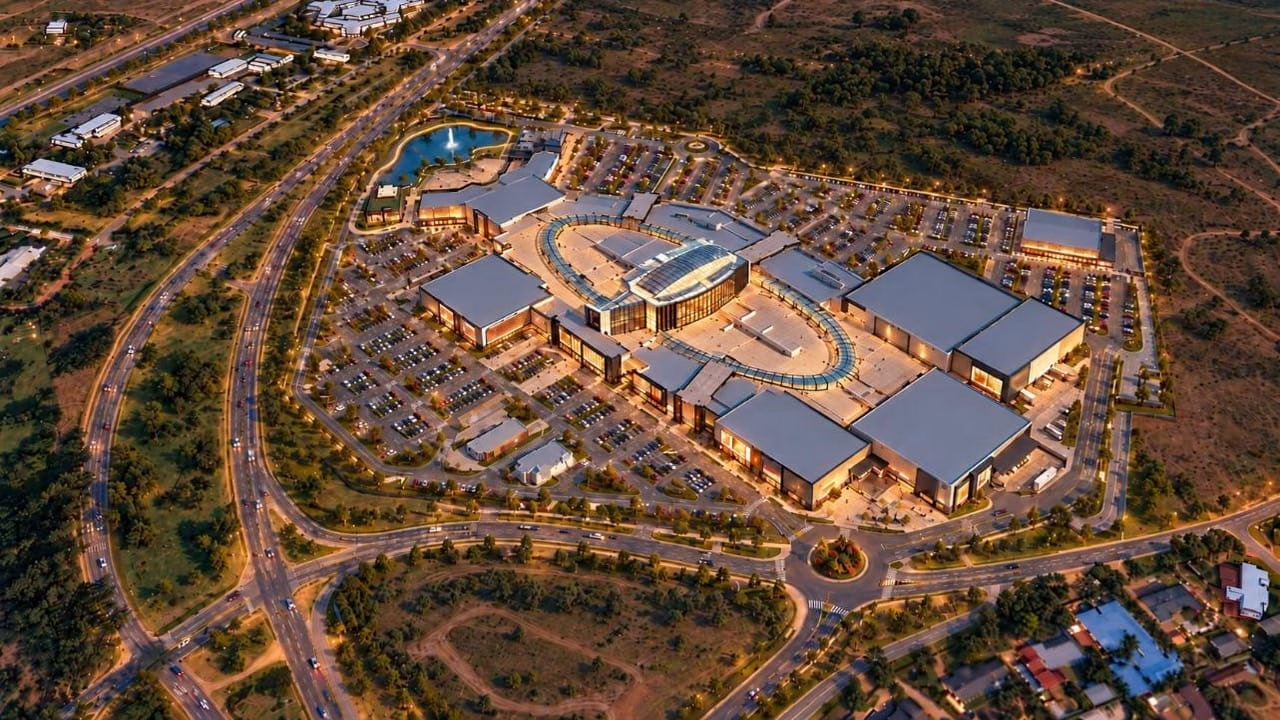
The tenant launch, held in Harare on Tuesday, 24 November 2026, marked an important milestone in a project that has been approximately 16 years in the making, with developers now targeting groundbreaking in the first quarter of 2027 and an anticipated opening in December 2028. Located in Borrowdale, the proposed development is expected to become Zimbabwe’s largest enclosed retail and lifestyle complex, with an initial gross lettable area of approximately 52,000 square metres and potential expansion to between 75,000 and 80,000 square metres.
Beyond its physical scale, however, the significance of the project lies in what it could represent for Zimbabwe’s investment environment, particularly at a time when modern commercial infrastructure, regional capital partnerships and the expansion of private-sector productive activity are increasingly important to the country’s economic development ambitions.
The partnership between WestProp Holdings, a Zimbabwean property development company listed on the Victoria Falls Stock Exchange, and Exemplar REITail, a Johannesburg Stock Exchange-listed retail property investment company, brings together local market experience and regional shopping-centre development expertise. Exemplar’s involvement is particularly notable given its experience in developing approximately 90 shopping malls, providing the Zimbabwean project with access to established regional retail development knowledge.
For Zimbabwe, the partnership demonstrates the potential value of cross-border investment arrangements in mobilising capital and technical expertise for developments that may be difficult to execute through domestic resources alone. It also illustrates how regional investors can participate in the country’s commercial property market through partnerships that combine local knowledge with established investment and operational capabilities.
The scale of tenant interest reported at the launch further provides an indication of the commercial expectations surrounding the development. WestProp chief executive Mr Ken Sharpe said the project had attracted applications for nearly all of more than 120 available spaces, while the company has separately indicated that more than 200 prospective tenants have expressed interest. The developers are now undertaking a vetting and refinement process expected to take between two and six months before applications are converted into binding lease agreements.
Among the established retailers and businesses associated with the tenant engagement process are Food Lover’s Market, Pick n Pay, SuperSpar, Edgars, Electrosales, Simbisa Brands, Mr Price and Studio 88. Their involvement, at varying stages of application and engagement, reflects the commercial interest in securing space within a development expected to introduce a new retail proposition to the local market. The distinction between expressions of interest, applications and signed leases remains important as the project moves towards its next implementation phase.
The proposed mall is designed around an integrated Eat, Shop, Work and Play concept, moving beyond the traditional understanding of shopping centres as spaces primarily dedicated to retail transactions. Its proposed facilities include a food court, entertainment areas, an amphitheatre and family-oriented recreational spaces, with discussions also extending to the possibility of a five-star hotel.
This approach reflects the changing role of modern shopping centres in regional economies, where retail developments increasingly function as commercial, social and entertainment destinations. Their value is therefore measured not only through the amount of retail space available but also through their ability to attract sustained consumer activity, support businesses and create interconnected economic opportunities.
One of the most important considerations, however, is the project’s potential contribution to domestic economic activity. A US$100 million development of this nature has implications extending beyond the property sector, particularly through demand for construction materials, engineering services, transport, professional services, equipment, utilities and other supporting industries.
During construction, opportunities could emerge for Zimbabwean contractors, architects, engineers, manufacturers and suppliers to participate in the delivery of the project. The operational phase could subsequently support employment across retail management, hospitality, security, cleaning, logistics, maintenance, entertainment and other service industries.
WestProp has previously projected that the development could generate approximately 3,000 direct and indirect jobs. While this remains a company projection rather than a verified employment outcome, it provides an indication of the anticipated economic contribution. The actual impact will depend on the scale of construction activity, the final tenant mix, the number of businesses that establish operations and the extent to which local suppliers participate in the mall’s commercial ecosystem.
Equally important is the opportunity to strengthen connections between large retail establishments and Zimbabwean producers. The presence of major supermarket operators could create additional demand for locally produced agricultural commodities, processed foods, manufactured goods and consumer products. This presents an opportunity to deepen the relationship between retail investment and domestic production, ensuring that the economic benefits of the development extend beyond the immediate Borrowdale business district.
For local manufacturers and small businesses, the question will be whether the mall’s tenant and procurement structures create meaningful entry points for Zimbabwean products and service providers. A development of this magnitude has the potential to become an important marketplace for domestic brands, but deliberate engagement with local suppliers will be necessary to translate that potential into measurable economic participation.
The project’s financing structure also provides an important dimension to the investment story. Mr Sharpe indicated that WestProp and Exemplar had committed their equity contribution, while discussions were continuing with local and international banks, regional financial institutions, pension funds, institutional investors and engineering, procurement and construction financiers to secure the debt component. This suggests that the project has progressed into a more advanced financing and commercial structuring phase, although the completion of the overall funding package remains an important milestone to watch.
The involvement of Exemplar is particularly relevant in this regard, as established regional property investment institutions can bring experience in structuring, developing and managing large commercial assets. For Zimbabwe, attracting such partnerships could help strengthen investor perceptions of the country’s capacity to accommodate sizeable commercial developments, provided that project implementation, financing arrangements and the broader operating environment remain supportive.
The development also carries implications for Harare’s urban growth. Borrowdale has continued to develop as an important residential and commercial district, and the introduction of a major regional shopping centre is likely to increase demand for supporting infrastructure and services. Road access, traffic management, water supply, electricity provision, waste management and public transport connectivity will therefore be essential considerations.
The developers have indicated that access road works are progressing ahead of the anticipated construction commencement. Nevertheless, the long-term success of the project will depend partly on how effectively the surrounding infrastructure accommodates the additional commercial activity and movement of people expected once the mall becomes operational.
An interesting feature of the proposed development is its intention to incorporate architectural references to Great Zimbabwe, drawing inspiration from the country’s historical stone architecture and organic design elements. This introduces a cultural dimension to a project otherwise defined by contemporary retail infrastructure and regional commercial investment.
Such an approach provides an opportunity to demonstrate that modern commercial developments can embrace international architectural and operational standards while retaining a distinctive Zimbabwean identity. It also reinforces the importance of integrating national heritage into contemporary urban development.
The Mall of Zimbabwe has been under consideration for approximately 16 years, with earlier implementation efforts affected by broader economic conditions. Its movement towards construction therefore represents not only the advancement of a property development concept but also the culmination of years of planning, partnership development and commercial positioning.
For the wider economy, the more important test will be whether the investment translates from projected value into actual productive activity. The number of binding tenant agreements, the completion of financing arrangements, the commencement of construction, local contractor participation and the eventual creation of employment will provide more concrete measures of its contribution.
Zimbabwe’s economic development requires investment that creates productive linkages across sectors rather than activity confined to individual projects. In this respect, the Mall of Zimbabwe presents an opportunity to connect property development with retail trade, agriculture, manufacturing, hospitality, transport and financial services.
Its significance will ultimately be determined not simply by the size of its buildings or the number of international brands it attracts, but by the extent to which it contributes to the growth of domestic businesses, creates sustainable employment and strengthens the country’s commercial infrastructure.
As WestProp and Exemplar move towards their targeted construction timetable, the project places a renewed spotlight on the role of private-sector partnerships in expanding Zimbabwe’s investment landscape. If successfully implemented, the Mall of Zimbabwe could become an important addition to Harare’s commercial infrastructure and a demonstration of how regional investment, local enterprise and modern development planning can converge to support broader economic growth.