WestProp Holdings Limited’s third-quarter performance is highlighting the growing commercial potential of large-scale integrated property developments beyond Zimbabwe’s established urban markets, with its expansion into Chivhu emerging as a major driver of revenue growth and a significant new dimension in the country’s property investment landscape.
The property developer recorded a 167.1 percent increase in revenue to US$14.96 million for the quarter ended 30 September 2026, up from US$5.60 million during the corresponding period last year, while net profit after tax surged by 234.9 percent to US$2.90 million.
The Group’s performance was significantly bolstered by Chivhu EcoCity, which generated US$5.88 million in revenue and emerged as the Group’s largest revenue contributor during its first full quarter of sales.
The development’s emergence as a leading revenue driver places WestProp’s geographical expansion at the centre of its current business growth, reflecting the commercial opportunities that could arise from extending integrated property investment beyond Harare into emerging urban locations.
Chivhu EcoCity, a planned 5,000-hectare development, is designed to accommodate approximately 20,000 homes and a population of up to 80,000 people. Its proposed residential, commercial, industrial, agricultural and recreational components reflect an investment model that seeks to create an integrated urban economy rather than a conventional residential estate.
Located along the Harare-Masvingo corridor, Chivhu offers an important geographical advantage through its connectivity to major economic centres and surrounding agricultural and industrial activities. The development also introduces opportunities for supporting businesses, construction services, retail, transport and other commercial activities as the proposed city takes shape.
The commencement of civil works at Founders Estate in September 2026 marked an important step towards implementation, with the initial phase comprising approximately 600 residential stands. The developer has also outlined plans for essential infrastructure, including roads, water and sewer networks, which will be fundamental to supporting subsequent development phases.
For WestProp, the commercial significance of Chivhu lies in its potential to unlock a new property market while progressively creating additional revenue streams through residential, commercial and other development components.
Its contribution of US$5.88 million represented approximately 39 percent of the Group’s quarterly revenue, demonstrating how quickly the new development has become central to the company’s earnings profile.
However, the performance also reveals an important shift in the economics of the Group’s property portfolio. While revenue and profitability increased substantially, gross profit margins narrowed to 36.3 percent from 50.8 percent in the comparable period, reflecting a changing revenue mix as land and infrastructure-led sales accounted for a larger share of business activity.
Cost of sales increased to US$9.53 million from US$2.76 million, reflecting the expansion of construction activity and the changing composition of sales. Operating expenses also rose by 41.5 percent to approximately US$2.18 million as the company expanded operations across multiple developments.
Nevertheless, profit from operations increased by 164.6 percent to US$4.53 million, while profit before tax rose by 139.3 percent to US$3.90 million. Finance costs increased to US$630,000 from US$80,000, reflecting financing secured to support the Group’s long-term development programme.
Beyond Chivhu, WestProp’s established developments continued to provide significant contributions, demonstrating the importance of maintaining a diversified property pipeline.
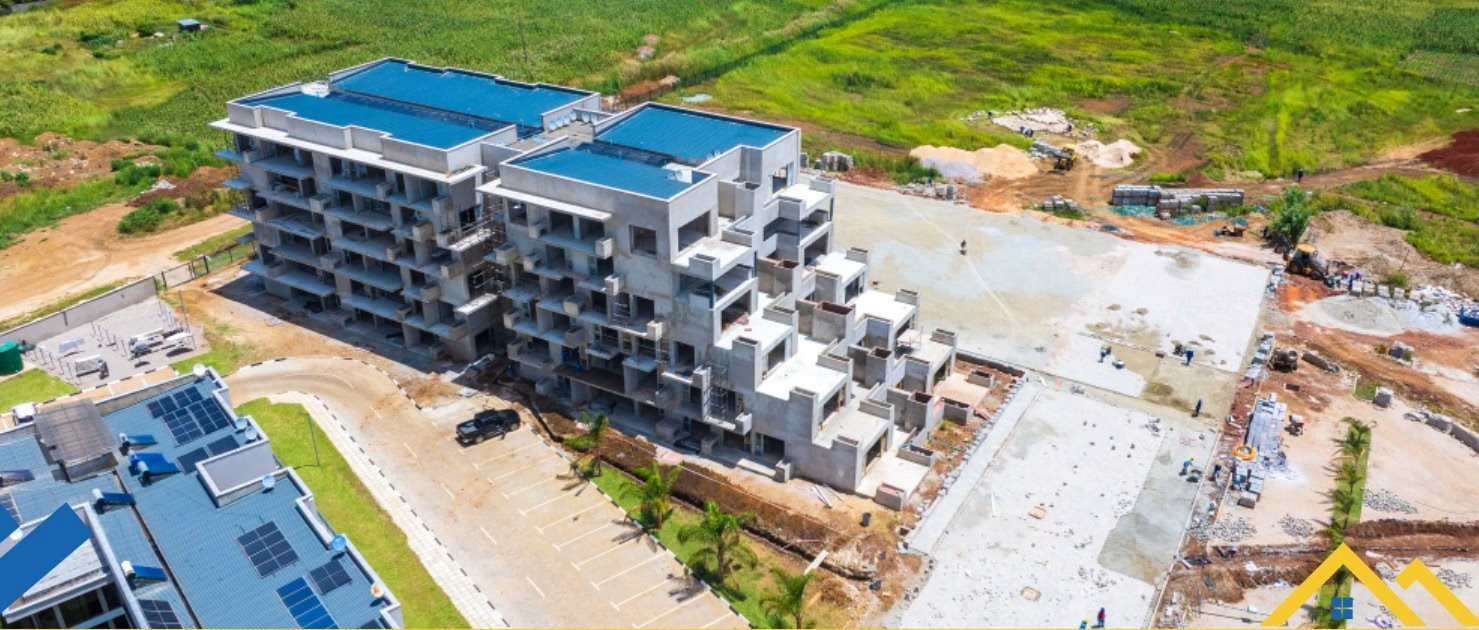
Millennium Heights generated US$3.72 million during the quarter, supported by strong uptake of newly launched apartment blocks. The development remains a significant component of the Group’s residential and hospitality portfolio, with construction continuing on new phases and a serviced apartment complex scheduled for completion in 2027.
Pomona City contributed US$2.22 million, supported by demand for residential stands and apartment units. Infrastructure development, including roads, stormwater drainage and water reticulation, continued alongside construction on apartment blocks approaching completion and handover.
At The Hills Lifestyle Estate, revenue reached US$1.65 million following progress in residential sales and the operational launch of its driving range. The broader development is expected to incorporate hospitality, retail, commercial and residential facilities, with preparations also progressing towards the opening of its golf course.
Pokugara Residential Estate, meanwhile, has transitioned into a more mature phase following the sale of all residential units, with the focus now shifting towards completing community amenities, including the clubhouse, gymnasium and recreational facilities.
The distribution of revenue across these developments demonstrates the growing importance of diversification in WestProp’s business model. Rather than depending on a limited number of established projects, the Group is drawing revenue from different development stages and property segments, providing multiple avenues for commercial growth.
Another important element is the company’s manufacturing and development services divisions, which support construction activity across its portfolio while generating additional revenue from external customers.
The integration of manufacturing capabilities into property development has the potential to improve operational efficiency, reduce dependence on third-party suppliers and strengthen domestic construction value chains through demand for locally produced materials and related services.
This is particularly relevant in an environment where the expansion of housing and infrastructure requires sustained investment in construction inputs, technical services and supporting industries.
The wider significance of WestProp’s investment programme also intersects with Zimbabwe’s National Development Strategy 2, particularly its emphasis on housing delivery, infrastructure development, private-sector investment, industrialisation and sustainable urbanisation.
Integrated developments such as Chivhu EcoCity present an opportunity to connect housing provision with commercial and productive economic activity, potentially broadening investment beyond established metropolitan centres.
However, the long-term developmental and commercial value of such projects will depend on the conversion of planned developments into functioning communities supported by reliable infrastructure, essential services, employment opportunities and sustainable business activity.
For investors, the distinction between property sales, infrastructure investment and recurring income will also remain important as the Group expands its development pipeline. The increased finance costs and narrowing gross margins underline the capital demands associated with large-scale property development, making execution, cost management and the pace of project delivery important considerations.
WestProp enters the final quarter of 2026 with stronger revenue performance, increased profitability and a growing geographical footprint. Its Chivhu investment, in particular, places the company within an emerging conversation about the role of private property developers in shaping new urban centres and broadening Zimbabwe’s investment landscape.
The next phase will be to translate the current commercial momentum into completed infrastructure, operational communities and sustainable economic activity, ensuring that the expansion of the property portfolio delivers value beyond land and residential sales.