Padenga Holdings Limited closed the nine months to September 2026 with a strong trading performance, as higher gold prices and increased production lifted revenue and supported cash generation.
Group revenue rose 47% compared with the same period last year, driven mainly by firmer gold prices and stronger sales volumes. The company said robust profitability and cash generation allowed it to fund its capital expenditure from internal resources. It remained in a net cash position even after paying an interim dividend of US$25.67 million in October 2026.
The trading environment remained shaped by global uncertainty, driven by conflicts in Ukraine and the Middle East, trade tariff tensions and shifting interest rate expectations. Gold prices remained at historically high levels, averaging US$3,239 per ounce over the nine months, 39% above the prior-year average. Prices were volatile in the third quarter, peaking at US$4,664 per ounce in August before easing to US$4,176 per ounce at quarter-end after the United States Federal Reserve cut interest rates in September.
Locally, the macro-economic environment remained stable, with the local currency trading at 26.80 to the United States dollar and inflation at 3.7% in September. Mining input costs, particularly consumables, fuel and contractor rates, continued to rise well above headline inflation.
On operations, gold sales increased 14% to 2,184 kilogrammes, equivalent to 70,220 ounces, from 1,909 kilogrammes, or 61,358 ounces, in the prior year, driven mainly by higher plant throughput and improved feed grade at Eureka Mine. The group recorded no fatalities at both mines.
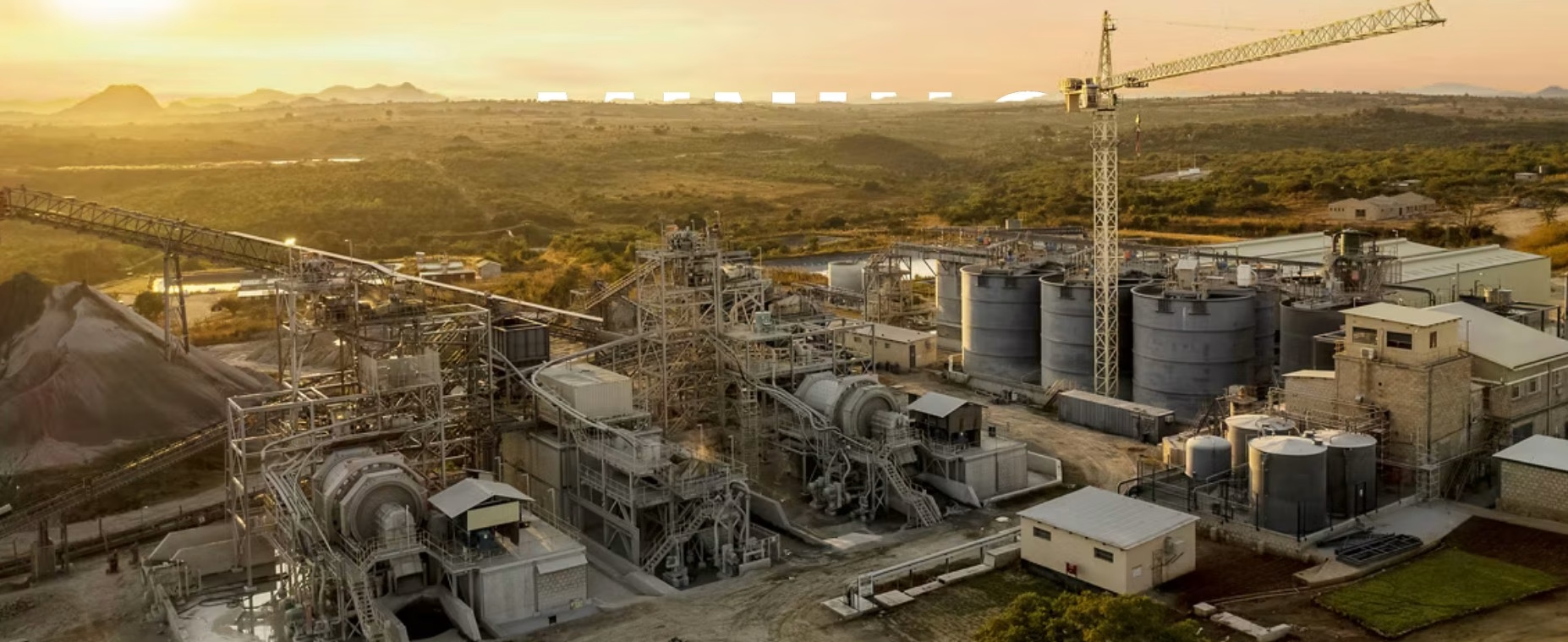
Eureka Mine achieved record quarterly plant throughput of 376,500 tonnes in the third quarter. Waste stripping is being stepped up, supported by additional haul trucks, to expose the next phases of the open pit. Exploration drilling of 12,232 metres to date has returned encouraging preliminary results at depth, supporting the assessment of future underground mining beneath the open pit. Eureka achieved 1,313 consecutive lost-time-injury-free days as at 30 September 2026.
At Pickstone Peerless Mine, third-quarter hoisting was constrained by necessary rehabilitation of the Southwell Shaft and the upgrade of the Burnett Shaft winder. Those works are now complete, with hoisting capacity improved going into the fourth quarter. Exploration drilling of 39,416 metres to date supports expansion of the resource base, including the Peerless Underground project, while the mine’s 4.5 megawatt solar plant now supplies up to 20% of site power.
In agribusiness, skins sold fell 62% to 30,086, as sales of lower-value skins were reduced to shift the average price per centimetre higher. A lower proportion of skins was sold to premium customers. The business closed the period with 19,448 skins in stock. Skin quality continued to improve and operating costs fell 23% following restructuring of the business.
Looking ahead, full-year 2026 gold production is expected to exceed that of 2025, underpinned by Eureka Mine and a recovery in hoisting at Pickstone Peerless following completion of the shaft works.
Key projects will support production growth. At Eureka Mine, the Gravity Circuit Upgrade was completed in October 2026 and is being optimised, while the Cyclone Upgrade is scheduled for commissioning in November 2026 and is expected to ease a milling constraint. At Pickstone, the underground project was completed in October 2026, improving shaft reliability and hoisting capacity, while Phase 4, which will establish a new loading station at 21.5 Level to extend the life of the mine, is expected to be commissioned in the second half of 2027.
The group’s longer-term growth strategy remains focused on unlocking value within existing assets, including deeper extensions at Pickstone, the Peerless Underground project and potential underground mining at Eureka, complemented by evaluation of external opportunities and further solar investment. Key risks include gold price volatility, input cost inflation and power supply reliability, which the group is mitigating through cost discipline and investment in production growth and renewable energy.
For Padenga Agribusiness, exotic skin markets remain challenging, reflecting subdued luxury demand amid global uncertainty, an oversupply of alligator skins and a shift by tanneries to smaller, more frequent orders. The business continued to contain costs and is intensifying marketing efforts, including options to hold skins closer to European customers, to improve prices and achieve sustainable profitability. All low-quality skins from prior years will be sold this year. From 2027, the business will supply strictly to a 25,000-skins-to-the-market model. Reduced supply, coupled with the recent closure of several crocodile farms in Southern Africa, should see demand and prices recovering.