Pensioners covered by the National Social Security Authority (NSSA) are set to receive higher monthly payments following Government approval of a review of minimum benefits.

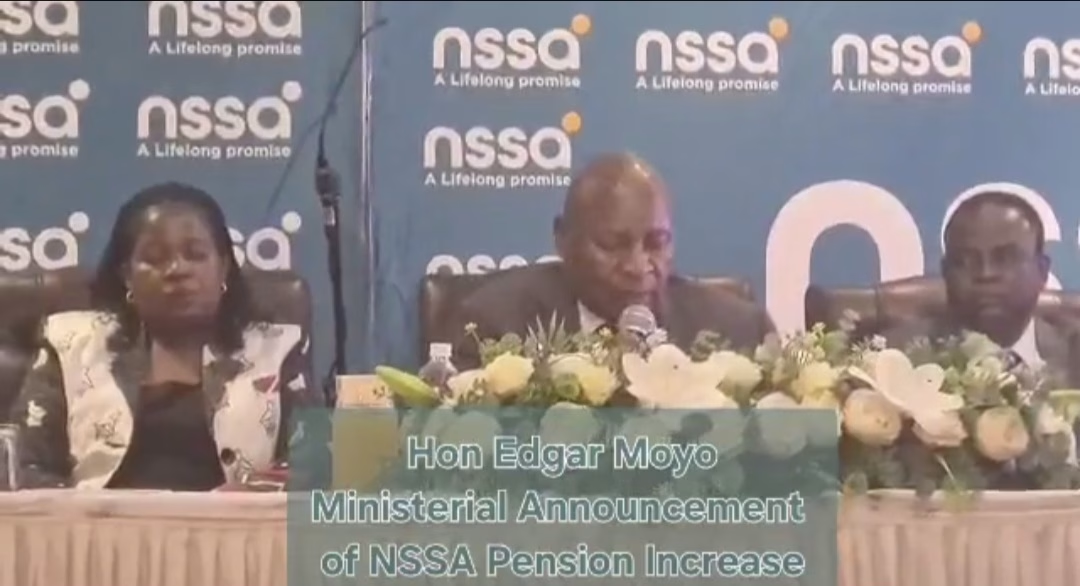
Public Service, Labour and Social Welfare Minister Edgar Moyo announced the changes in Harare on Tuesday. He said they were made possible after a statutory actuarial valuation in 2025 showed that the Authority’s funds were in a healthy position and capable of supporting the increase on a sustainable basis.
The main scheme, the Pension and Other Benefits Scheme, caters for around 262,000 retired workers and surviving dependants. Its minimum pension will move from US$70 to US$90 per month, an increase of 28.57 percent. The second scheme, the Accident Prevention and Workers’ Compensation Scheme, looks after about 8,000 people who were injured at work or are living with occupational disabilities. Its minimum payment will move from US$100 to US$130 per month, an increase of 30 percent.
Beneficiaries will not have to wait long to feel the change. The new rates will be included in the payroll due on 13 November 2026, with the increase applied retrospectively to October 2026 so that the outstanding amount for that month is also paid.
The pension review was announced together with the coming into effect of the Occupational Safety and Health Act No. 7 of 2026, which is designed to strengthen protection for workers against injuries, diseases and deaths linked to their work.
NSSA administers Zimbabwe’s national social security system and oversees occupational safety and health standards. The system is funded through monthly contributions from employers and employees, which are pooled to provide support in old age and in cases of disability, loss of a breadwinner or injury at work.
The increase is in line with the broader objectives of Vision 2030 and the National Development Strategy 2, which place social protection at the centre of Zimbabwe’s drive towards an empowered and prosperous upper-middle-income society. By strengthening income security for older citizens and injured workers, Government is seeking to reduce vulnerability, protect household livelihoods and ensure that no one is left behind as the economy grows.