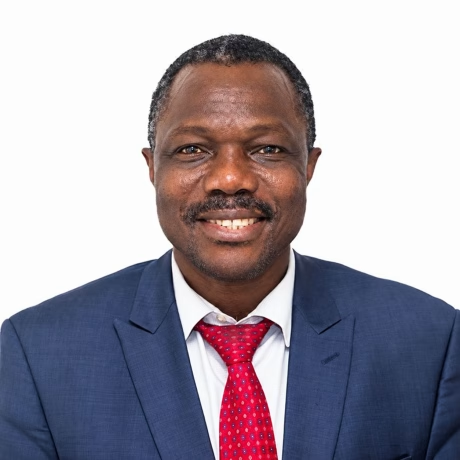
The appointment of Hon. Senator Dr. K.R. Tagwirei (PB) as Minister of Economic Development and Investment Promotion has placed Harare Metropolitan Province in a strategically important position within Zimbabwe’s economic development agenda. However, beyond the political significance of his appointment and his expression of gratitude to the appointing authority, his first major address to the Harare Metropolitan Province Provincial Coordinating Committee (PCC) Meeting presented a much bigger question: how does Zimbabwe convert investment interest into productive economic activity that improves the lives of its people?
In thanking His Excellency Dr. Emmerson Dambudzo Mnangagwa, President and First Secretary of ZANU PF, for appointing two Senators from Harare Province under Constitutional Amendment No. 3, as well as appointing a Minister from the province, Hon. Senator Dr. Tagwirei connected political inclusion to a wider responsibility for economic development. His reference to the President’s philosophy of leaving no one and no place behind was particularly significant, because it placed the responsibility for development beyond the institutions of Government and into the hands of provincial structures, businesses, communities and investors.
Harare occupies a distinctive position in this national equation. As Zimbabwe’s principal commercial and financial centre, it hosts major corporate institutions, financial services, manufacturing enterprises, investment networks and a substantial concentration of skilled human capital. Its economic influence extends well beyond its geographical boundaries, connecting businesses and investors to opportunities across the country. This makes the province an important platform from which national investment ambitions can be translated into actual economic activity.
But the real measure of Harare’s contribution cannot be the number of influential people it produces or the positions its representatives occupy. It must be the extent to which its economic capacity helps expand production, attract capital, create employment and connect communities to opportunities. The province must increasingly be understood not merely as the seat of national administration and commerce, but as a potential engine for investment mobilisation and productive growth.
This is where the Minister’s explanation of the new ministry becomes particularly important. The restructuring of the former Ministry of Finance, Economic Development and Investment Promotion into separate portfolios was presented as a deliberate division of responsibilities. While the Ministry of Finance, under Professor Mthuli Ncube, focuses on the national budget, revenue mobilisation, debt and macroeconomic stability, the Ministry of Economic Development and Investment Promotion has been assigned the task of attracting and facilitating capital and ensuring that it finds its way into productive sectors.
The distinction is economically significant. Macroeconomic stability creates the environment in which investment can take place, but investment itself is what must expand the productive capacity of the economy. Capital must move beyond approvals and announcements into factories, processing plants, energy projects, agricultural infrastructure, transport networks and enterprises capable of generating employment and exports.
Hon. Senator Dr. Tagwirei acknowledged this gap when he pointed to the 378 investment licences worth more than US$3 billion approved by the Zimbabwe Investment and Development Agency during the first half of 2026. His observation that licences are not jobs and approvals are not factories captured one of the central challenges facing investment promotion in Zimbabwe: converting approved projects into operational businesses and measurable economic returns.
This is a crucial shift in the way investment performance should be assessed. The success of an investment promotion framework cannot be measured only by the value of proposed capital or the number of licences issued. It must also be measured by the proportion of approved projects that reach financial closure, secure funding, commence construction, become operational and contribute to employment, production and tax revenues. The movement from investment approval to implementation is where the economic value of the entire process is ultimately established.
The Ministry’s stated focus on local, foreign and diaspora investment through ZIDA, Special Economic Zones and Public-Private Partnerships therefore carries considerable implications for the country’s development trajectory. Zimbabwe requires capital across mining, manufacturing, agriculture, energy, tourism and technology, but it also requires investment that strengthens linkages between these sectors. Mining, for example, can generate greater national value when minerals are processed locally and connected to manufacturing. Agriculture can contribute more substantially to industrial growth when production is supported by irrigation, storage, processing and reliable markets.
The Minister’s emphasis on beneficiation and value addition speaks directly to this requirement. The objective is not simply to increase the volume of minerals or agricultural commodities extracted and produced, but to retain more economic value within the country. Processing lithium, developing mineral-based manufacturing, expanding agro-processing and strengthening domestic industrial capacity can create a wider network of businesses, technical skills and employment opportunities around the country’s natural resources.
For Harare, this presents an opportunity to mobilise its financial, professional and commercial capabilities in support of productive investment elsewhere in Zimbabwe. Investment does not have to be concentrated in the capital to benefit from the institutions and networks based there. A manufacturing project in another province may depend on financing, legal services, engineering expertise, logistics, technology and corporate partnerships operating through Harare. The province can therefore serve as a coordinating centre for investment whose benefits reach the wider national economy.
The diaspora represents another important source of capital identified by the Minister. Zimbabwe receives substantial remittance inflows, but the development question is how a greater proportion of these resources can be channelled into productive enterprises rather than remaining largely directed towards household consumption. Transparent investment vehicles, credible project information, predictable regulation and appropriate financial instruments could help convert diaspora confidence into long-term domestic investment. Such an approach would also allow Zimbabweans abroad to participate in national development beyond the money they send to support their families.
Equally important was Hon. Senator Dr. Tagwirei’s recognition that investment should not be understood as the exclusive preserve of large multinational corporations or wealthy businesspeople. His reference to small-scale entrepreneurs, farmers, miners and local enterprises broadened the meaning of investment to include the productive capacity of ordinary citizens. This is consistent with the principle that national economic transformation becomes more sustainable when communities participate directly in wealth creation.
The challenge is to create an environment in which small businesses can grow into formal enterprises, access finance, acquire technology and enter wider markets. For Harare, this means recognising the economic potential of its informal and emerging business sectors while improving the conditions that allow viable enterprises to expand. Simplified procedures, efficient licensing, reliable infrastructure and access to business support are not merely administrative conveniences; they are instruments of economic development.
The Minister’s call for provincial and party structures to become ambassadors of investment also introduces an important dimension to the development conversation. Investment promotion is not the responsibility of one ministry alone. The national investment climate is experienced through the conduct of institutions, the consistency of regulations, the efficiency of public services and the manner in which investors are received and supported. His appeal to welcome and protect investors rather than frustrate them points to the importance of institutional coordination and a predictable business environment.
This responsibility becomes even more significant as Zimbabwe assumes the chairmanship of the Common Market for Eastern and Southern Africa under the leadership of President Mnangagwa. The 25th COMESA Summit, held in Harare on 22 October 2026, placed inclusive industrialisation, investment and regional integration at the centre of the bloc’s agenda. Leaders called for stronger intra-regional trade, greater value addition, improved infrastructure, digitalisation and the development of regional value chains.
For Zimbabwe, the chairmanship creates an opportunity to connect national investment priorities with a regional market of 21 member states. For Harare, the implications are particularly relevant because the province possesses the financial institutions, corporate networks, logistics capabilities and professional services that can support businesses seeking to enter regional markets. The opportunity is to turn the capital’s commercial infrastructure into a platform for facilitating trade, attracting cross-border investment and supporting Zimbabwean companies to compete beyond domestic borders.
However, regional leadership must also translate into practical benefits for local producers. A larger regional market only becomes valuable when businesses can meet quality standards, access affordable finance, move goods efficiently across borders and compete on price. The COMESA agenda therefore reinforces the need for investment in production, infrastructure, technology and industrial capacity at home. Zimbabwe’s ability to benefit from regional integration will depend substantially on what its economy can produce competitively.
Ultimately, the significance of Hon. Senator Dr. Tagwirei’s address lies in the development responsibility attached to the opportunities he identified. Harare has political representation, commercial influence and proximity to national decision-making. Zimbabwe has a regional leadership platform and an investment promotion framework designed to mobilise capital. The task now is to connect these advantages to projects that produce measurable economic outcomes.
The Minister’s declaration that Zimbabwe is rising, accompanied by his appreciation for the leadership of President Mnangagwa, therefore finds its deeper meaning in the work of implementation. Economic progress must be experienced not only through national indicators and investment announcements, but through functioning industries, expanded markets, reliable infrastructure, new employment opportunities and improved household incomes.
For Harare, the message is clear: being at the centre of the national economic conversation must come with the responsibility to help move the economy forward. The province’s greatest contribution will not simply be the recognition of its political representation, but its ability to turn influence into investment, investment into production, and production into development that reaches every corner of Zimbabwe.