By Aldridge Dzvene
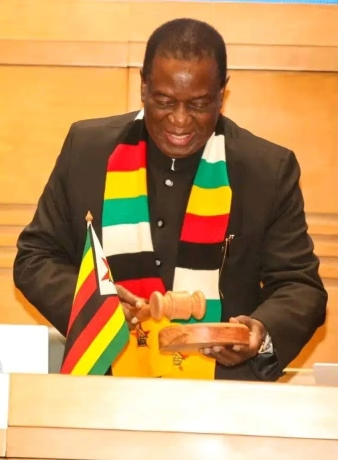
The Third Russia-Africa Summit in Moscow has brought into sharper focus a changing international economic and political landscape in which Africa is increasingly seeking to diversify its strategic partnerships, strengthen control over its natural resources and secure a greater role in shaping the institutions that govern the global economy. For Zimbabwe, the participation of His Excellency Dr Emmerson Dambudzo Mnangagwa, President and First Secretary of ZANU PF, carried significance beyond diplomatic representation, placing the country’s industrialisation ambitions, mineral beneficiation agenda and search for alternative investment and financial partnerships within a much wider continental conversation.
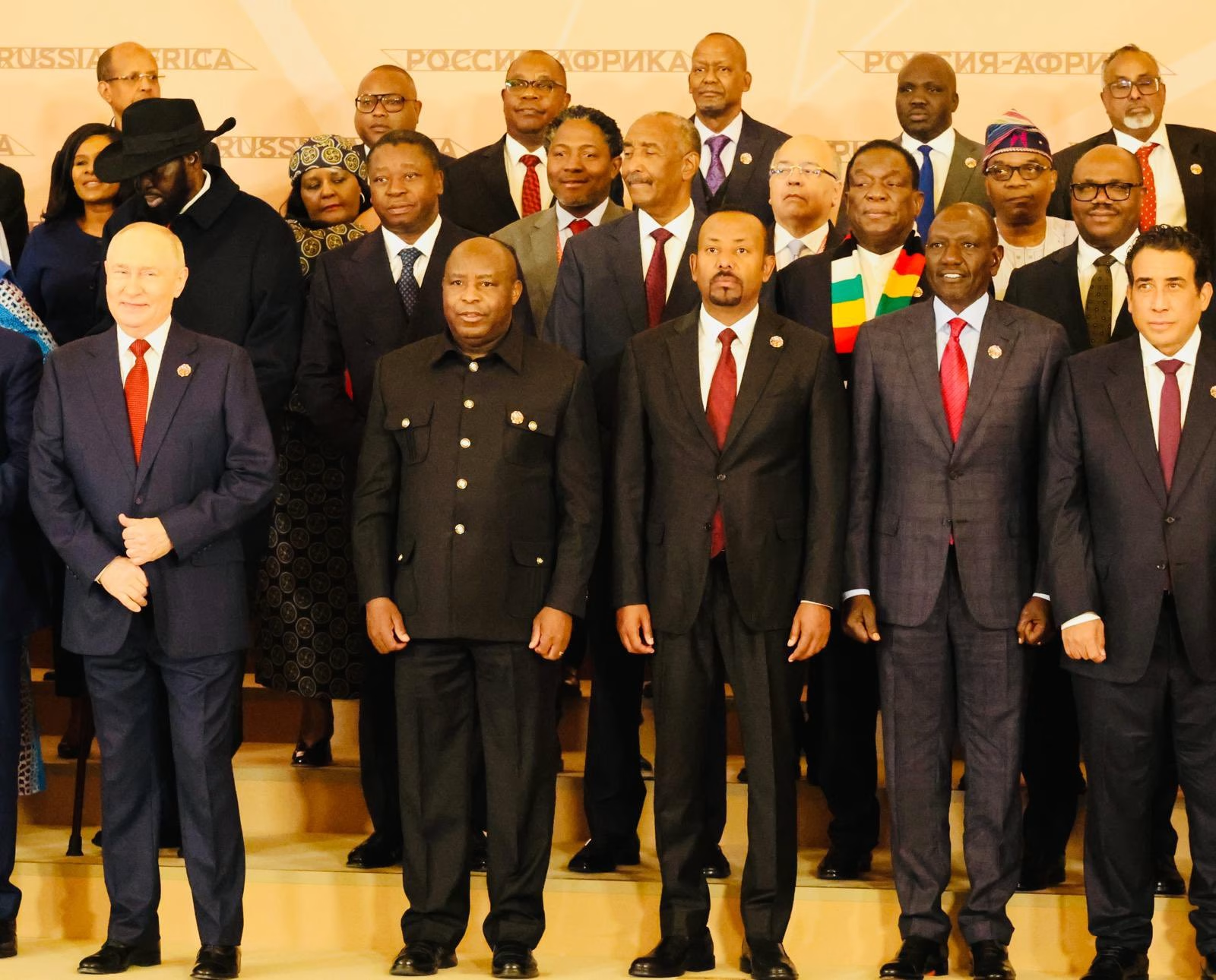
Held from 28 to 29 October 2026 under the theme, For Peace, Security and Development, the summit brought together representatives from 48 African countries, including 21 delegations led by Heads of State and Government. Co-chaired by Russian President Vladimir Putin and Burundi’s President Évariste Ndayishimiye, who also chairs the African Union, the gathering marked another stage in a diplomatic process initiated in Sochi in 2019 and consolidated in St Petersburg in 2023. Its significance lies in the attempt to move a relationship historically defined by Soviet support for African liberation movements into a more structured framework of trade, industrial cooperation, technology transfer, energy security and financial engagement.
The timing of the summit is particularly important for Zimbabwe, which has spent recent years pursuing economic diplomacy under its engagement and re-engagement policy, seeking investment, markets, technology and development partnerships across different geopolitical centres. Russia represents one of these opportunities, particularly in sectors where Zimbabwe’s natural resource base and development requirements intersect with Russian industrial, scientific and technological capabilities. Yet the Moscow engagements also raise a more fundamental question about the continent’s development trajectory: how does Africa convert diplomatic goodwill and historical solidarity into productive economic relationships capable of changing the structure of its economies?
President Mnangagwa addressed this question during his plenary intervention, arguing that Africa’s natural resources, expanding markets and youthful population must be combined with Russia’s technological and industrial capabilities to accelerate industrialisation, skills development and sustainable economic growth. He recalled the progression of the Russia-Africa partnership from the 2019 Sochi summit to the 2023 St Petersburg meeting, where an action plan for 2023–2026 was adopted, placing the latest gathering within a continuing effort to move from established political relationships towards measurable development cooperation.
His emphasis on complementary strengths is particularly relevant to Africa’s long-standing position in international trade. Despite possessing substantial reserves of critical minerals, agricultural resources and energy potential, many African economies continue to participate in global value chains primarily as suppliers of unprocessed commodities. This structural challenge explains why mineral beneficiation and local industrial production have become central to the continent’s development ambitions. President Mnangagwa reiterated that Zimbabwe is determined to move beyond exporting raw materials, highlighting value addition and beneficiation across economic sectors. His argument is consistent with the country’s ambition to use its mineral wealth as a foundation for manufacturing, technological development and employment creation rather than allowing the greatest economic value to accumulate outside its borders.
The importance of this position becomes clearer against the growing international competition for critical minerals, including lithium, platinum group metals, gold and other resources essential to emerging technologies, energy systems and industrial production. Zimbabwe occupies an important position in this evolving economic landscape, with its mineral deposits providing opportunities to attract investment into processing, refining and downstream manufacturing. However, mineral wealth alone does not guarantee industrialisation. Access to capital, reliable energy, technology, infrastructure, skilled labour and markets determines whether natural resources become the foundation of a productive economy or remain predominantly an export commodity. These are precisely the areas in which the Russia-Africa discussions could become relevant to Zimbabwe’s economic transformation.
President Mnangagwa consequently invited Russian investment into green energy generation and distribution, transport and logistics, emerging industries, high-technology systems and digital communications. He also called for expanded cooperation in agro-industrial production, recognising that climate change and food security remain interconnected challenges for African economies. His proposal for stronger business-to-business engagement, with governments playing a facilitative role, is particularly significant because diplomatic agreements must ultimately be supported by commercial institutions, investors and businesses capable of financing and executing projects. The President also identified artificial intelligence and cybersecurity as emerging areas for cooperation, proposing that Russia’s technological capabilities be connected to African universities, research institutions, technology companies and public-sector institutions.
This technological dimension deserves particular attention because Africa’s development challenge is no longer confined to infrastructure deficits and access to finance. It increasingly concerns technological ownership, digital infrastructure, research capacity and the ability of African economies to participate in industries being reshaped by artificial intelligence. For Zimbabwe, cooperation in these areas could support digital public administration, agricultural research, mineral exploration, cybersecurity, scientific innovation and the development of specialised technical skills. The President’s address therefore placed industrialisation within a broader understanding of economic sovereignty, one in which control over resources must be accompanied by the capacity to process, innovate, manufacture and participate in higher-value economic activities.
The bilateral engagements on the sidelines of the summit gave this broader vision a more practical dimension. President Mnangagwa engaged Russian financial and institutional representatives, including PSB Bank and Rossotrudnichestvo, as Zimbabwe explored mechanisms for expanding trade finance, investment and human-capital development. Among the proposals discussed was the establishment of a joint technical working group involving PSB Bank, Zimbabwe’s Ministry of Finance and the Reserve Bank of Zimbabwe to explore trade financing and investment support for bankable projects. The President also called on Zimbabwean and Russian institutions to ensure that signed cooperation instruments translate into actual projects rather than remain diplomatic commitments.
The proposed financial cooperation is important because access to international finance remains a critical consideration for countries seeking to expand productive capacity and international trade. Discussions around payment and settlement arrangements also reflect a wider conversation taking place across emerging economies about reducing dependence on traditional international financial channels and strengthening the use of national currencies in cross-border transactions. Nevertheless, alternative payment systems must be assessed beyond their political appeal. Their effectiveness depends on currency convertibility, banking relationships, liquidity, regulatory compatibility and the ability of businesses to settle transactions reliably. For Zimbabwe, any arrangement must support financial stability and facilitate actual commercial activity rather than introduce additional costs and uncertainties for exporters and importers.
The trade figures offer an interesting starting point. According to figures attributed to ZIMTRADE and reported during the summit coverage, Zimbabwe exported goods worth US$22.2 million to Russia in the first eight months of 2026, against imports valued at US$15.2 million, giving the country a US$7 million trade surplus for the period. The reported surplus was the first recorded since 2016. Potential export opportunities include tobacco, peas, nuts, blueberries and coffee, providing room for Zimbabwean producers to expand their presence in the Russian market. These figures demonstrate that the relationship has an existing commercial foundation upon which further cooperation can be built. However, the wider bilateral trade relationship, estimated at approximately US$80 million in 2025, remains relatively modest, illustrating the considerable distance between the political warmth of the relationship and its actual economic scale.
The challenge is therefore to expand trade beyond a narrow range of commodities and develop more diversified commercial relationships supported by investment, processing capacity, logistics and long-term purchasing arrangements. Zimbabwe’s engagement with Russia also extends beyond trade finance. President Mnangagwa highlighted human-capital development, noting that more than 1,000 Zimbabwean students are studying at Russian universities, particularly in sciences, medicine and technology. He welcomed scholarship opportunities and encouraged further cooperation in specialised scientific fields, including nuclear science and space-related disciplines. The significance of this educational relationship should not be underestimated because industrialisation requires more than machinery and investment capital. It requires engineers, scientists, researchers, medical professionals, technicians and innovators capable of operating and developing advanced production systems. However, the effectiveness of these partnerships will depend on whether Zimbabwe develops the industries, research facilities and employment opportunities necessary to retain and utilise the expertise acquired by its students.
Beyond Zimbabwe’s bilateral interests, the summit exposed the wider geopolitical calculations shaping Russia’s renewed engagement with Africa. President Putin used the gathering to present Russia as a strategic partner in the construction of a multipolar international system, arguing that global affairs should no longer be determined by a limited group of powerful countries. He described Russia and Africa as natural allies in advancing a world order based on sovereign equality, international law and respect for national independence, while invoking the Soviet Union’s historical support for African liberation movements as a foundation for contemporary cooperation.
On the economic front, President Putin said trade between Russia and African countries had exceeded US$27 billion in 2025, while expressing the ambition to double that figure. He highlighted Russian deliveries of more than 18 million metric tonnes of grain to African countries in 2025 and another 13 million tonnes during the first nine months of 2026. He also pointed to expanding fertiliser exports, energy cooperation, mining, industrial development and logistics, presenting Russia as a partner prepared to share technology, support local production, develop industrial facilities and create employment opportunities in African economies. For agricultural economies such as Zimbabwe, access to fertilisers, grain markets, agricultural machinery and scientific expertise can have direct implications for production costs, productivity and food security. Similarly, Russian experience in nuclear science, energy generation, engineering and advanced industrial systems presents potential areas of cooperation for countries seeking to expand productive infrastructure.
However, President Putin’s intervention must also be understood within the geopolitical context in which it was delivered. Moscow is seeking to strengthen its international partnerships at a time when its relations with Western countries remain severely affected by sanctions and the war in Ukraine. Its renewed African engagement is consequently both an economic initiative and a foreign-policy strategy. Russia is seeking markets, investment opportunities, diplomatic support and stronger relationships with countries whose collective influence carries considerable weight in international institutions. The opportunities available to African countries should therefore be considered alongside the strategic interests of the partners offering them.
The economic figures reveal an imbalance that should inform the continent’s approach. Although Russia-Africa trade reached approximately US$27 billion in 2025, Russia accounted for about US$22.7 billion of exports to Africa, while African exports to Russia were estimated at US$4.4 billion. This illustrates that expanding trade volumes alone will not necessarily produce balanced economic relationships. African countries must increase their productive capacity and ability to export processed and manufactured goods. Africa does not simply require additional markets for imported products. It needs partnerships that expand domestic manufacturing, develop local supply chains, transfer technology and enable African businesses to compete in international markets. This is where President Mnangagwa’s emphasis on beneficiation and industrialisation connects directly with the wider continental agenda.
One of the most consequential political dimensions of the Moscow summit was the discussion surrounding reform of global governance. African countries have long argued that the international institutional architecture established after the Second World War does not adequately reflect contemporary geopolitical and demographic realities. The continent, with 54 countries and a population approaching 1.6 billion, remains without a permanent seat on the United Nations Security Council. Kenyan President William Ruto made this question particularly prominent, arguing that the international order must reflect the realities of the present rather than those of 1945. He also emphasised that sovereignty, territorial integrity and peaceful settlement of international disputes must apply consistently to all countries, regardless of their geopolitical influence.
President Putin supported Africa’s demand for permanent representation on the Security Council, describing its absence as unfair, while African Union Commission Chairperson Mahmoud Ali Youssouf emphasised that the continent must move beyond exporting raw materials and ensure that its agricultural and mineral resources generate tangible benefits for its population. He also called for technology transfer, improved access to international capital markets and reform of the global financial architecture. These interventions demonstrate that Africa’s engagement with Russia is taking place within a much wider debate about representation, economic sovereignty and the distribution of power in international affairs.
For Zimbabwe, this debate carries additional diplomatic significance. The country is preparing to serve as a non-permanent member of the United Nations Security Council for the 2027–2028 term. President Mnangagwa indicated that Zimbabwe intends to use this position to contribute constructively to international peace, multilateralism and a global order rooted in the United Nations Charter. He also acknowledged Russia’s support for Zimbabwe’s successful bid for the position. This creates an opportunity for Zimbabwe to participate in international discussions on peace and security while advancing the broader African position on representation and institutional reform.
Nevertheless, the principle of multipolarity must be understood carefully. A world with several powerful centres is not automatically a world in which smaller countries possess greater influence. The benefits depend on whether countries can exercise independent foreign policies, negotiate favourable terms and protect their economic interests. For Africa, the objective should not simply be to replace dependence on one geopolitical centre with dependence on another. It should be to develop the economic and institutional capacity to engage all partners on the basis of clearly defined national and continental priorities. The summit’s discussions on security also deserve consideration. President Putin highlighted Russia’s military and technical cooperation with African countries, while the final declaration addressed counterterrorism, conflict resolution and the principle of African solutions to African problems. These issues are particularly relevant to countries experiencing instability in parts of the Sahel and the Horn of Africa, although security cooperation must be evaluated against its contribution to institutional stability, civilian protection, regional peace and the long-term capacity of African states to manage their own security challenges.
The Moscow gathering also sought to give the relationship a more structured direction through the adoption of three important documents: the Declaration of the Third Russia-Africa Summit, the Declaration on Cooperation in the Civilian Application of Artificial Intelligence Technologies, and the Russia-Africa Partnership Forum Action Plan for 2027–2029. The new action plan reportedly contains 236 measures covering cooperation in trade, investment, industrialisation, energy, education, healthcare, science, technology and security. The final summit declaration also addresses the consequences of colonialism, including the question of compensation for historical damage and the return of cultural artefacts taken from African countries.
The inclusion of colonial reparations is particularly noteworthy because it takes the discussion beyond conventional diplomatic and commercial relations into questions of historical justice and economic restitution. For generations, African economies were structured around the extraction of natural resources and their movement into overseas industrial centres. The consequences of that historical economic arrangement remain visible in the continent’s limited manufacturing capacity, infrastructure deficits and dependence on imported finished products. The summit’s declaration recognises the importance of addressing historical inequalities while establishing new economic relationships. However, declarations are not development outcomes. The effectiveness of the 2027–2029 action plan will depend on financing, institutional accountability, implementation schedules and the willingness of participating countries to translate commitments into projects. This is particularly important given that the previous Russia-Africa action plan covered 2023–2026. The existence of a new framework should be accompanied by transparent assessments of what the previous programme actually delivered.
There are already indications that regional institutions are seeking to move in this direction. On 28 October, the Southern African Development Community and the Russian Federation signed an Action Plan on Cooperation, providing a framework for collaboration in agriculture, food security, trade, investment, industrialisation, mining, energy, transport, information technology, education and healthcare. The agreement, signed by SADC Executive Secretary Elias Magosi and Russian Foreign Minister Sergey Lavrov during the summit, is significant because cooperation is increasingly being organised through regional institutions rather than relying exclusively on individual bilateral relationships. For Zimbabwe, this creates an additional opportunity to connect national development priorities with regional projects and markets.
As a member of SADC and Chairperson of COMESA, Zimbabwe occupies an important position in discussions about regional integration, trade facilitation and interconnected economic systems. President Mnangagwa’s participation as COMESA Chairperson was therefore particularly relevant. His engagements were not limited to advancing Zimbabwe’s bilateral relationship with Moscow; they also provided an opportunity to present the interests of a regional economic community whose member states are seeking greater access to international markets, investment and technology. The wider ambition is to ensure that Africa’s regional economic blocs become more effective instruments for industrial development and international trade. For COMESA, this means strengthening intra-African trade, improving transport and logistics networks, expanding productive capacity and reducing barriers that prevent businesses from accessing regional markets. A stronger Russia-Africa relationship could complement these objectives if investment and commercial agreements are structured to support regional production networks rather than isolated extraction projects. The same principle applies to the African Continental Free Trade Area, whose success will depend on the continent’s ability to produce goods, move them efficiently across borders and create competitive industries.
Ultimately, the significance of President Mnangagwa’s Moscow visit should be assessed against what it can contribute to Zimbabwe’s domestic economic transformation. The country is pursuing an ambitious development trajectory towards Vision 2030, with industrialisation, modernisation, infrastructure development and increased productivity forming important elements of its economic agenda. Russia’s potential contribution must therefore be considered in terms of specific development requirements. In energy, cooperation could support generation capacity, renewable energy development and the exploration of civilian nuclear applications, subject to technical, regulatory and financial feasibility. In mining, the opportunity lies in moving from mineral extraction towards local processing, refining and manufacturing. In agriculture, stronger access to fertilisers, agricultural technologies, research and markets could support productivity and food security. In technology, collaboration in artificial intelligence, cybersecurity, digital communications and scientific research could expand the country’s technical capabilities. In finance, the proposed PSB Bank working group could help identify new channels for financing productive investments and facilitating bilateral trade, while the existing scholarship relationship could contribute to developing specialised skills needed by Zimbabwean industries.
These are significant opportunities, but they require a deliberate implementation framework that identifies projects, establishes financing arrangements, defines responsibilities and measures outcomes. The Government’s emphasis on moving agreements from paper to practical projects is therefore an important principle for evaluating the visit. There is also a need to maintain a balanced understanding of the international environment in which these partnerships will operate. Russia faces substantial Western sanctions, particularly following its invasion of Ukraine in 2022. These restrictions have implications for international banking, payments, insurance, shipping and access to certain technologies. For Zimbabwean businesses, these considerations cannot be ignored. A commercially viable partnership must account for potential transaction costs, settlement risks, access to equipment and the reliability of supply chains. Equally, competition among major international powers for access to Africa’s resources should encourage African governments to strengthen their negotiating capacity.
The continent has considerable economic leverage through its natural resources, agricultural potential, expanding consumer markets and strategic minerals. Yet this leverage can only be fully realised when African countries coordinate their positions and insist on partnerships that build domestic productive capacity. The central question emerging from Moscow is therefore not simply how Africa can attract more international partners, but how it can use its relationships with them to fundamentally change its position in the global economy.
President Mnangagwa’s intervention placed Zimbabwe within that broader conversation, connecting the country’s mineral beneficiation agenda, industrialisation ambitions and search for diversified partnerships to a continental vision of greater economic independence. His bilateral engagements with President Putin at the Kremlin further provided an opportunity to advance the political relationship between the two countries. While the publicly available accounts confirm that the leaders held talks, detailed agreements or specific project commitments arising directly from their private meeting have not been publicly established. The distinction between diplomatic engagement and confirmed commercial outcomes remains important.
What is clear is that the Third Russia-Africa Summit has established a new framework for cooperation extending into the 2027–2029 period, with Zimbabwe among the countries seeking to turn that framework into practical economic opportunities. For Africa, the broader significance lies in the opportunity to engage Russia alongside its existing relationships with China, the United States, Europe, India and other emerging economic centres. For Zimbabwe, the immediate task is to ensure that diplomatic goodwill becomes investment, investment becomes productive capacity, and productive capacity generates employment, exports and sustainable economic growth.
The real measure of the Moscow engagements will not be the number of agreements signed, the number of leaders photographed together or the strength of diplomatic language. It will be whether a Zimbabwean farmer gains access to more affordable inputs, whether a mineral deposit supports local processing and manufacturing, whether an industrial enterprise secures financing, whether a university develops new scientific capabilities and whether Zimbabwean businesses gain sustainable access to international markets. That is where the promise of economic diplomacy must ultimately be tested.