October 30, 2026 | Beijing
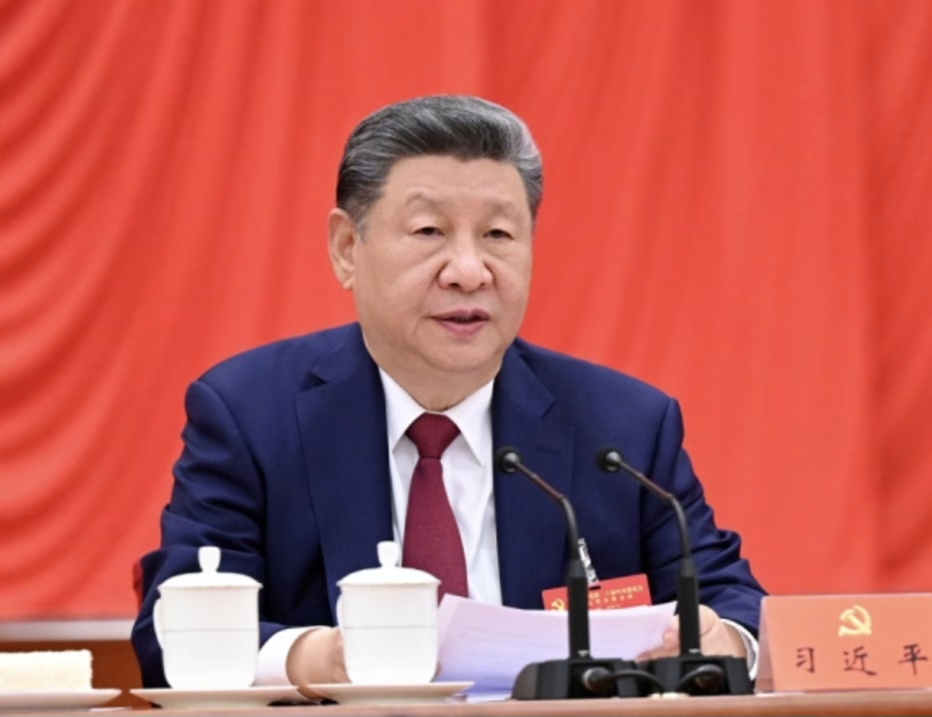
The 20th Central Committee of the Communist Party of China convened its fifth plenary session in Beijing from October 26 to 29, presided over by the Political Bureau, with General Secretary Xi Jinping delivering the work report and keynote address.
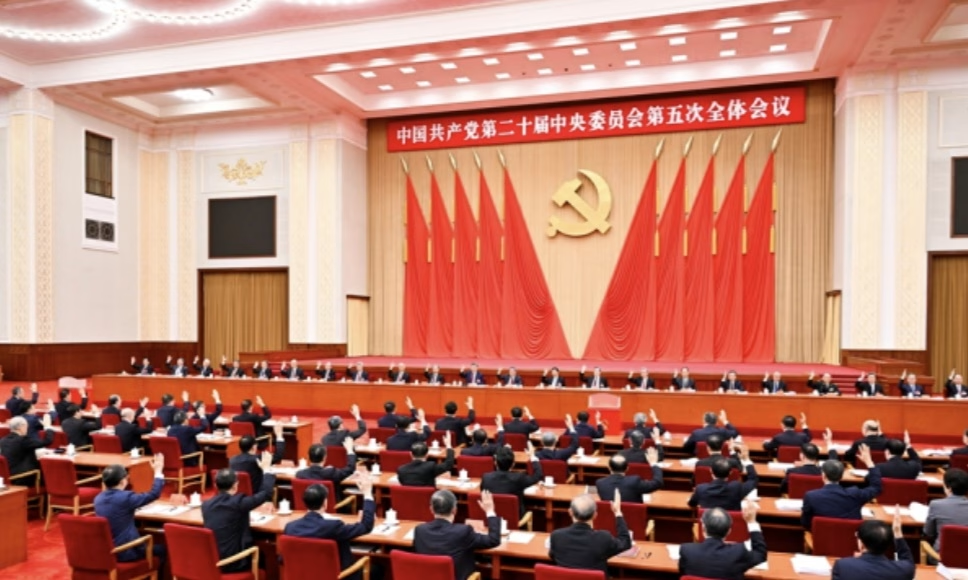
The main outcome was the adoption of the Resolution on Certain Major Issues Concerning Persevering with Full and Rigorous Party Self-Governance. The Committee affirmed the work of the Political Bureau since the fourth plenum, citing implementation of the principles of the 20th National Congress, balancing development and security, advancing high-quality growth, and bringing the 14th Five-Year Plan to a successful conclusion while securing a good start for the 15th.
A review of Party history formed a key theme of the communique, which attributed successive victories to the pursuit of communism, commitment to national rejuvenation and self-governance, and identified people’s oversight and Party self-reform as the two answers to escaping the historical cycle of rise and fall. Achievements in full and rigorous self-governance since the 18th National Congress were hailed as historic, with lax self-supervision addressed at the root, while Xi Jinping Thought on Party Building was presented as fundamental guidance. The communique noted that challenges remain, with the “four tests” and “four dangers” still protracted amid profound changes in global, national and Party conditions.
The session outlined guiding principles for future work: serving the Party’s missions, taking political strengthening as the overarching principle, exercising rigorous governance across the board, adopting a problem-oriented approach, upholding fundamental principles while breaking new ground, adhering to a top-down approach, and running the Party according to regulations. The action plan focuses on strengthening Party spirit, practicing democratic centralism, cultivating high-caliber officials, building a well-knit organizational system, improving conduct and tightening discipline, advancing the anti-corruption drive to ensure officials have no audacity, opportunity or desire to commit corruption, improving Party regulations and oversight, and enforcing accountability.
On personnel and discipline, Zhang Shengmin was elected to the Political Bureau and ten alternate members were promoted to the Central Committee. The plenum confirmed the expulsion of more than 30 senior officials, including Ma Xingrui, Zhang Youxia and Liu Zhenli, for grave violations of discipline and law, and the removal of Li Yunze from his Party position.
The Committee decided that the 21st National Congress will be convened in Beijing in the second half of 2027.
Direction Going Forward
Going forward, the communique signals that the Party will anchor its future trajectory on persevering with full and rigorous self-governance as the foundation for long-term governing capacity and national rejuvenation. The direction is one of inward-strengthening to enable outward delivery.
Politically, it will uphold the centralized, unified leadership of the Central Committee with Xi Jinping at its core. Ideologically, it will consolidate around Xi Jinping Thought on Socialism with Chinese Characteristics for a New Era and Xi Jinping Thought on Party Building.
Organizationally and institutionally, the Party intends to run itself according to regulations, enforce strict standards in official selection and management, build a cross-level aligned organizational system, and refine Party and state oversight with inspection as a key tool.
In terms of conduct, the focus will be on sustained discipline, work-style improvement under the eight-point decision, and an uncompromising anti-corruption drive.
Strategically, this self-reform agenda is presented as the prerequisite for achieving the Party’s missions — safeguarding sovereignty, security and development interests, promoting high-quality development during the 15th Five-Year Plan, and basically realizing socialist modernization en route to the Second Centenary Goal, with the 21st National Congress as the next critical milestone.