By Aldridge Dzvene
HARARE – Zimbabwe and Mozambique are seeking to give parliamentary diplomacy a more practical role in advancing bilateral cooperation, with legislators from the two countries moving beyond protocol and parliamentary exchanges towards the sharing of legislative information, coordinated international engagement and stronger implementation of agreements between the two neighbouring states.
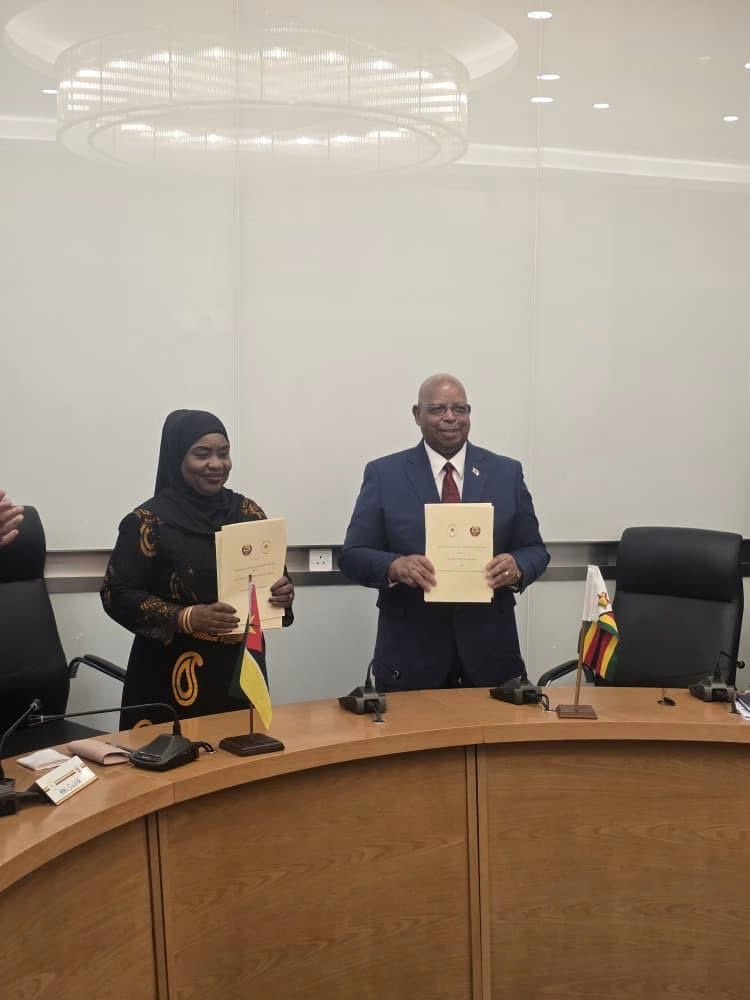
The direction emerged during the official visit to Harare by Speaker of the National Assembly of Mozambique, Honourable Margarida Adamugy Talapa, which brought together the Chief Whips of the two countries and members of Portfolio Committees before the Mozambican Speaker held bilateral discussions with Speaker of Parliament, Hon Advocate Jacob Francis Nzwidamilimo Mudenda.
The significance of the engagement lies in the recognition that bilateral agreements ultimately require functioning institutions to translate political commitments into practical outcomes. Parliament, through legislation, oversight and engagement with sector ministries, can influence whether agreements remain diplomatic declarations or become operational frameworks affecting trade, infrastructure, investment and the movement of people and goods.
ZANU PF Chief Whip Cde Pupurai Togarepi captured this broader requirement by calling for interaction between corresponding structures of government in Zimbabwe and Mozambique, arguing that the parliamentary engagement provides a platform to strengthen support for the bilateral commission.
That approach points to a potentially more integrated model of bilateral diplomacy. Instead of relations being driven primarily by the executive and diplomatic establishments, parliamentary committees, government departments and sector institutions can develop direct working relationships around specific areas of mutual interest.
For Zimbabwe and Mozambique, geography makes such coordination particularly important. The countries share a border and have longstanding political ties dating back to the liberation struggle. Their relationship therefore carries both historical and contemporary strategic weight, particularly around regional trade, transport corridors, energy, security and economic integration.
FRELIMO Chief Whip Feliz Silvia said the two countries were seeking to strengthen parliamentary cooperation through the exchange of legislative information and coordination in international parliamentary fora, while describing Zimbabwe and Mozambique as brotherly countries with communities living alongside each other across the shared border.
The emphasis on legislative information is significant because differences in laws, regulations and administrative procedures can become practical barriers to regional commerce even where governments have already agreed politically on cooperation. Greater parliamentary interaction can therefore help legislators understand how each country approaches common challenges and identify areas where legal and institutional frameworks can be made more complementary.
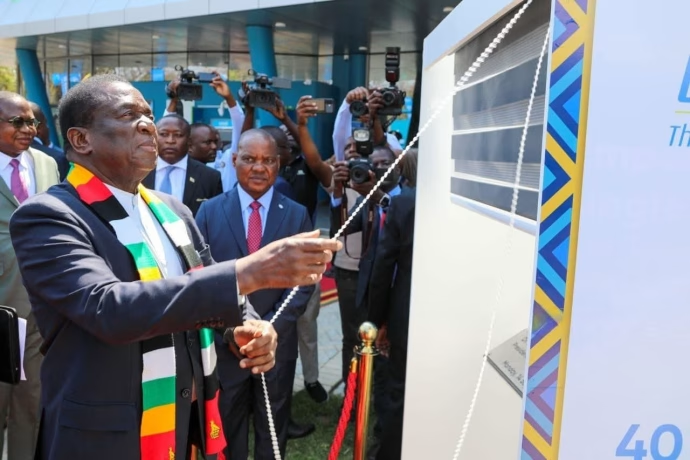
The visit also brought the physical transformation of Zimbabwe’s Parliament into the diplomatic picture, with the Mozambican delegation touring the new Parliament Building and its modern facilities. The symbolism is important, but the larger issue is what parliamentary infrastructure and institutional capacity can produce in terms of oversight, legislation and regional engagement.
The subsequent bilateral meeting between Ms Talapa and Advocate Mudenda placed the relationship at the level of parliamentary leadership, with both sides reaffirming the importance of stronger inter-parliamentary cooperation. Advocate Mudenda, however, pushed the discussion into a wider continental question, identifying economic independence as a challenge that remains unresolved across Africa.
That observation gives the parliamentary engagement a deeper strategic dimension.
Africa’s political independence did not automatically produce economic sovereignty. Many countries remain dependent on external capital, technology, markets and industrial inputs, while intra-African trade continues to face regulatory, infrastructure and financial barriers. Parliamentary institutions therefore have a role in examining the laws and policies that either enable or constrain economic integration.
For Zimbabwe and Mozambique, this could mean ensuring that parliamentary friendship associations and Portfolio Committees move from ceremonial exchanges towards measurable programmes covering trade, investment, infrastructure, agriculture, energy, transport and border economies.
Advocate Mudenda’s call for exchange visits to produce practical outcomes is therefore particularly important. Parliamentary diplomacy becomes more valuable when legislators return from exchanges with specific areas for cooperation, follow up on agreements and maintain institutional channels through which challenges can be addressed.
The shared liberation history provides a strong political foundation, but history alone cannot sustain contemporary bilateral relations. The next phase requires institutions capable of converting historical solidarity into economic and developmental value.
The relationship between Zimbabwe and Mozambique already has a natural strategic logic. Their geographic proximity, shared history and position within the SADC region create opportunities for cooperation that extend well beyond Parliament. What parliamentary diplomacy can provide is another institutional mechanism for ensuring that those opportunities are supported by compatible laws, informed oversight and sustained political engagement.
The visit by Speaker Talapa therefore represents more than an exchange between two legislatures. It signals an effort to strengthen the institutional architecture behind Zimbabwe-Mozambique relations at a time when African countries are being challenged to deepen regional integration and build greater economic self-reliance.
The real measure of the engagement will now be whether the proposed exchanges generate legislation, oversight initiatives, sector cooperation and follow-up mechanisms that produce visible outcomes for citizens and businesses on both sides of the border.
For Zimbabwe and Mozambique, parliamentary friendship will carry its greatest value when it moves from friendship as a diplomatic expression to cooperation as a working instrument of regional development.