HARARE — Seed Co Limited reported a resilient performance for the year ended 31 March 2026, navigating a normalised regional trading environment following an exceptional prior year, while strengthening its balance sheet, cash generation and commitment to climate-smart agriculture.
On behalf of the Board, Chairman P. Gowero noted that FY26 results must be viewed against an exceptionally strong comparative period. FY25 benefited from heightened regional seed demand driven by widespread drought and supply shortages across Southern Africa, as well as elevated public-sector demand in Zimbabwe.
“As regional agricultural production recovered and seed availability normalised, export demand reduced significantly,” Mr. Gowero said.
“While this resulted in lower revenues and profitability compared with the prior year, management responded proactively through cost optimisation initiatives, disciplined pricing, and enhanced working capital management.”
The year was characterised by constrained liquidity, climate variability, changing cropping patterns, and increased competition. Following the drought-induced export surge in FY25, trading conditions normalised during FY26. Zimbabwe also continued its transition to the Zimbabwe Gold (ZWG) currency, with liquidity pressures and elevated financing costs influencing the cost of doing business.
Despite headwinds, Seed Co demonstrated resilience through disciplined cost management and strong market execution.
Revenue declined 27.7% to US$51.5 million from US$71.2 million in FY25. The decline was primarily attributable to lower export demand following the normalisation of regional seed supply. Gross profit decreased to US$25.8 million from US$40.7 million, with gross margin contracting by 630 basis points to 50.1% due to changes in sales mix and competitive intensity.
Operating expenses reduced 16.7% to US$21.8 million, reflecting cost-containment and efficiency initiatives. Operating profit declined 53.7% to US$9.6 million, while profit before tax fell 52.6% to US$10.2 million. Profit after tax was US$8.0 million, down 54.3% from US$17.5 million in FY25. Basic earnings per share was 3.16 cents compared to 6.93 cents previously.
Importantly, cash generated from operations improved significantly to US$7.8 million from an outflow of US$1.0 million in FY25, driven by disciplined working capital management, improved collections and tighter inventory controls. The Company invested US$3.6 million in capital expenditure to sustain operational efficiency.
The balance sheet remained robust. Total assets increased to US$184.3 million. Net debt-to-equity improved marginally to 18.2% from 18.5%, with net debt at approximately US$25.7 million after cash balances of US$2.5 million. Shareholders’ equity grew by 8.6%.
The company declared a dividend of 0.68 US cents per share for FY26, compared to 0.91 US cents in FY25, in line with its balanced capital allocation framework focused on R&D, infrastructure, prudent leverage, working capital and sustainable shareholder returns.
Share of profit from associates and joint ventures increased to US$4.0 million. Key contributions included US$3.53 million from the 27.48% stake in Seed Co International and US$0.34 million from the 51% JV, Prime Seed Co Zimbabwe.
Seed Co maintained its market leadership through a strong genetics portfolio, extensive farmer engagement, and sustained investment in research and development. Zimbabwe remains the dominant market, contributing 82% of FY26 revenue, with export markets accounting for 16% and third-party sales 2%.
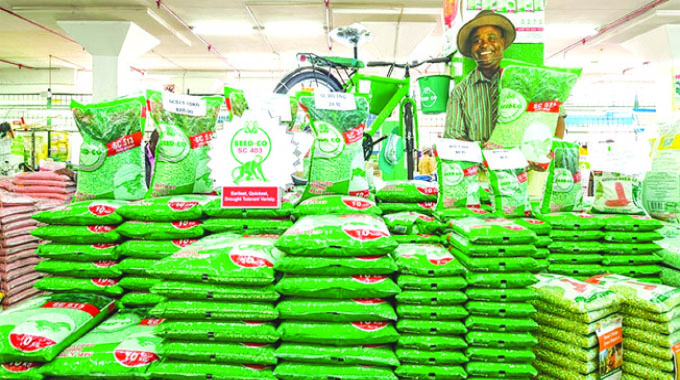
The Company had adequate seed supplies to leverage regional opportunities arising from the prior year’s El Niño drought. Robust contingency planning and efficient logistics helped cushion climate-driven disruptions. The R&D pipeline remains central to strategy, with a target to release at least five new or improved maize hybrids annually, plus one upgraded variety from other crops. During the year, new varieties were registered for the region, with strong progress in developing maize germplasm tolerant to fall armyworm, Maize Lethal Necrosis Disease and cob rots. R&D programmes are also expanding into rice and beans.
Seed Co remains committed to sustainable agriculture and long-term food security. Key initiatives in FY26 included:
- Continued investment in climate-smart and drought-tolerant seed varieties
- Expansion of farmer training and extension support programmes
- Improved seed production efficiency and resource utilisation
- Continued support for smallholder farmer productivity and resilience
- Strengthening governance, compliance and risk management frameworks
The Company’s ESG-led innovation strategy integrates advanced seed genetics with agronomic training to help farmers maximise yields and use resources efficiently.
Talent retention was enhanced through competitive reward structures, educational support and welfare initiatives. In governance, Mr. Frédéric Savin retired from the Board on 5 September 2025 and was succeeded by Mr. Rogério Álvares de Andrade, a move expected to enhance the Board’s skill mix and independence.
The company remains optimistic about medium- and long-term prospects. Priorities include growing the open market business, strengthening profitability and cash generation, optimising working capital, expanding adoption of improved seed genetics, driving operational efficiencies, and growing regional market share.
“The strength of the Seed Co brand, market leadership position, extensive distribution network and robust research pipeline provide a strong platform for sustainable growth and long-term shareholder value creation,” said Chief Executive Officer Morgan Nzwere.
The company expressed confidence that it is well positioned to navigate current market conditions and capitalise on future growth opportunities, reaffirming its commitment to advancing African agriculture and inclusive economic development.