By Aldridge Dzvene
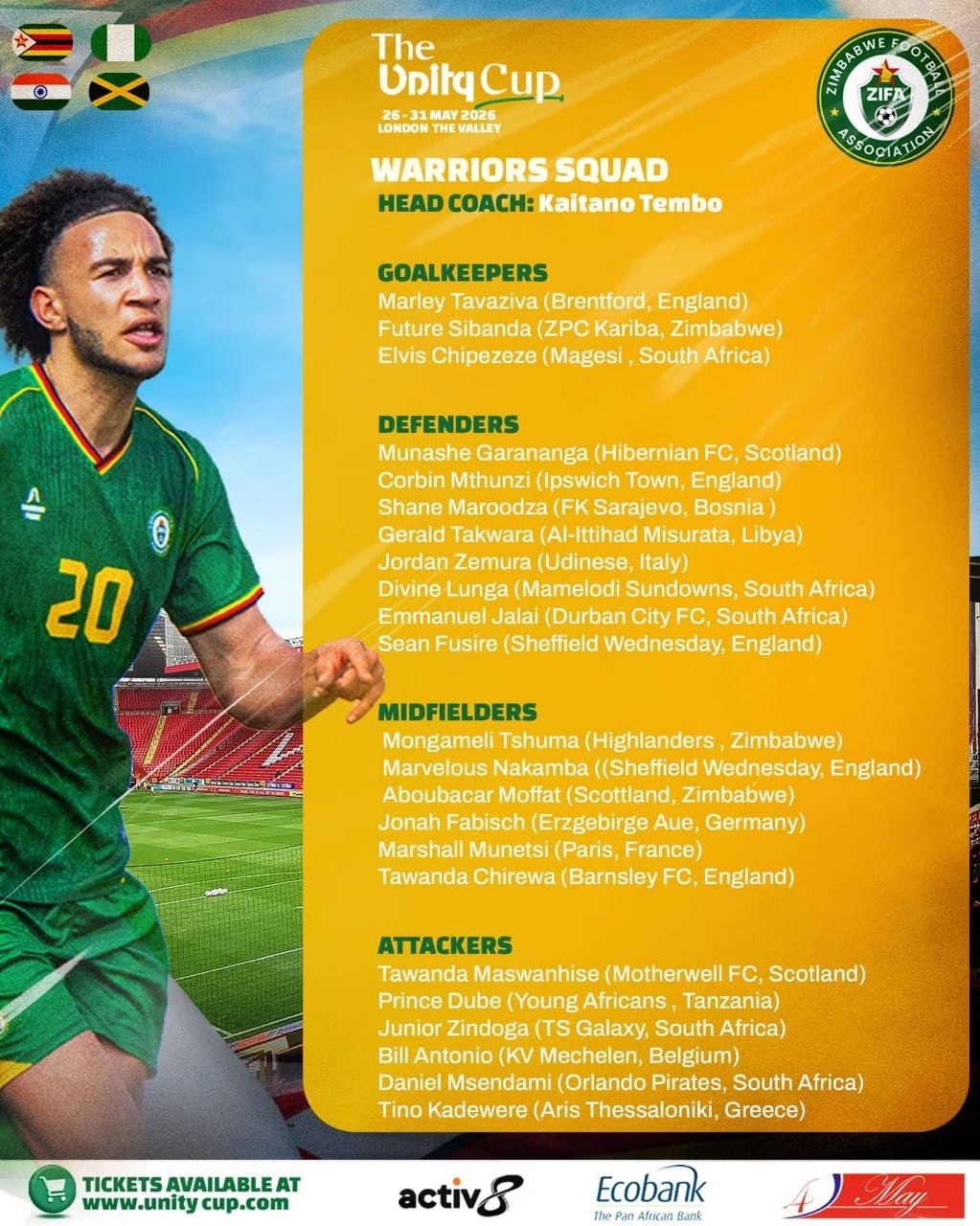
Zimbabwe’s Warriors have unveiled a largely balanced and internationally seasoned squad for the upcoming Unity Cup in London, with the return of key figures Marshall Munetsi, Jordan Zemura, and Tino Kadewere providing a significant boost to the national team setup ahead of the four nation tournament.
The competition, set for June 26 to 30 in London, will feature Zimbabwe national football team alongside Nigeria national football team, Jamaica national football team, and India national football team, in what is increasingly being viewed as more than a friendly tournament, but a strategic rebuilding platform for Zimbabwean football.
The return of Marshall Munetsi, now playing in France, restores steel, leadership, and tactical maturity in midfield, an area that has at times lacked balance during transitional phases within the national team. Equally important is the inclusion of Jordan Zemura, whose presence on the left side offers both defensive stability and attacking progression, attributes that have become increasingly vital in modern football systems.
The recall of Tino Kadewere also signals a potential resurgence for the Warriors attack. Despite injury disruptions in recent seasons, Kadewere remains one of Zimbabwe’s most technically gifted forwards, capable of linking play and adding experience in high pressure moments.
Coach Kaitano Tembo appears to have selected a squad designed not only for competition, but for long term cohesion ahead of future continental assignments. The squad reflects a blend of Europe based professionals, regional league performers, and locally developed talent, illustrating a widening football ecosystem for Zimbabwe.
In goal, Marley Tavaziva of Brentford headlines a department that also includes Elvis Chipezeze and local based goalkeeper Future Sibanda. The selection reflects an attempt to maintain continuity while exposing younger goalkeepers to international competition environments.
Defensively, the Warriors appear to have prioritised athleticism and adaptability. Players such as Munashe Garananga, Corbin Mthunzi, Shane Maroodza, and Divine Lunga bring a combination of European exposure and African league experience, while Sean Fusire’s inclusion adds youthful dynamism to the squad structure.
The midfield carries perhaps the strongest narrative within the team. Alongside Munetsi are Marvelous Nakamba and Tawanda Chirewa, players capable of controlling tempo while linking defensive and attacking transitions. The inclusion of Jonah Fabisch and emerging talents also points toward an evolving midfield identity built around technical progression rather than purely physical play.
In attack, the Warriors will rely on pace, movement, and versatility through players such as Tawanda Maswanhise, Prince Dube, Bill Antonio, Daniel Msendami, and Kadewere. The frontline suggests an intention to play with greater attacking fluidity, particularly against technically strong opponents like Nigeria.
Beyond the squad itself, the Unity Cup represents an important symbolic and developmental moment for Zimbabwean football. Participation in international tournaments hosted in major football markets such as London increases player visibility, strengthens diaspora engagement, and offers Zimbabwe a platform to reassert its football identity after years of inconsistency and administrative turbulence.
The composition of the squad also reflects a broader transformation within Zimbabwean football, where talent development pathways are increasingly stretching across Europe, Southern Africa, and local academies. Rather than relying solely on established veterans, the Warriors are gradually building a hybrid generation capable of sustaining competitiveness over a longer cycle.
For supporters, the return of experienced names like Munetsi, Zemura, and Kadewere provides optimism. However, the deeper significance of the squad lies in whether the Warriors can finally convert individual talent into collective identity, something Zimbabwe has struggled to consistently achieve on the international stage.
As the countdown to London begins, the Unity Cup may ultimately serve as a measuring point not only of current form, but of how prepared Zimbabwe is for the next chapter of its football rebuild.