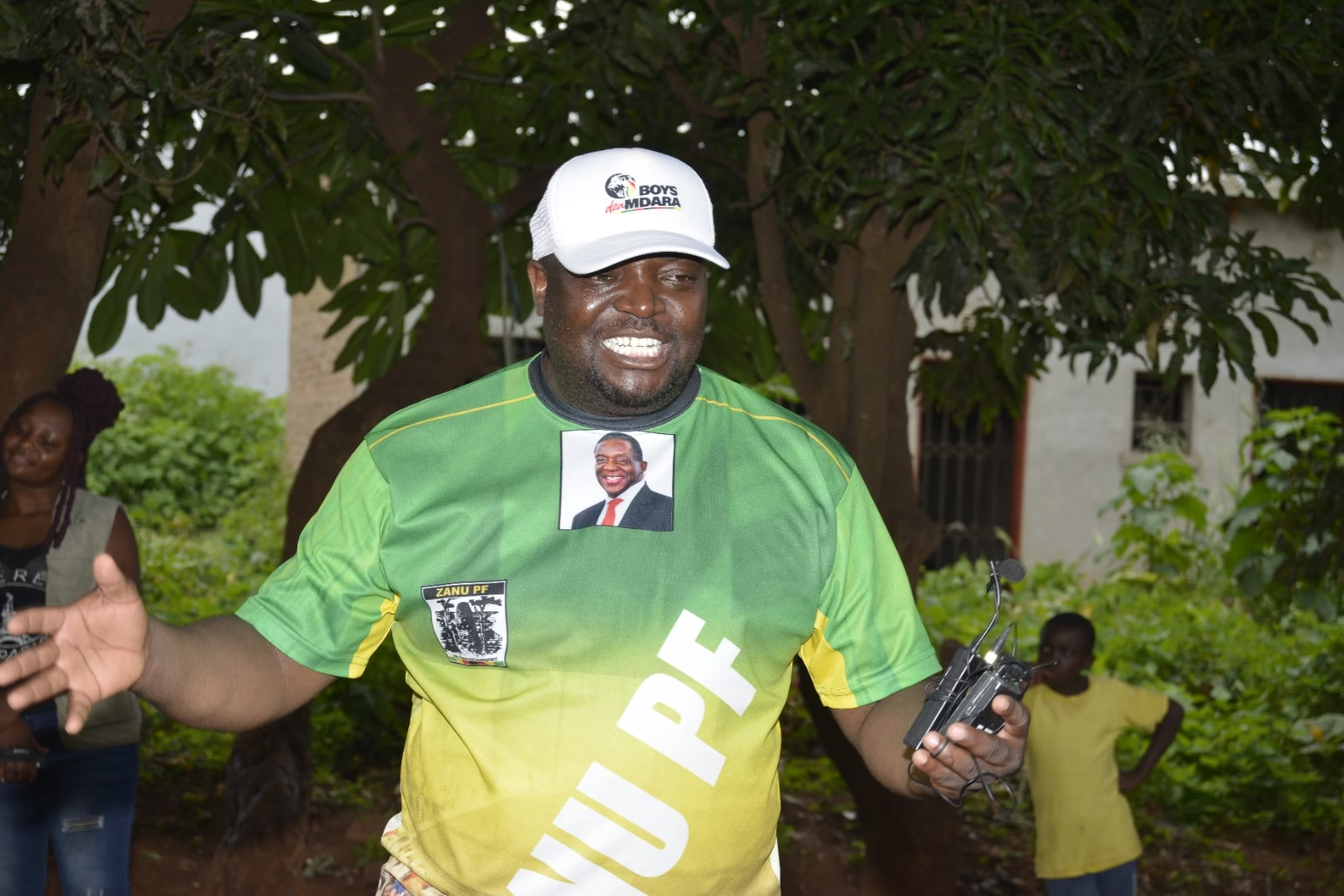
Harare – What unfolded in Warren Park D’s Tabudirira 1–2 Districts was less a routine political gathering and more a deliberate reconfiguration of how power meets the people, as ZANU PF Harare Province leadership anchored a community centred outreach that fused welfare support with grassroots engagement.
At the heart of the programme was a large scale distribution exercise, where over 2,000 residents, spanning the elderly, youths, and vulnerable households, received grocery packs and financial assistance. The intervention positioned economic relief not as charity, but as an extension of participatory governance.
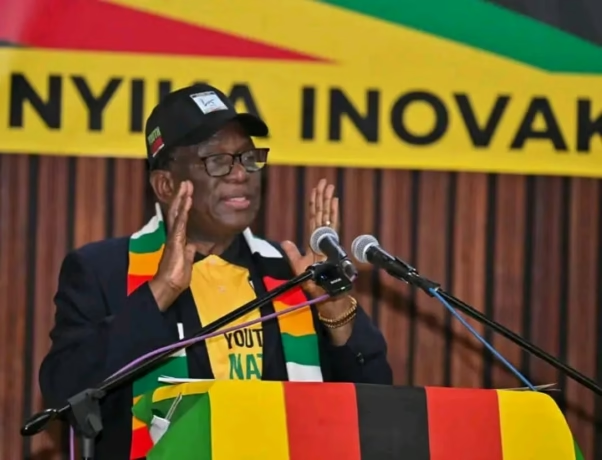
The operation was steered by the Provincial Political Commissar, Voyage Dambuza, whose mobilisation efforts transformed the event into a high attendance platform that reflected both organisational depth and community resonance.
Beyond the distribution, the gathering signalled a subtle but significant shift in political tone, where citizens are no longer passive recipients but active stakeholders in a development conversation. Residents openly acknowledged the immediacy of the support, linking it to broader questions of dignity, resilience, and economic inclusion.
Speakers framed the moment within the leadership of Emmerson Mnangagwa, describing an administration that prioritises accessibility and responsiveness. The narrative emerging from the event suggested that the intersection of political structures and private sector participation is increasingly shaping Zimbabwe’s development model.
For many beneficiaries, the assistance was not merely timely, but indicative of a broader shift toward practical empowerment.
Addressing the crowd, Cde Dambuza underscored the importance of trust as a driver of political engagement, noting that participation is becoming more voluntary and conviction based. The gathering, he suggested, was evidence of communities aligning themselves with a shared national vision anchored on stability and opportunity.
Conversations at the event extended beyond immediate needs, touching on governance reforms and the country’s developmental trajectory. Attendees expressed support for Constitutional Amendment Bill No. 3, viewing it as part of a wider framework aimed at consolidating gains and ensuring continuity in policy direction.
As the programme drew to a close, the mood was not just one of gratitude, but of recalibrated expectations, where politics is increasingly judged by its ability to deliver, and where development is measured at the level of the ordinary household.