By Aldridge Dzvene
HARARE – Beneath the solemn stillness of the National Heroes’ Acre, the burial of Air Commodore (Rtd) Simon Brian Bere unfolded not merely as a ritual of honour, but as a coded national message, one that quietly but firmly reasserted the ideological spine of Zimbabwe’s statehood.
What appeared as a final salute to a fallen hero simultaneously functioned as a strategic reminder: that the liberation struggle was never an event frozen in history, but a living doctrine, continuously redefining its battlefield, its expectations and its demands on citizens.
In life, Air Commodore (Rtd) Bere embodied a seamless transition across phases of struggle. From crossing into Mozambique in 1978 to join the armed liberation movement, to assuming the role of a political commissar shaping ideological consciousness, and later evolving into a senior officer and state functionary, his trajectory reflects disciplined continuity of purpose.
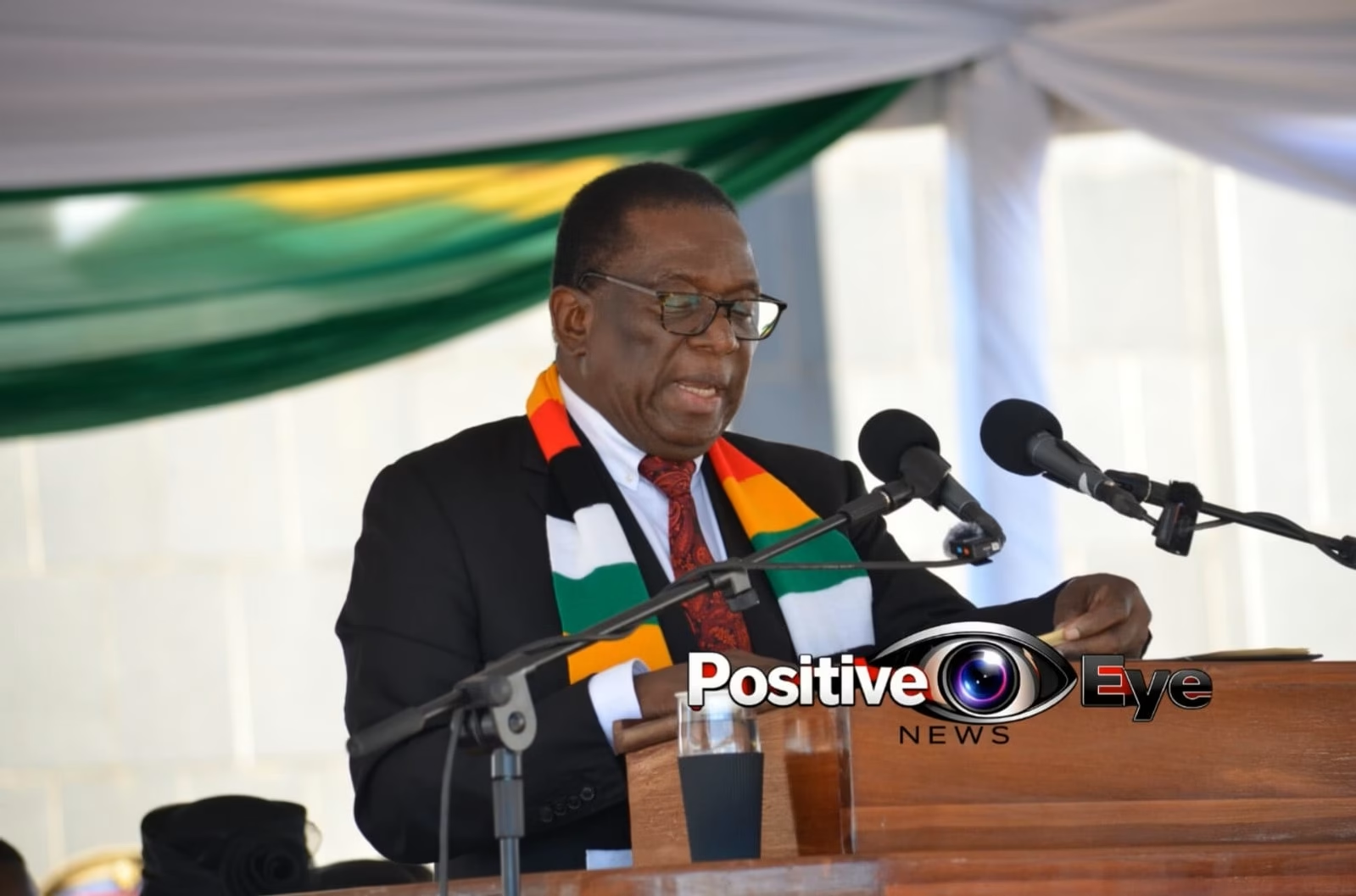
Presiding over the burial, the President and Commander-in-Chief of the Zimbabwe Defence Forces, His Excellency, Cde. Dr. E.D. Mnangagwa, did more than eulogise. The address repositioned the meaning of patriotism, shifting it from remembrance to obligation. The message was clear: the struggle has evolved.
This repositioning carries ideological weight. By framing productivity, innovation and sectoral participation as extensions of the liberation ethos, the State is redefining patriotism in practical terms. In this construct, the farm, the mine, the factory and the digital space are theatres of national duty.
Air Commodore (Rtd) Bere’s wartime role as a commissar reinforces this continuity. The liberation war was sustained by both arms and ideology, and that same consciousness is now required to confront modern economic challenges.
The address further reinforced the progression of national struggle, from armed resistance to economic assertion, often framed within successive Chimurenga phases. The current phase demands production, innovation and unity as instruments of sovereignty.
Within this framework, citizens are positioned as active participants in shaping national destiny. The call for youth to occupy strategic sectors such as the digital economy, mining, tourism and manufacturing reflects a deliberate effort to align national development with ideological commitment.
The emphasis on unity, discipline and responsibility underscores the enduring pillars of national stability. These values, rooted in the liberation struggle, remain central to navigating contemporary challenges.
In burying Air Commodore (Rtd) Simon Brian Bere, the nation was not only honouring a life of service, but reinforcing a standard. His legacy reflects a model of continuity between sacrifice and service, between ideology and action.
The ceremony, while marking an end, also signalled a continuation, a reminder that the struggle persists, redefined by the demands of a changing national and global landscape