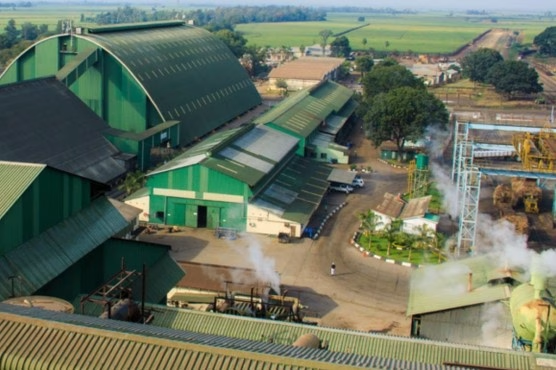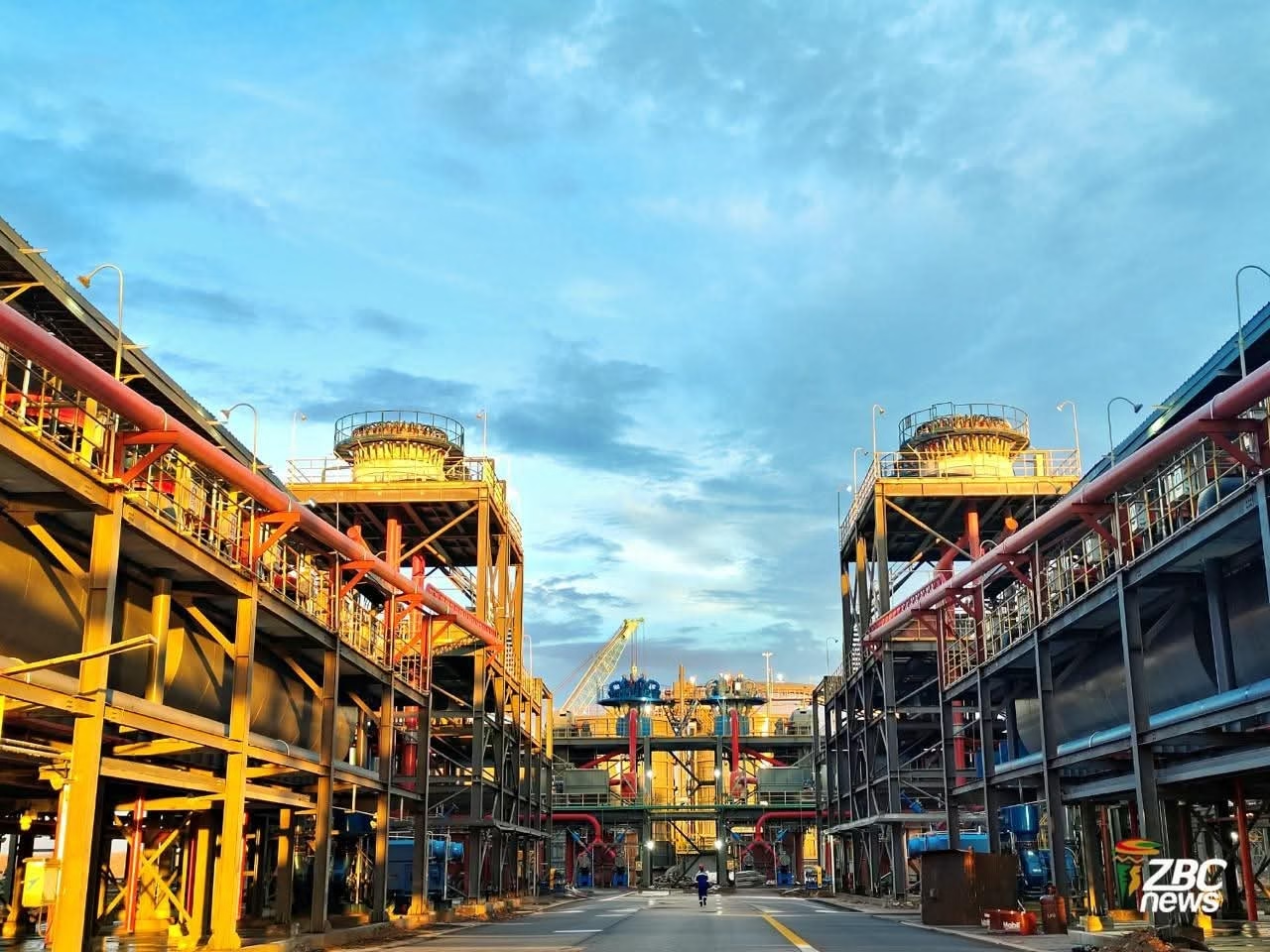
Zimbabwe’s push for inclusive industrialisation under Vision 2030 is increasingly finding expression at community level, with Kamativi Mining Company adopting a more integrated local economic development model that directly empowers surrounding businesses in Hwange District.
In a notable departure from traditional corporate social responsibility approaches, the company has begun awarding contracts to local enterprises, signalling a shift toward embedding communities within the mining value chain. This move responds to long-standing expectations from residents who have sought more tangible economic benefits from lithium extraction activities in the area.
At the core of the initiative is supply chain integration. By opening up opportunities in logistics, construction, and site maintenance to local firms, Kamativi is fostering a decentralised industrial ecosystem that aligns with Zimbabwe’s broader development thrust under the National Development Strategy 2. This approach strengthens domestic participation while supporting the transition toward value addition and localised production systems.
The strategy is complemented by ongoing infrastructure and employment commitments. The company has already contributed to community development through the rehabilitation of solar-powered boreholes and upgrades to local health facilities, while projecting employment of over 1,200 workers at peak production, with priority given to local residents. These interventions collectively reinforce economic inclusion and improve social welfare in the host community.
Equally significant is the alignment with responsible mining standards. Through participation in independent frameworks such as Initiative for Responsible Mining Assurance, Kamativi is embedding stakeholder engagement into its operational model. Integrating local businesses into procurement systems is increasingly viewed as essential for maintaining a sustainable “social licence to operate,” particularly in resource-rich but historically marginalised regions.
For Kamativi itself, once a near-abandoned mining settlement following the closure of the tin mine, the resurgence driven by lithium extraction is now translating into broader economic revival. Local contracts are creating new income streams, stimulating small-to-medium enterprises, and gradually restoring economic activity in a community that had long faced decline.
This development reflects a wider shift within Zimbabwe’s mining sector, where the focus is no longer confined to extraction alone, but extends to ensuring that mineral wealth drives local industrialisation, employment creation, and community development.
As the country advances its industrial agenda, Kamativi’s model offers a compelling case for how mining can evolve from an enclave activity into a catalyst for inclusive growth, anchoring national development within the very communities where resources are found.