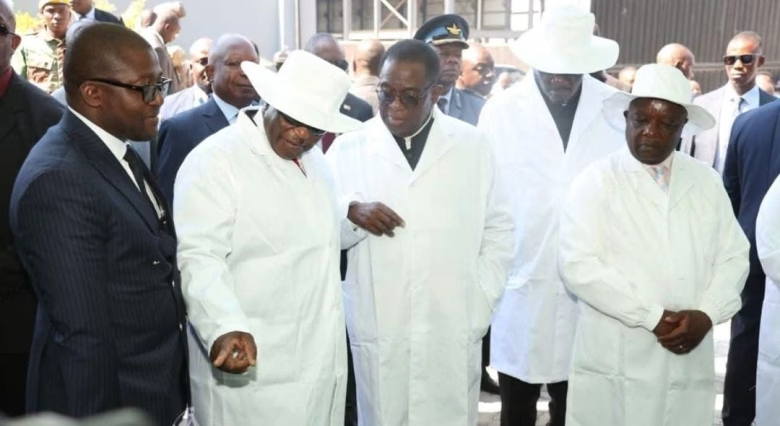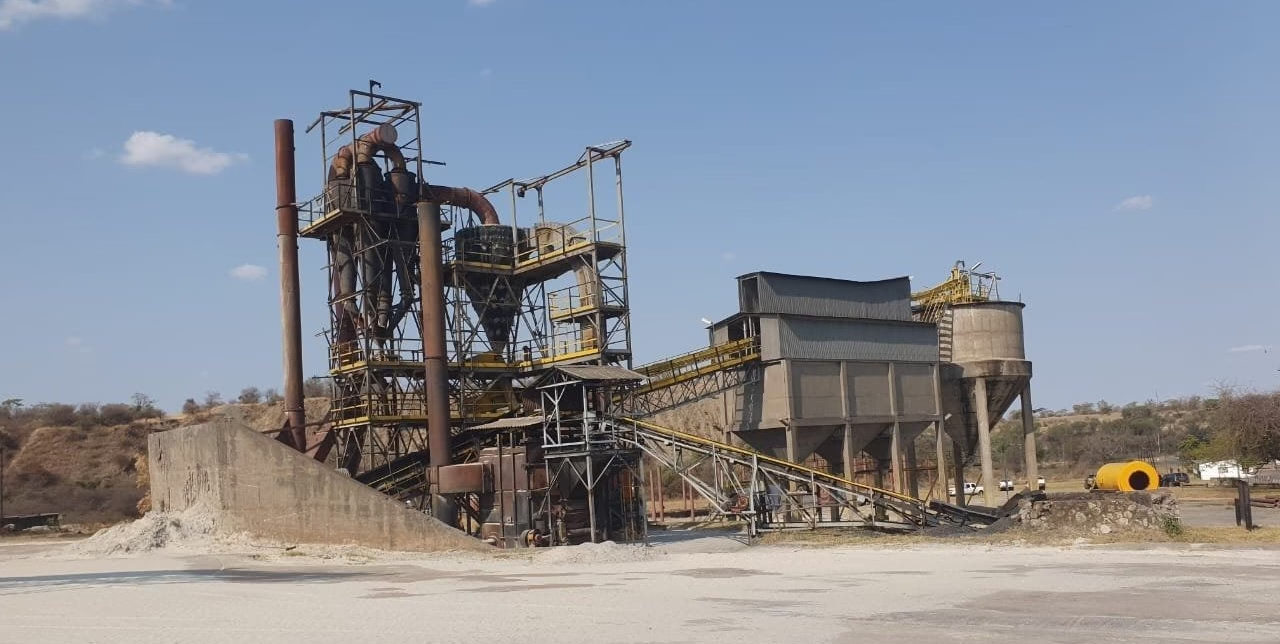
Zimbabwe’s push for agricultural self-sufficiency is gaining momentum, with Dorowa Minerals now on the brink of full commissioning following a major capital injection from the Mutapa Investment Fund.
The Dorowa plant, currently 95 percent complete, is expected to come online in May 2026, marking a critical milestone in the country’s efforts to reduce dependence on imported fertiliser and strengthen food security under the National Development Strategy 2 (NDS2).
At full capacity, the plant is projected to produce 100,000 tonnes of phosphate concentrate, a key raw material that will support the production of approximately 300,000 tonnes of basal fertiliser, covering nearly two-thirds of Zimbabwe’s national requirement. With the country’s basal fertiliser demand estimated at 450,000 tonnes, this development significantly narrows the supply gap.
The broader national fertiliser demand, including top dressing and blends such as ammonium nitrate, stands at around 1.4 million tonnes, underscoring the strategic importance of local production capacity.
The investment, part of a US$153.1 million fertiliser value chain programme, signals a deliberate shift toward import substitution. By localising phosphate production, Zimbabwe is expected to reduce foreign currency outflows that have historically been directed toward importing finished fertiliser products.
Beyond foreign currency savings, the move is also expected to lower input costs for farmers, as locally produced phosphate is typically more affordable than imported alternatives. This has direct implications for productivity, particularly for small-scale farmers who are most affected by high input costs.
The success of Dorowa is also closely linked to the revival of Zimphos, specifically its sulphuric acid plant. A steady supply of phosphate concentrate from Dorowa will enable Zimphos to resume production of Single Super Phosphate (SSP), further strengthening the domestic fertiliser manufacturing chain.
However, while the progress is significant, critical challenges remain. The rehabilitation of the Zimphos acid plant requires specialised engineering expertise, with assessments currently underway on equipment valued at approximately US$4 million. In addition, long procurement cycles for specialised industrial components could delay the full integration of the fertiliser value chain.
To date, about US$5.3 million has already been disbursed toward the initial phase, with the transition from refurbishment to production now representing a decisive test of implementation capacity.
In the broader context, the Dorowa project reflects a strategic shift from raw resource extraction toward value addition and industrial linkages, positioning agriculture, mining and manufacturing within a more integrated development framework.
As commissioning approaches, attention will now turn to consistency of production, pricing impact on farmers, and the speed at which downstream industries can be fully operationalised. The outcome will be pivotal not only for the fertiliser sector, but for Zimbabwe’s wider ambitions of achieving agricultural resilience and economic stability under Vision 2030.