Story By Aldridge Dzvene
Zimbabwe’s tobacco sector is entering the 2026 marketing season with renewed confidence and strategic momentum after the Tobacco Industry and Marketing Board confirmed that auction floors will officially open on March 4, a move that has triggered operational acceleration across major growing zones and reinforced expectations of another high value export cycle for the country.
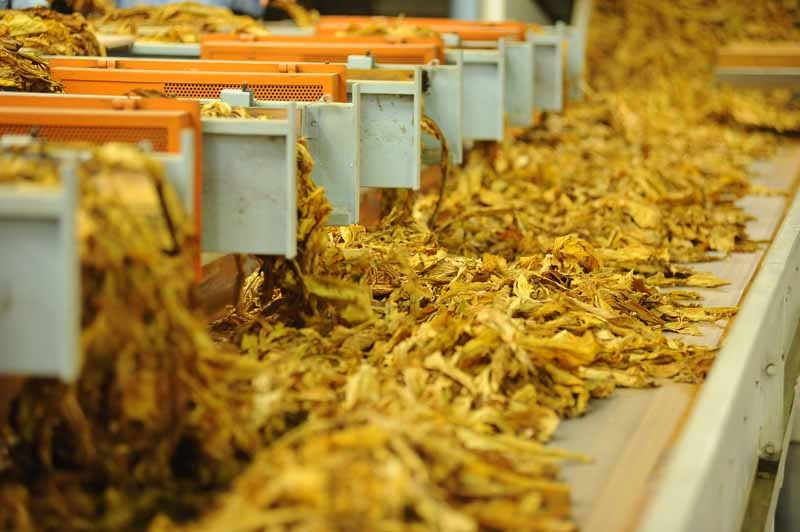
The official confirmation does more than set a calendar date, it activates the economic engine behind one of Zimbabwe’s most dependable foreign currency earners. Across farming belts such as Glendale, Mazowe and Concession, growers are already deep into reaping, curing and baling processes, aligning their crop with strict grading requirements that increasingly determine pricing competitiveness on the auction floors.
For farmers, timing is directly tied to liquidity. Tobacco production is capital intensive, with upfront investments in inputs, labour, curing fuel and logistics. The opening of the marketing season therefore represents the turning point where sunk production costs are converted into cash flow, debt servicing capacity and reinvestment capital for the next agricultural cycle. The psychological impact is equally significant, as certainty around the marketing window reduces speculation risk and stabilizes farmer planning.
At farm level, producer sentiment reflects cautious optimism shaped by agronomic realities. While rainfall distribution varied across regions, adaptive farming practices, staggered planting and multiple reaping cycles have helped cushion output risks. Some growers report that even where rainfall totals were lower, crop management techniques and curing discipline preserved leaf quality, which often matters more than raw volume in determining final earnings.
The structure of the tobacco value chain also explains the strong reaction to the season opening announcement. Tobacco is not merely a crop, it is a coordinated ecosystem involving contract financing, input suppliers, transporters, graders, auctioneers and exporters. When the marketing season date is confirmed, the entire chain synchronizes, from warehouse preparation to logistics scheduling and buyer positioning. This coordination reduces bottlenecks and improves throughput efficiency at auction floors.
Zimbabwe’s historical performance strengthens current optimism. The country has in recent years consolidated its position among leading global tobacco producers, with record breaking volumes and billion dollar export receipts. That performance has elevated tobacco beyond a traditional cash crop into a macroeconomic stabilizer, supporting rural incomes, national export earnings and downstream processing industries.
From a policy and governance perspective, predictable marketing calendars and regulatory clarity from authorities help maintain investor and contractor confidence in the sector. Contract farming models, which now account for a large share of production, depend heavily on orderly marketing systems and transparent oversight. Early signals of regulatory readiness and operational preparedness therefore serve as confidence anchors for both growers and financiers.
However, sector analysts also note that sustaining growth will increasingly depend on quality differentiation, value addition and market diversification rather than volume alone. Global tobacco markets are becoming more compliance driven, with tighter standards around traceability, grading consistency and sustainability practices. Farmers who align with these evolving requirements are more likely to secure premium prices and stable buyer relationships.
In that context, the 2026 season opening is not just a routine annual event, it is a strategic checkpoint for Zimbabwe’s broader agricultural export competitiveness. If current field reports on curing progress and leaf quality hold, the upcoming marketing cycle could reinforce the country’s reputation for reliable supply while deepening household level economic impact in tobacco growing communities across Zimbabwe.
The coming weeks will therefore be closely watched not only by farmers and merchants, but also by economic planners, financiers and export market participants who view tobacco performance as a leading indicator of rural economic strength and foreign currency inflows.