By Aldridge Dzvene
The birthday of Dr Paul Tempter Tungwarara, Special Presidential Investment Advisor to President Emmerson Mnangagwa, unfolded this year as more than a personal milestone. It became a moment that captured the multiple layers of his public persona, power, perception, inspiration, investment and diplomacy, while grounding his national role in a deeply human and symbolic act of compassion.
In Gweru, the celebration took a distinctive turn when Cde Miriam Banda, also known as Nhume Yamudhara, marked the occasion by visiting an orphanage, sharing food, drinks and moments of joy with vulnerable children. The gesture reframed the birthday from private recognition to public meaning, aligning it with the Second Republic’s development philosophy of leaving no one and no place behind. The children’s prayers and wishes for long life were not merely ceremonial; they reflected how leadership narratives resonate at the grassroots when policy ideals meet lived realities.
At a strategic level, Dr Tungwarara’s influence is anchored in power, not in the traditional sense of elected office, but through proximity to executive authority and trust within the Presidency. As Special Presidential Investment Advisor, he operates at the nerve centre of Zimbabwe’s economic re-engagement agenda, interfacing with global investors, facilitating capital flows and advancing investment diplomacy in a competitive international environment. His work reflects the Second Republic’s preference for assertive economic engagement, particularly with non-traditional partners, as Zimbabwe seeks to reposition itself within shifting global alliances.
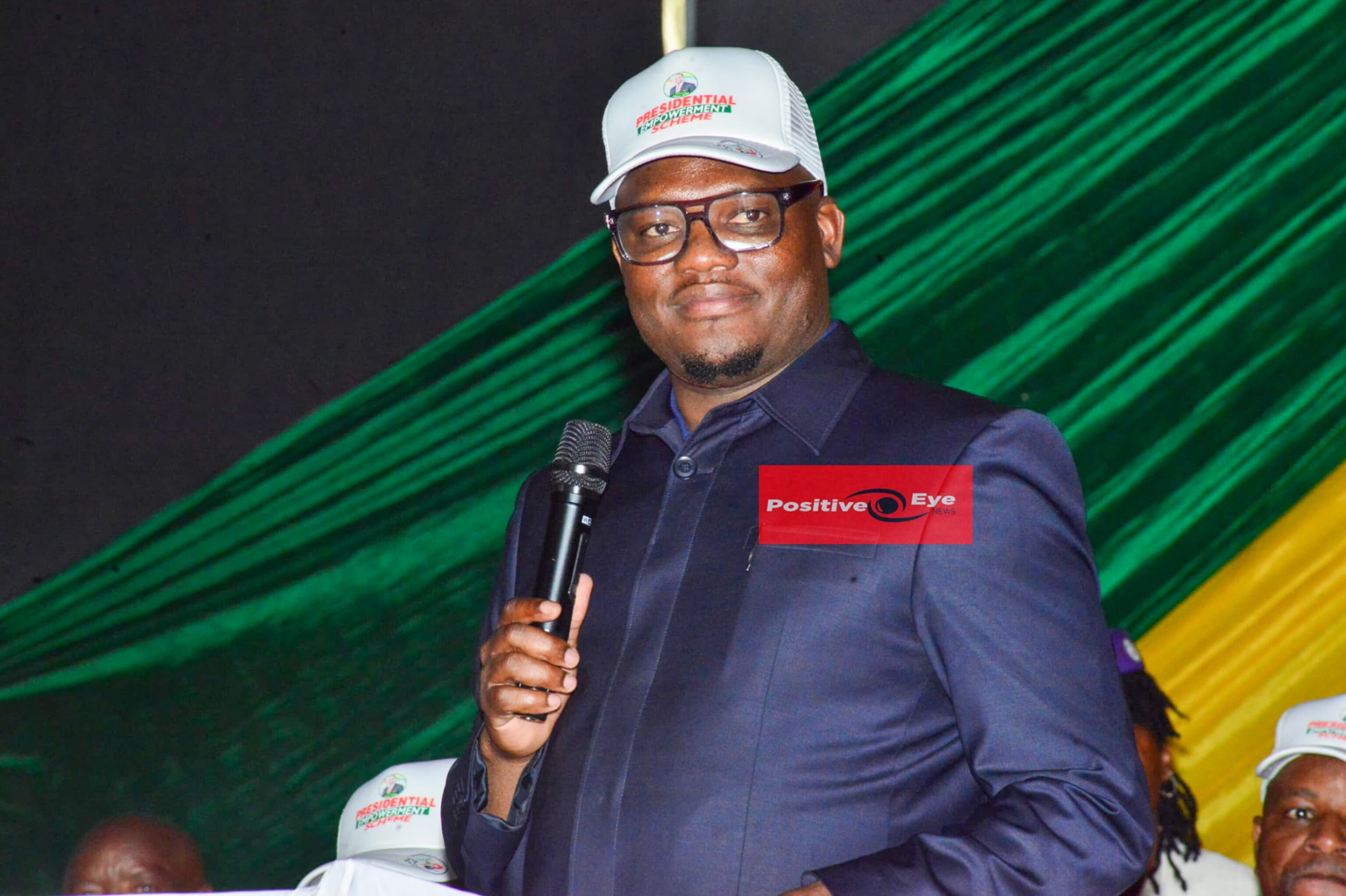
Public perception of Dr Tungwarara remains layered and dynamic. To supporters, he represents a new breed of development actor, direct, action-oriented and closely aligned with the President’s Vision 2030 roadmap. Empowerment initiatives linked to his office, targeting vendors, youths, churches and marginalised groups, are often cited as evidence of a leadership model that prioritises inclusion and economic participation. To critics, his prominence invites scrutiny around transparency, institutional boundaries and the sustainability of empowerment-driven interventions. This duality places him at the centre of broader national debates on governance and accountability in development facilitation.
The orphanage visit, however, adds an important dimension of inspiration to this discourse. It situates Dr Tungwarara’s national role within a moral and social framework, reminding observers that economic ambition must ultimately translate into social impact. By allowing his birthday to be marked through giving rather than grandeur, the moment reinforced a leadership ethic that values compassion alongside strategy, an increasingly important narrative in a society grappling with inequality and economic transition.
Investment and diplomacy remain the defining pillars of Dr Tungwarara’s mandate. His engagement in international investment corridors underscores Zimbabwe’s determination to attract capital, technology and industrial partnerships essential for long-term growth. These efforts are not isolated from domestic realities; they are framed as instruments to unlock jobs, industrial capacity and community upliftment, consistent with Vision 2030’s inclusive development agenda.
Politically, his journey also illustrates the nuanced balance between appointed influence and institutional power. While his advisory role grants him strategic reach, it exists within clearly defined state and party structures, reflecting an evolving governance model that seeks to harmonise executive confidence with organisational discipline.
In this context, Dr Paul Tungwarara’s birthday was not simply a celebration of age, but a moment of reflection on the kind of leadership Zimbabwe is cultivating under the Second Republic, leadership that blends power with purpose, diplomacy with development, and investment ambition with human compassion. The orphanage in Gweru became, symbolically, the meeting point of national vision and community reality, offering a quiet yet powerful statement on what inclusive development truly means.