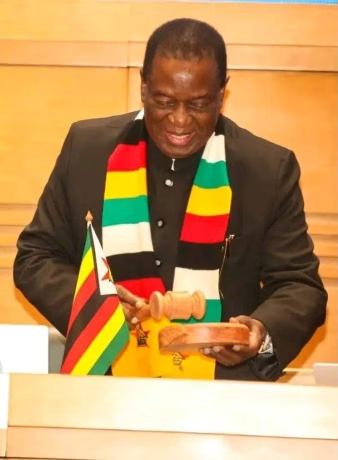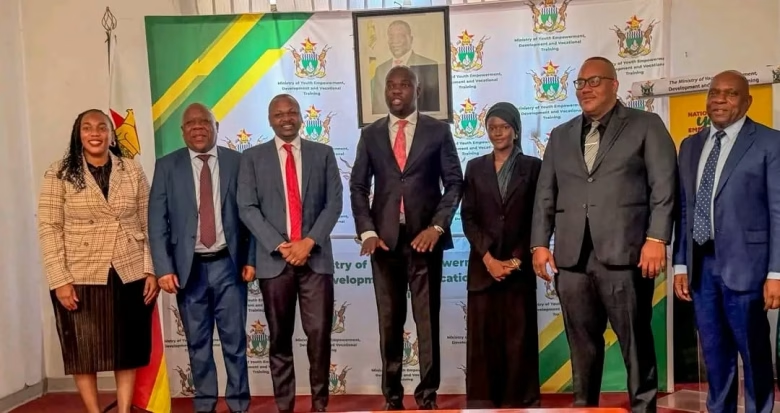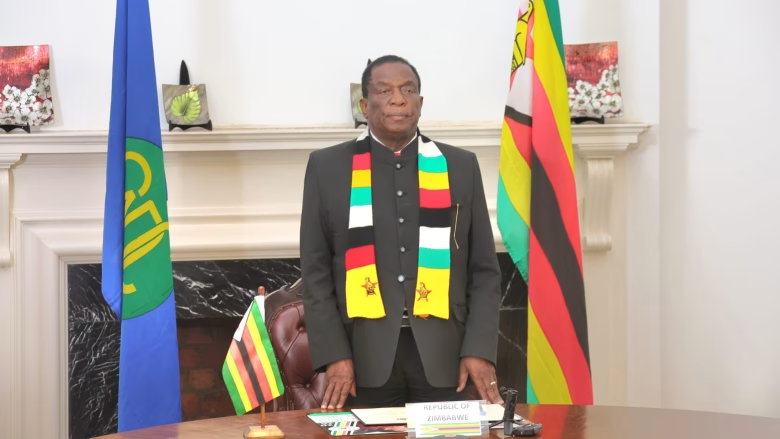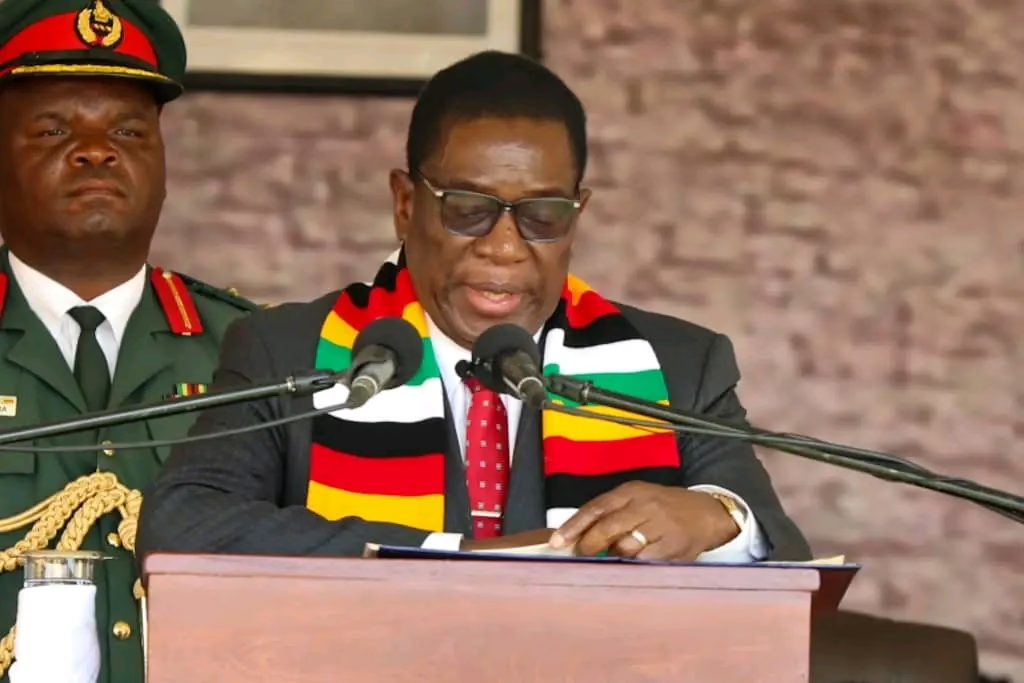
President Dr Emmerson Dambudzo Mnangagwa has firmly repositioned Zimbabwe’s engagement with the world by transforming diplomacy into a central pillar of national economic reconstruction. As the country prepares to operationalise National Development Strategy Two for the 2026 to 2030 economic cycle, the President’s directive that all diplomatic missions must function as economic nerve centres reflects a deliberate shift from symbolic diplomacy to productivity driven international engagement. This policy transition marks a clear recalibration of how Zimbabwe now defines power, influence and national interest in a highly competitive global economy.
Under the leadership of the President, Zimbabwe’s foreign missions are no longer confined to protocol duties and political representation. They are being re-engineered into platforms for trade promotion, investment mobilisation, tourism marketing and innovation exchange. This repositioning elevates embassies into frontline economic institutions tasked with opening markets, attracting foreign capital and building industrial linkages. In practical terms, the President has converted foreign policy into an economic weapon, aligning international relations directly with domestic production, job creation and export growth.
The President’s economic diplomacy strategy is deeply rooted in the broader reform trajectory of the Second Republic. Years of isolation triggered by illegal Western sanctions disrupted Zimbabwe’s access to capital markets, foreign direct investment and international credit systems. Through persistent engagement and re-engagement, the President has steadily reopened diplomatic corridors, restored bilateral trust and reintroduced Zimbabwe into global economic conversations. The shift from defensive diplomacy to proactive economic projection demonstrates a leadership style that prioritises leverage over lamentation, opportunity over restriction.
National Development Strategy Two provides the institutional framework within which this diplomatic retooling will operate. The strategy outlines a reformed business environment characterised by streamlined investment procedures, modernised customs systems, improved ease of doing business and strengthened quality control frameworks. These reforms are designed to ensure that when diplomatic missions attract investors, the domestic environment can absorb, protect and grow that capital. The creation of export support mechanisms, digital trade promotion platforms and measures to dismantle non tariff barriers further consolidate the President’s push toward a competitive export driven economy.
Equally strategic is the President’s emphasis on projecting Zimbabwean leadership and expertise into global institutions. The elevation of Zimbabweans into influential international positions is not only a recognition of national competence but a calculated expansion of soft power. Through such placements, Zimbabwe’s developmental priorities gain direct representation within global policy making platforms, strengthening the country’s voice on issues of climate finance, youth development, sport governance and international cooperation. This approach transforms human capital into diplomatic capital, reinforcing national relevance beyond borders.
The President’s recognition of the diaspora as a core development partner further expands this diplomatic reconfiguration. By directing embassies to adopt open door engagement with Zimbabweans abroad, the President has moved beyond remittance dependency toward strategic diaspora participation in investment, skills transfer and market linkages. This approach acknowledges that Zimbabwe’s global footprint is not limited to official missions but is also carried by millions of citizens embedded in advanced economies, whose knowledge and networks present untapped economic leverage.
Global trade expos, cultural exchanges and international competitions outlined under National Development Strategy Two also assume new strategic value under this doctrine. These platforms are no longer viewed as symbolic presence but as transactional spaces where national branding, export visibility and investor confidence are actively competed for. Through structured participation in these global arenas, the President seeks to reposition Zimbabwe not as a peripheral economy but as an emerging production and logistics hub within the southern African region.
What distinguishes the President’s diplomacy driven development model is its pragmatism. It recognises that in today’s world, economic growth is no longer generated solely within national borders but through the intelligent integration of external markets, technologies, capital and demand chains. By directing diplomats to become economic scouts and investment brokers, the President aligns Zimbabwe with global best practice, where embassies operate as satellite growth centres feeding national industrialisation.
In its totality, President Dr Emmerson Dambudzo Mnangagwa’s economic diplomacy doctrine represents a strategic fusion of foreign policy and domestic production. It signals a government that understands that sovereignty in the modern era is not only defended through politics but through competitiveness, exports and value creation. As Zimbabwe prepares to enter the National Development Strategy Two phase, the success of this model will increasingly be measured not by speeches delivered abroad, but by factories built at home, contracts signed internationally and livelihoods transformed locally. In that equation, diplomacy becomes not an art of engagement alone, but a hard instrument of national renewal.