

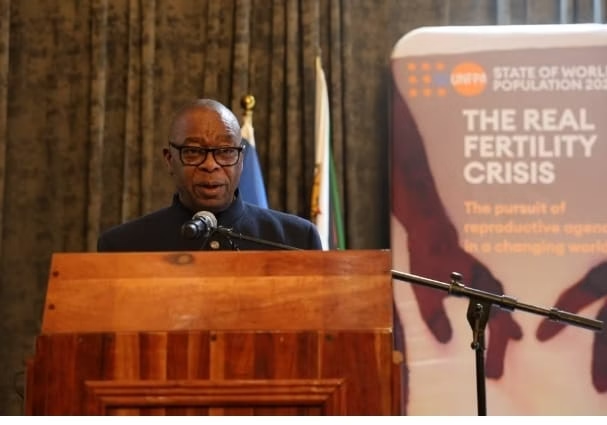
The United Nations Population Fund (UNFPA), in partnership with the Government of Zimbabwe and other stakeholders, launched the 2025 State of World Population Report on Thursday, revealing a continued global and national decline in fertility rates, particularly among young people.
The report, titled “The Real Fertility Crisis: The Pursuit of Reproductive Agency in a Changing World,” highlights that one in five people worldwide are unable to have the number of children they desire due to economic and social barriers. Key factors cited include the high cost of raising children, lack of affordable healthcare, job insecurity, and the absence of a suitable partner.

Rainbow Hotels — Experience Luxury Across Zimbabwe
Rainbow Hotels continues to redefine hospitality standards in Zimbabwe, offering world-class accommodation, fine dining, and modern conference facilities in Harare, Bulawayo, and Victoria Falls.
Whether for business or leisure, Rainbow Hotels delivers unmatched comfort, exceptional service, and a truly premium guest experience tailored to modern travellers.
Book NowUNFPA Executive Director, Dr. Natalia Kanem, said the issue is not a rejection of parenthood but rather limited choices caused by structural barriers.
“Vast numbers of people are unable to create the families they want. The issue is lack of choice, not desire, with major consequences for individuals and societies,” she said.
In Zimbabwe, the Total Fertility Rate (TFR) has declined from 4.3 children per woman in 1994 to 3.9 as of the 2023, 24 Zimbabwe Demographic and Health Survey. The report shows rural women continue to have more children than those in urban areas, with rural TFR at 4.6 compared to 3.1 in urban settings. Women in urban areas also tend to delay childbearing by about two years.
Speaking at the launch, Minister of Health and Child Care, Dr. Douglas Mombeshora, reaffirmed Zimbabwe’s commitment to reproductive rights and autonomy.
“The Government of Zimbabwe upholds reproductive rights, empowering individuals to choose the number, timing, and spacing of children they want, free from coercion,” he said. “Fertility rates are a key driver of Zimbabwe’s continued population growth and youthful demographic structure.”
The report also links declining fertility with wealth disparities. Women from the lowest wealth quintile have an average of 5.5 children, compared to 2.6 for those in the highest. Women in lower-income households also begin childbearing earlier, on average at 19 years, compared to 21.9 years among wealthier women.
Other key contributors to reduced fertility include gender inequality and unpaid domestic work. According to the report, women globally perform three to ten times more unpaid caregiving than men, which often hinders career progression and affects reproductive decisions.
UNFPA Country Representative, Ms. Miranda Tabifor, said the findings should inform national and global policy responses.
“This report underscores a critical truth, the ability to choose the size and timing of one’s family is a fundamental human right,” she said. “When economic precarity and societal pressures limit these choices, we face a real fertility crisis.”
Representing UK Development Director Dr. Jo Abbot, Ms. Tessa Mattholie, Senior Health Adviser to the Health Resilience Fund, said the UK remains committed to supporting reproductive rights.
“This report is a wake-up call. When people are unable to have the families they want due to economic or social barriers, it’s not just a personal loss, it’s a development challenge,” she said.
UNFPA is urging governments to invest in affordable housing, decent jobs, paid parental leave, and comprehensive reproductive healthcare as part of the solution to the fertility crisis.
The State of World Population Report has been published annually since 1978 and continues to shape global discourse around reproductive health and rights.


