Zimbabwe’s annual inflation eased to 101,3 percent in July from 175,8 percent in the prior month as the local unit continued to firm against the United States dollar and riding on tight fiscal and monetary policy measures.
The latest statistics released by the Zimbabwe National Statistics Agency (ZIMSTAT) on Monday show that the month-on-month inflation rate closed in negative territory of -15,3 percent in July.
“The month-on-month inflation rate in July 2023 was -15,3 percent shedding 89,8 percentage points on the June 2023 rate of 74,5 percent,” Zimstat) Director General, Mr Taguma Mahonde said.

Mr Taguma Mahonde
The month-on-month inflation rate is given by the percentage change in the index of the relevant month compared with the index of the previous month.
He said the year-on-year inflation rate (annual percentage change) for the month of July 2023 as measured by the all-items Consumer Price Index (CPI) was 101,3 percent.
Inflation refers to the rate at which prices are increasing, while a fall in inflation does not, however, mean prices are decreasing, but reflects the slow pace in price adjustments.
The month on month food and non-alcoholic beverages inflation rate was -30,7 percent in the period under review shedding 134,9 percentage points on the June rate of 104,2 percent.
The month-on-month non-food inflation rate was 2,4 percent shedding 47,1 percentage points on the June rate of 49,5 percent.
The Food Poverty Line (FPL) for one person in July was $77,186.00.
The Total Consumption Poverty Line (TCPL) for Zimbabwe stood at $99,545.95 per person in July meaning that an individual required that much to purchase both non-food and food items as at July 2023 in order not to be deemed poor.
The Total Consumption Poverty Line is derived by adding the non-food consumption expenditures of poor households to the FPL.
In his 2023 National Budget statement, Finance and Economic Development Minister, Professor Mthuli Ncube, said national annual average inflation is projected to continue slowing down to double digit levels, underpinned by continued tight monetary and fiscal policy stance, stable foreign exchange market, strengthened Government procurement processes and implementation of measures to mop up excess liquidity such as the sale of gold coins and fairly stable global commodity prices.
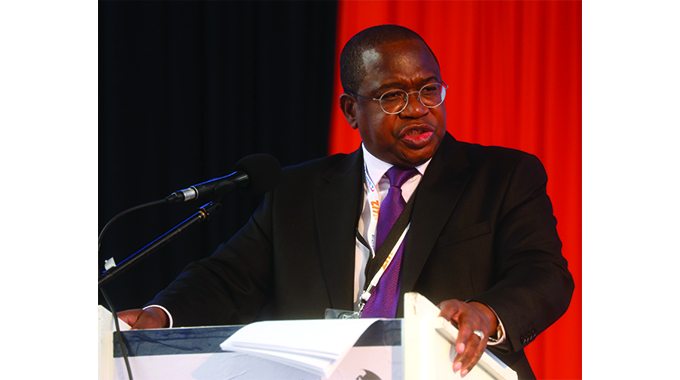
Professor Mthuli Ncube
In its recent annual bulletin Zimbabwe Public Debt Management Office, a department in the Ministry of Finance and Economic Development said the country’s economy is projected to grow by 5,3 percent this year, better than initial estimates, on the back of improved farm yields, better electricity supply, and strong mineral prices.
The revised economic growth is ahead of estimates by the International Monetary Fund (IMF), the World Bank, and the African Development Bank (AfDB), which have projected the economy would expand by 2,5, percent 3,6 percent and 2,8 percent, respectively.
Zimbabwe’s real gross domestic product growth moderated to three percent in 2022, down from 8,5 percent in 2021, due largely to exogenous and endogenous shocks.
Total output was further constrained by macroeconomic instability in 2022, arising from exchange rate depreciation and hyperinflation.
Chronicle