As Southern African Development Community (SADC) leaders hold an Extraordinary Summit today, the regional bloc has reaffirmed its unwavering support for the Democratic Republic of Congo’s (DRC) sovereignty, territorial integrity, and pursuit of lasting peace. SADC Executive Secretary Elias Magosi emphasized this commitment, highlighting the urgent need for stability in the conflict-ridden eastern region of the DRC.
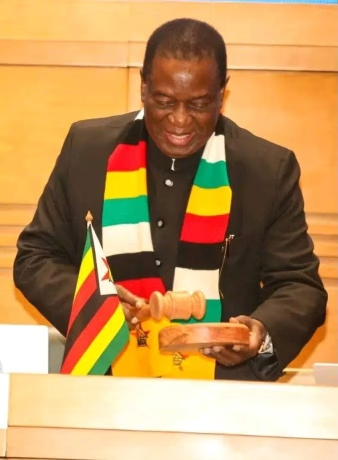
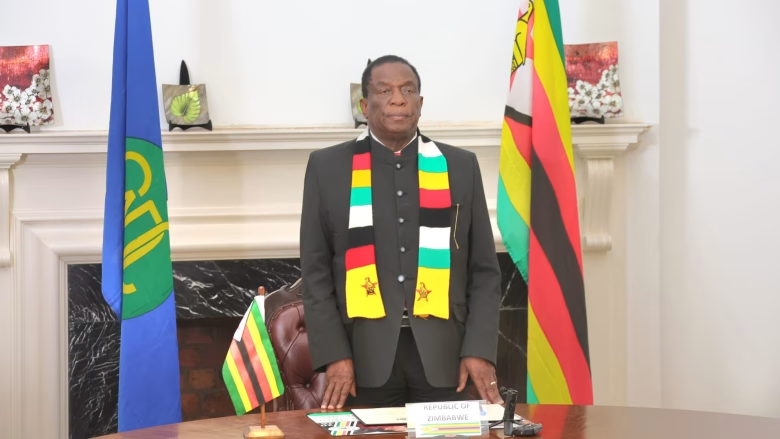
The summit, chaired by SADC Chairperson, President Emmerson Mnangagwa, follows recent attacks by the M23 armed group on Congolese security forces, SADC troops, and civilians, resulting in casualties among peacekeepers and thousands of displaced civilians. Addressing the SADC Council of Ministers meeting in Harare yesterday, Magosi underscored the importance of regional unity in resolving the crisis.
“In the spirit of solidarity and collective defence, we have been resolute in our efforts to find lasting peace and security in the eastern part of the DRC. The security and humanitarian situation remains precarious and worrisome to the region as a whole. We wish to reaffirm our commitment to the DRC’s independence, sovereignty, and territorial integrity,” Magosi said.
The SADC Executive Secretary also expressed condolences to families of those who lost their lives in the conflict, including fallen peacekeepers.
“We extend our heartfelt condolences to the people of the DRC and to the families of the fallen heroes and heroines who sacrificed their lives while serving under the SADC Mission in the DRC. May their souls rest in eternal peace,” he added.
The meeting builds on discussions held last week during the Extraordinary SADC Organ Troika Summit, where regional leaders acknowledged the increasing urgency of the situation.
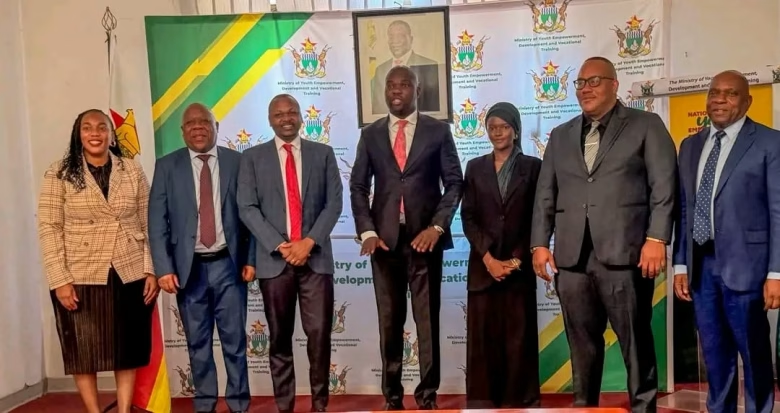
Foreign Affairs and International Trade Minister Professor Amon Murwira, host of the Council of Ministers session, reinforced the need for SADC to take charge of its own security, development, and economic stability, without over-reliance on external support.
“The SADC we want can only be built by its own people. SADC was formed to foster collective self-sufficiency, and we must vigorously pursue this goal. As President Mnangagwa has often emphasized, the SADC we want is built by its people,” he said.
Murwira also stressed the importance of operationalizing the Regional Development Fund, which is expected to drive infrastructure projects and industrialization across the region.
“Ensuring sustainable financing is crucial, and our discussions today will focus on the progress made toward implementing the Regional Development Fund. Its role in supporting key projects and advancing our regional integration agenda cannot be overstated,” he said.
With donor funding becoming increasingly uncertain due to shifting global geopolitics, Murwira urged SADC member states to take greater ownership of their development agenda.
“The reduction in external support should serve as a wake-up call. No one but ourselves will drive and build the SADC we want,” he concluded.
SADC, established in 1992, has long prioritized peace, security, and economic cooperation in the region. Decades of collaboration in the Defence Sector have strengthened the bloc’s response to regional conflicts, leading to the creation of the Inter-State Defence and Security Committee (ISDSC) in 1977. This committee played a pivotal role in liberation struggles and continues to safeguard national sovereignty and territorial integrity.
The Protocol on Politics, Defence and Security Cooperation outlines SADC’s commitment to peaceful conflict resolution through negotiation, mediation, and arbitration. While regional intervention in intra-state conflicts is permitted for mediation purposes, the protocol does not explicitly provide for military assistance.
Additionally, Article 3 of the Mutual Defence Pact (2003) reinforces SADC’s adherence to the principles of the United Nations Charter, advocating for peaceful dispute resolution while also recognizing that an attack on any member state constitutes a threat to regional peace and security, warranting collective action.