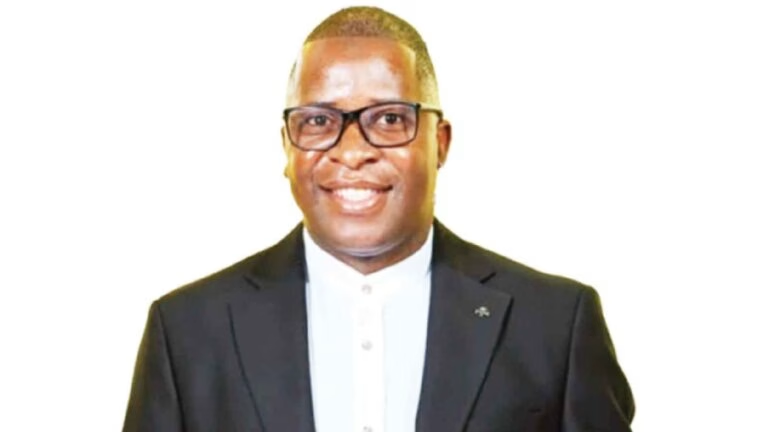
Twenty-five years ago, on July 1, 1999, the late Father Zimbabwe, Joshua Mqabuko Nkomo, passed away. As Zimbabweans celebrate the well-lived life of this iconic founding father and Vice President of Zimbabwe, they are reminded that the nation is united, not divided by religion, race, or tribe.
Father Zimbabwe, as Cde Nkomo was passionately known, was a unifying figure who tirelessly promoted national unity and reconciliation. His famous national unity statement was: “We are a people together and it makes me feel sad if people still talk of black and white, Shona and Ndebele peoples in independent Zimbabwe, we are a nation together.”

Rainbow Hotels — Experience Luxury Across Zimbabwe
Rainbow Hotels continues to redefine hospitality standards in Zimbabwe, offering world-class accommodation, fine dining, and modern conference facilities in Harare, Bulawayo, and Victoria Falls.
Whether for business or leisure, Rainbow Hotels delivers unmatched comfort, exceptional service, and a truly premium guest experience tailored to modern travellers.
Book NowFollowing in the footsteps of the late nationalist, the Second Republic, under the astute leadership of President Mnangagwa, recognizes that the culture of reconciliation remains a fundamental foundation for national unity and racial harmony. From a racially divided society riddled with inequalities, Zimbabwe continues to grow into a united, non-racial society where its citizens mingle without regard to color, creed, tribe, or region.
In line with the spirit of promoting the national ethos agenda, President Mnangagwa commissioned the Pupu Liberation Heritage Site. The site represents the resistance of indigenous people, specifically the Ndebele, against British colonialism. It honors the bravery and sacrifice of King Lobengula and his warriors who fought against the British South Africa Company forces.
The site offers valuable insights into the complex interactions between European powers and indigenous populations during the late 19th century. It serves as an educational tool for understanding colonial history, cultural identities, and the legacy of imperialism. Above all, the site’s preservation promotes national unity, development, and a collective sense of shared heritage among Zimbabweans.
The Second Republic believes nation-building requires a shared sense of identity, inclusivity, and equal opportunities for all citizens, regardless of their tribal background. By transcending tribalism, nations can build a more unified, equitable, and prosperous society.