By Aldridge Dzvene
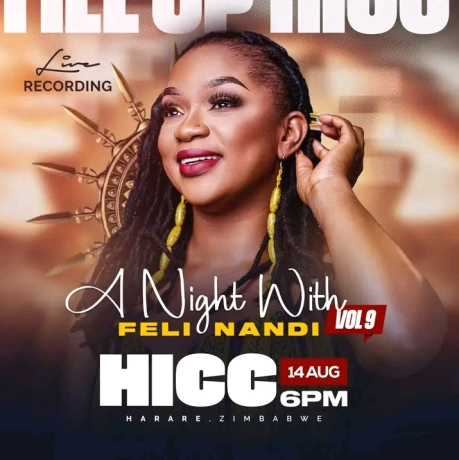
HARARE – Feli Nandi’s long-promised “Fill Up HICC” dream became reality on Friday night as thousands of fans packed the Harare International Conference Centre, transforming her ninth edition of A Night with Feli Nandi into a powerful celebration of Zimbabwean music and an emphatic demonstration of the strength of her growing audience.
The August 14 concert, which also served as a live recording, brought together established musicians, emerging performers, dancers, instrumentalists and choral groups in a production that reflected the diversity and commercial potential of Zimbabwe’s creative industry.
But beneath the spectacle, the defining story of the night was the relationship between Feli Nandi and her fans.
The audience did not simply attend the concert. They became part of the achievement she had spent years building towards.
From the opening performances by Sarungano, Fusion 5 Mangwiro, Mwenje Mathole and Intotal Band, the auditorium steadily grew louder, with familiar Zimbabwean melodies drawing the crowd deeper into the production.
Victor Kunonga, ExQ and Tammy Moyo subsequently brought different generations and styles of Zimbabwean music onto the same stage, creating a musical progression that moved between traditional influences, contemporary urban sounds, Afro-pop, soul and live-band performance.
Tammy’s performance, supported by dancers and musicians, further demonstrated the collaborative nature of large-scale creative productions.
“Teamwork makes the dream work,” she said, acknowledging the creative team behind her performance.
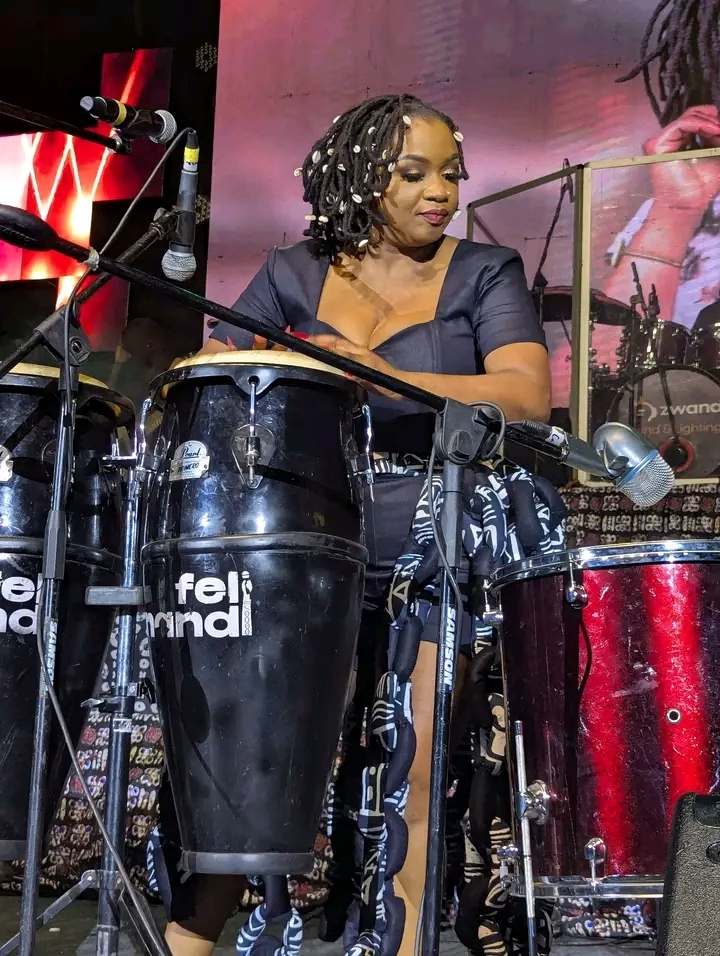
When Feli Nandi finally took the stage, the atmosphere changed from anticipation to celebration.
Supported by the Feli Nandi Choir and Guruve Dance Troupe, she delivered a broad catalogue including Ko Inini, Munamato, Pabva Mufaro Wangu, Shamwari, Munhu Wangu, Ndisiyei, Changamire Nditambireiwo, Handidi Newe, Hamundinzwisise, Woman, Kukoromoka, One Soul, Tongai, Simba Riri and Chana Changu.
The emotional weight of the occasion became particularly evident after her performance, when Feli spoke about what the turnout meant to her.
Rather than presenting the packed HICC as an achievement belonging to her alone, she directed much of the credit towards the people who had followed her journey and continued to support her music.
Her fans, she acknowledged, were central to making the milestone possible.
That response is important because it captures the commercial foundation of the modern creative economy: audiences.
An artist can produce music, build a brand and organise a major concert, but it is the willingness of audiences to buy tickets, follow the music, attend shows and remain invested in an artist’s journey that ultimately determines whether such ambitions become sustainable.
For Feli Nandi, the HICC crowd was therefore not simply a measure of attendance. It was evidence of an audience that had grown alongside her career.
Her emotional message also carried a broader gender dimension.
“Tonight is a representation that a woman can be a king, a woman can lead, a woman can be powerful,” she said.
She urged other female musicians to believe in their ability to occupy major stages, insisting that the achievement was not only about her.
“This is not for me, this is for everybody else,” she said.
The statement placed the concert within a wider conversation about women’s participation and leadership in Zimbabwe’s creative industries.
The appearance of Chimurenga musician Kurai Makore towards the close of the programme provided a fitting conclusion to a night that had deliberately connected contemporary Zimbabwean music with the country’s deeper musical traditions.
Yet the lasting image from the night was the packed HICC and the relationship between the artist and the audience that filled it.
Feli Nandi had promised to fill the venue.
Her fans ultimately answered that promise.
The significance of the night, therefore, lies not only in an artist reaching one of Zimbabwe’s biggest stages, but in an audience demonstrating that Zimbabwean music can command large-scale support when artists build genuine connections with the people who listen to them.
For Zimbabwe’s creative economy, that is perhaps the more important message: the talent is there, the audiences are there, and the challenge is now to build an industry capable of turning that support into sustainable careers, investment and opportunities for the wider creative sector.