By Aldridge Dzvene
VICTORIA, SEYCHELLES – Zimbabwe has successfully championed a landmark resolution on travel facilitation at the 69th United Nations Tourism (UN Tourism) Regional Commission for Africa (CAF), securing unanimous endorsement from African Member States in a move expected to strengthen regional integration, boost tourism competitiveness and unlock new economic opportunities across the continent.
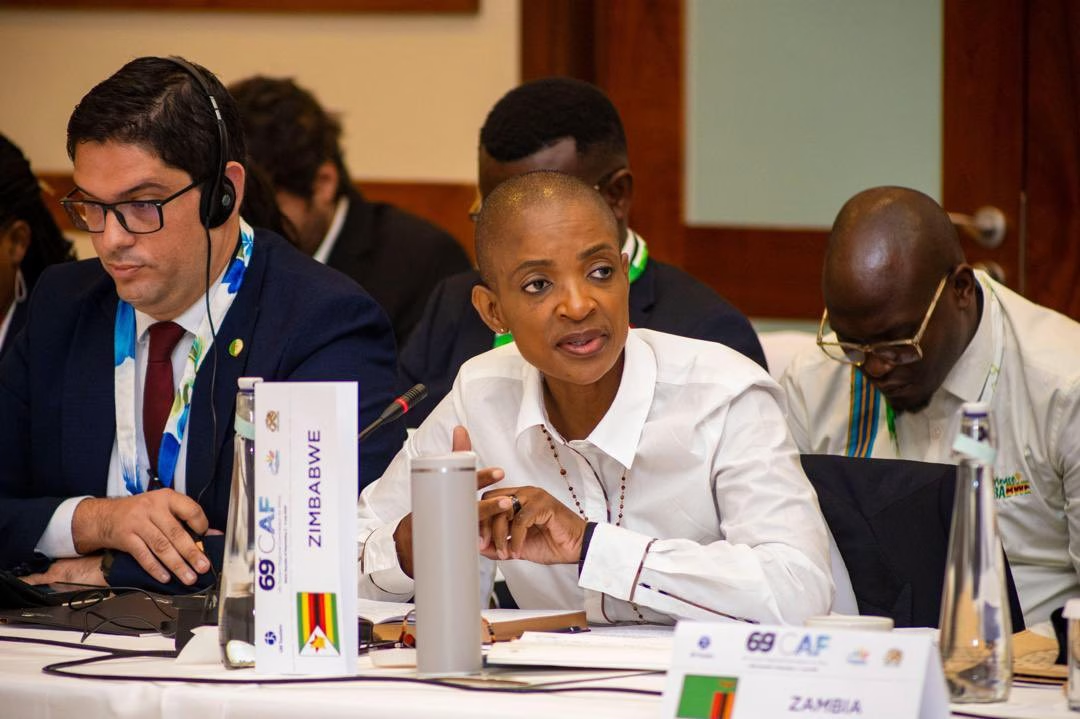
The resolution, presented by the Minister of Tourism and Hospitality Industry, Honourable Barbara Rwodzi, calls on the UN Tourism Secretary-General, working with the African Union Commission, to mobilise support for recognising tourism as a strategic economic sector, removing travel and trade barriers, operationalising the Single African Air Transport Market (Free Skies Policy) and advancing the introduction of an African Univisa through Regional Economic Communities in line with Agenda 2063.
Held in Victoria, Mahé, Seychelles, the Regional Commission meeting brought together Tourism Ministers, policymakers, industry leaders, academics and development partners to deliberate on strategies for enhancing Africa’s tourism growth through human capital development, policy reforms and regional cooperation.
Zimbabwe’s proposal reflects a growing continental recognition that tourism is no longer simply a leisure industry but a strategic driver of economic transformation, employment creation, foreign currency generation and regional value chains. Easier movement of people across African borders is expected to stimulate business travel, intra-African tourism, investment and cultural exchange while reducing the cost and complexity of travelling within the continent.
The call for an African Univisa and the operationalisation of the Free Skies Policy addresses long-standing structural barriers that have constrained the growth of Africa’s tourism sector. Improved air connectivity and simplified visa regimes are widely viewed as essential prerequisites for increasing tourist arrivals, strengthening regional trade and positioning Africa as a globally competitive destination.
Zimbabwe’s leadership on the resolution also aligns with the country’s engagement and re-engagement policy, which seeks to deepen international cooperation while leveraging tourism as a catalyst for sustainable economic development. By advocating for continent-wide reforms, Zimbabwe is positioning itself as an active contributor to Africa’s integration agenda and the implementation of the African Union’s Agenda 2063.
The resolution further recommends convening an intergovernmental meeting bringing together Ministers responsible for Tourism, Finance, Transport, Home Affairs, Foreign Affairs and other key sectors to develop practical measures that improve cross-border mobility, enhance connectivity, attract tourism investment and accelerate the growth of Africa’s visitor economy.
For Zimbabwe, improved regional integration presents significant opportunities to increase international arrivals, strengthen destination competitiveness and maximise the economic benefits of its diverse tourism products. Enhanced connectivity with neighbouring countries is also expected to support multi-destination tourism packages, encourage private sector investment and create new markets for local tourism operators.
As Africa seeks to position tourism among its leading economic sectors, Zimbabwe’s successful advocacy at the UN Tourism Regional Commission demonstrates the country’s commitment to shaping continental policies that promote inclusive growth, regional integration and sustainable development.