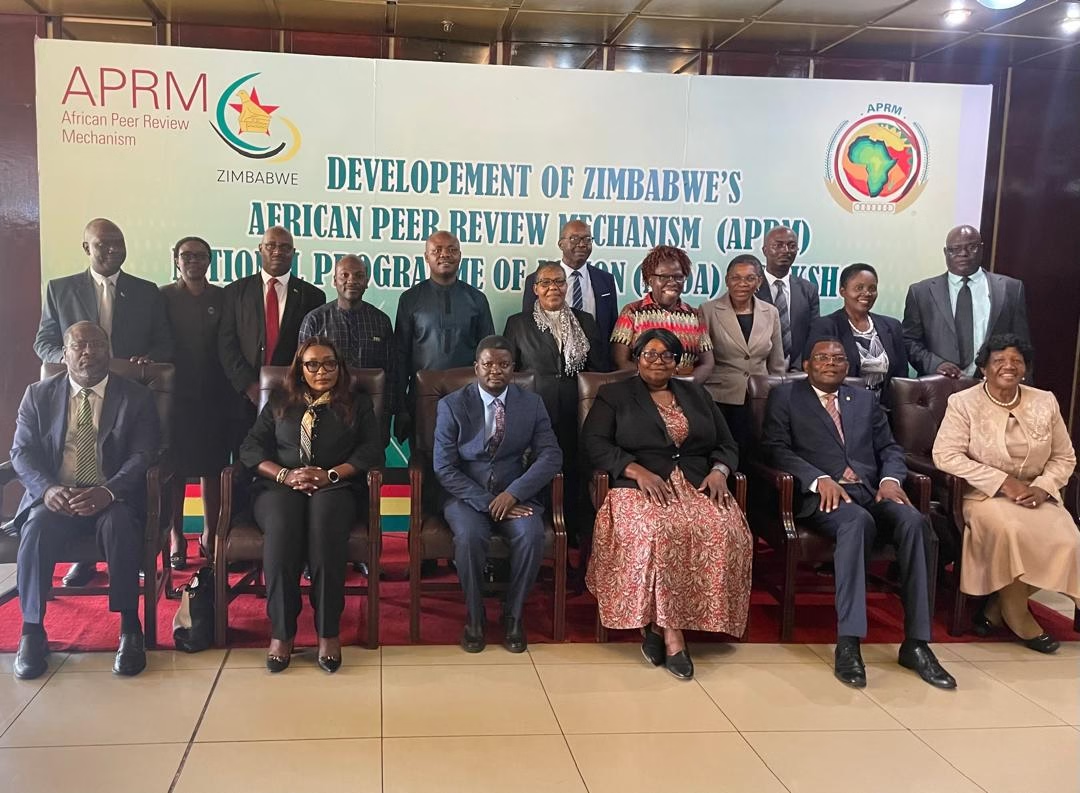
Zimbabwe has taken a significant step towards strengthening governance and accelerating development reforms, as the African Peer Review Mechanism convenes a four day technical workshop focused on crafting the country’s National Programme of Action.
The workshop is designed to transform findings from Zimbabwe’s Targeted Review Report into tangible, impactful and sustainable interventions that directly advance national development priorities. At the centre of discussions is the need to ensure that governance reforms move beyond assessment and are effectively implemented within the country’s institutional and policy frameworks.
Speaking at the official opening, on behalf of Zimbabwe’s APRM Focal Point and Secretary for Foreign Affairs and International Trade, the Chief Director for Multilateral Affairs, Mrs. Petronellah Nyagura emphasised that Zimbabwe’s participation in the APRM process is firmly grounded in constitutional principles and a commitment to good governance.
She highlighted that Constitution of Zimbabwe, particularly Section 9, obligates the State to enact and implement policies that promote efficiency, transparency and accountability across all levels of governance. This constitutional alignment positions the APRM process as a key instrument in reinforcing Zimbabwe’s governance architecture.
The APRM framework itself is built on the principle of peer learning and mutual accountability among African states. Through this mechanism, Zimbabwe’s economic and governance systems are assessed within the broader context of continental best practices, allowing for both introspection and shared progress.
Providing further insight into the workshop’s objectives, the Director for Country Reviews in the APRM Directorate, Dr. Rachel Mukamunana underscored the importance of aligning the National Programme of Action with the country’s development blueprint, the National Development Strategy II. She noted that such alignment ensures that APRM driven reforms are not isolated initiatives, but are fully embedded within national planning and budgeting systems.
Dr. Mukamunana outlined four critical principles that will guide the successful implementation of APRM outcomes. She stressed the importance of political ownership at the highest level, noting that sustained leadership commitment is essential to driving reforms across institutions and sectors. She further emphasised the need for realism and prioritisation, highlighting that effective reform requires a careful balance between ambition, capacity and available resources.
Accountability for results was identified as another key pillar, with clear institutional mandates, performance indicators and monitoring frameworks being necessary to ensure measurable impact. In addition, she pointed to the importance of partnerships, calling for continued collaboration with stakeholders and development partners to mobilise both technical expertise and financial support.
The development of Zimbabwe’s National Programme of Action represents a crucial bridge between policy review and practical implementation. By translating diagnostic findings into actionable programmes, the country is positioning itself to not only address governance gaps but also to enhance institutional efficiency and public sector performance.
As the workshop progresses, its outcomes are expected to shape a reform agenda that is both realistic and results oriented, reinforcing Zimbabwe’s commitment to good governance, accountability and sustainable development within the continental framework of the APRM.