

Story by Aldridge Dzvene
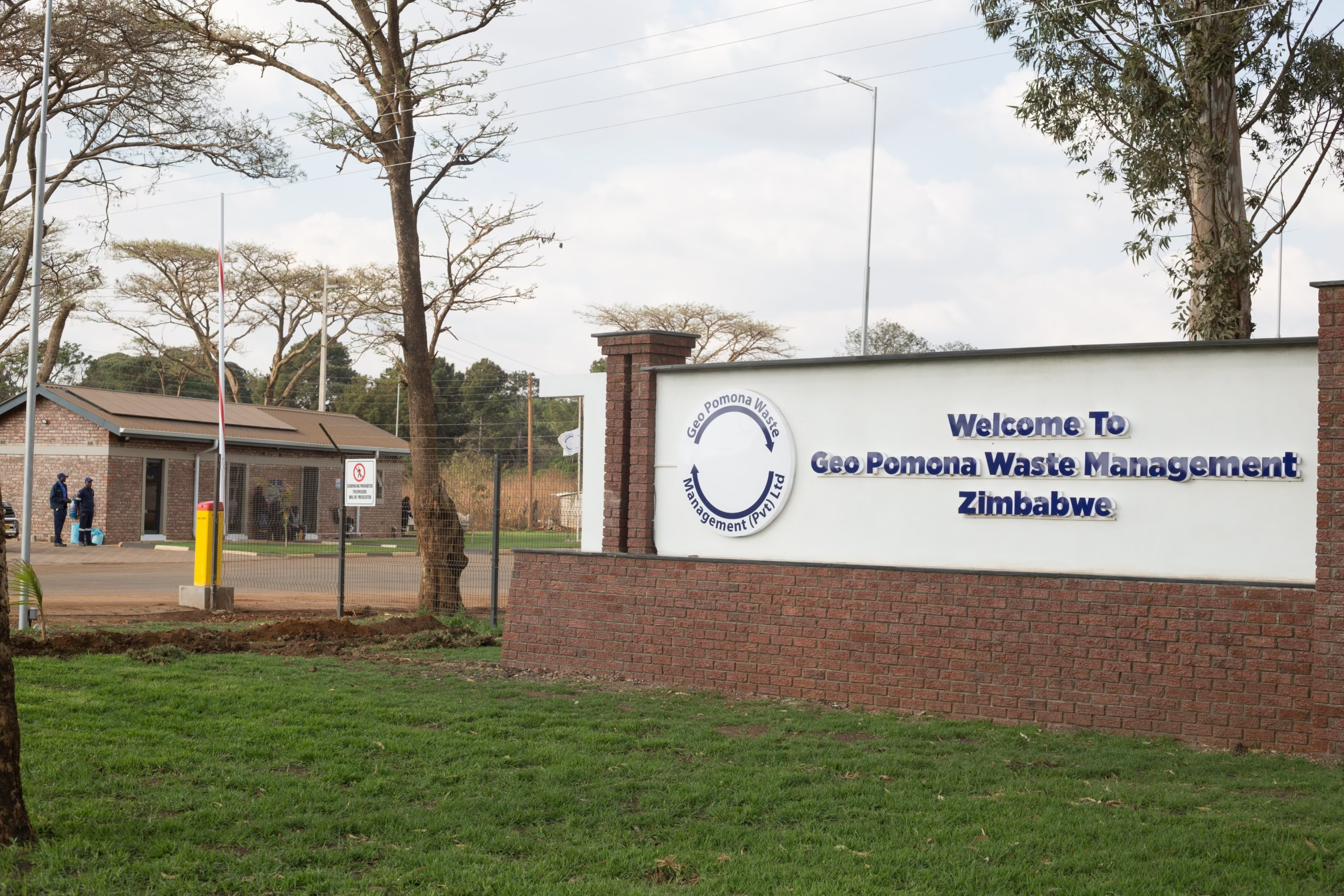
Harare – Zimbabwe is quietly advancing a strategic agenda to establish itself as a regional leader in waste management, with the GeoPomona project emerging as both an economic and geopolitical lever. Beyond its immediate role in clearing refuse across Harare, the project is systematically generating employment, enhancing skills, and creating entrepreneurial pathways, particularly for women, who make up the majority of the workforce at the sorting facility.

Rainbow Hotels — Experience Luxury Across Zimbabwe
Rainbow Hotels continues to redefine hospitality standards in Zimbabwe, offering world-class accommodation, fine dining, and modern conference facilities in Harare, Bulawayo, and Victoria Falls.
Whether for business or leisure, Rainbow Hotels delivers unmatched comfort, exceptional service, and a truly premium guest experience tailored to modern travellers.
Book NowEvery day, hundreds of trucks collect waste through a door-to-door system, transporting materials to the Pomona processing plant, where aluminium, plastics, and other recyclables are systematically separated, a process that adds measurable economic value to the waste management chain. For workers, this is more than a job; it is a pathway to stability, skills acquisition, and economic empowerment, addressing the unemployment gap that has persisted for decades.
The government has demonstrated a strategic commitment to leveraging this initiative. Officials from the Ministry of Skills Audit and Development recently assessed competencies at the plant to establish a skills database, signaling a forward-looking approach to workforce development aligned with Zimbabwe’s vision of becoming a regional waste management hub.
GeoPomona Executive Chairperson and CEO Dr Dilesh Nguwaya emphasized that the project is not only providing jobs but also creating avenues for entrepreneurial engagement, as recycled materials are sold to end-users. The next phase, construction of a waste-to-energy plant capable of producing 22 megawatts of electricity, further consolidates the project’s strategic significance, linking waste management directly to energy production, industrial growth, and national resilience.
Analysts note that Zimbabwe’s approach combines economic empowerment, industrial innovation, and sustainability, positioning the country as a model for integrated waste-to-energy solutions in the region. By aligning job creation, skills development, and value-added infrastructure, the GeoPomona project signals a deliberate effort to strengthen Zimbabwe’s economic independence while projecting regional leadership in a sector with increasing strategic importance.