
By Aldridge Dzvene
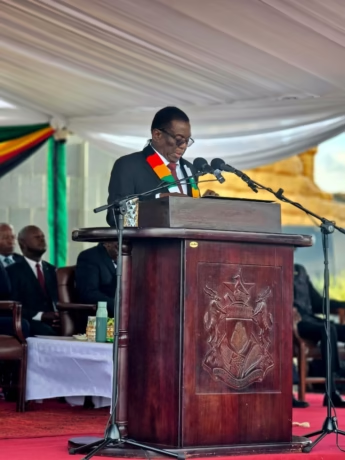
Harare – The burial of Brigadier General (Rtd) Samuel Mpabanga, known as Cde Moffat Nkomo, at National Heroes Acre on 18 February 2026, offered Zimbabwe a moment of solemn reflection on patriotism, leadership, and national identity. The ceremony, attended by President Emmerson Mnangagwa, both Vice Presidents, senior government officials, liberation war veterans, and diplomatic representatives, underscored the enduring influence of liberation-era figures on Zimbabwe’s political and developmental trajectory.

Rainbow Hotels — Experience Luxury Across Zimbabwe
Rainbow Hotels continues to redefine hospitality standards in Zimbabwe, offering world-class accommodation, fine dining, and modern conference facilities in Harare, Bulawayo, and Victoria Falls.
Whether for business or leisure, Rainbow Hotels delivers unmatched comfort, exceptional service, and a truly premium guest experience tailored to modern travellers.
Book NowAddressing mourners, President Mnangagwa framed the late Brigadier General’s life as an embodiment of selfless service and national dedication. Mpabanga, who passed away at the age of 69 at Gwanda Provincial Hospital, was celebrated not only for his role in the liberation struggle under ZIPRA but also for his disciplined service in the post-independence Zimbabwe Defence Forces. Analysts note that the President’s remarks were not merely ceremonial; they served as a strategic reiteration of national unity, state sovereignty, and the importance of loyalty in public service and the security sector.
Highlighting the Brigadier General’s journey from Gwanda to military training in Zambia and the then-USSR, the President drew a parallel between historical struggles for independence and Zimbabwe’s contemporary challenges. “We are a sovereign people and should never revoke this absolute right to please illusionary entities or cyber-societies,” he said, reinforcing a posture of strategic autonomy that resonates with the nation’s broader foreign policy and domestic governance narratives.
Observers suggest that the address functioned on multiple levels. Beyond honoring a national hero, it reaffirmed key state priorities: devolution and decentralization, youth empowerment through Heritage-Based Education 5.0, and investment in infrastructure, training, and skills development in Matabeleland South. These initiatives, President Mnangagwa noted, form part of the Second Republic’s vision to industrialize and modernize Zimbabwe by leveraging both historical lessons and emerging technologies, aligning with Vision 2030 objectives.
The ceremony also provided a subtle reinforcement of political continuity and loyalty as central to national cohesion. Mpabanga’s career, which spanned the liberation struggle and Zimbabwe Defence Forces service, exemplified discipline, humility, and dedication, qualities the State seeks to instill in current and future leaders. Analysts highlight that such commemorations serve as both moral instruction and political signal, emphasizing unity across political divides while maintaining allegiance to national institutions.
In closing, President Mnangagwa’s remarks struck a balance between personal tribute, nationalistic reflection, and policy orientation. He urged Zimbabweans, especially the youth, to draw inspiration from the values embodied by liberation heroes: courage, consistency, and selfless patriotism. The late Brigadier General’s interment at the National Heroes Acre thus stands not only as a commemoration of the past but also as a reminder of the enduring link between historical struggle, state consolidation, and the pursuit of Zimbabwe’s socio-economic and political development.