

By Godfrey M Bonda
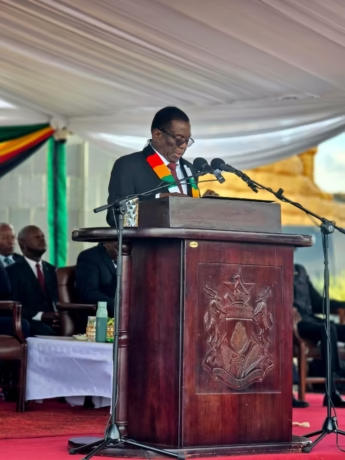
Zimbabwe today laid to rest national hero Brigadier General Retired Samuel Mpabanga at the National Heroes Acre, with President Emmerson Mnangagwa leading proceedings as chief mourner, in a ceremony that blended remembrance, liberation history, national identity, and forward looking development messaging.

Rainbow Hotels — Experience Luxury Across Zimbabwe
Rainbow Hotels continues to redefine hospitality standards in Zimbabwe, offering world-class accommodation, fine dining, and modern conference facilities in Harare, Bulawayo, and Victoria Falls.
Whether for business or leisure, Rainbow Hotels delivers unmatched comfort, exceptional service, and a truly premium guest experience tailored to modern travellers.
Book Now
The burial at the National Heroes Acre was attended by senior Government and ruling party leadership, including Vice Presidents Constantino Chiwenga and Kembo Mohadi, as well as ZANU PF National Chairperson and Minister of Defence Oppah Muchinguri-Kashiri, underscoring the State’s recognition of Mpabanga’s liberation and military contribution.
In his address, President Mnangagwa framed Brigadier General Mpabanga’s life within the broader narrative of Zimbabwe’s liberation struggle and post independence state building, describing him as a disciplined cadre, committed patriot, and humble servant of the nation. Referring to the late hero by his liberation name, Cde Moffat Nkomo, the President said the gathering was not only to bury a soldier, but to honour a generation that placed national interest above personal comfort.

From an analytical standpoint, such state funerals serve multiple roles beyond tribute. They reinforce liberation war memory, strengthen ideological continuity, and connect past sacrifice with present development goals. President Mnangagwa linked the liberation legacy to today’s transformation agenda driven by technology, innovation, and skills, calling on young people to become heroes of a new economic and technological revolution beyond Vision 2030.
Born in Gwanda in 1956, Brigadier General Mpabanga’s early life was shaped by colonial land policies, including the Native Land Husbandry Act, which displaced many African families. His journey into the liberation struggle followed regional routes used by many cadres, crossing through Botswana in 1977 to join the ZIPRA forces. He trained at Mulungushi and later in Zambia and abroad, including further military training in Russia, before being deployed along the Zambezi front.
This trajectory reflects the transnational nature of Zimbabwe’s liberation war, where regional solidarity, external training, and ideological grounding combined to produce a generation of military and political leaders who later anchored the national defence forces.
President Mnangagwa emphasised unity, sovereignty, and peace as enduring pillars of the State, saying Zimbabwe remains a friend to all and an enemy to none, and will continue to defend its independence and policy autonomy. He also used the platform to highlight ongoing provincial development initiatives, including vocational training infrastructure in Matabeleland South, linking remembrance with practical empowerment projects.
The family spokesperson expressed gratitude to Government and the nation for the honour bestowed, describing the late Brigadier General as a devoted family man with a passion for farming, reading, fishing, football, and livestock keeping. Such personal details humanise liberation figures and help bridge the gap between national symbolism and community memory.
Decorated with several medals, including liberation, independence, and regional campaign honours, Brigadier General Mpabanga was portrayed as a loyal and professional officer who remained grounded despite rank and recognition. His promotion to Brigadier General, confirmed by the President in his capacity as Commander in Chief, was cited as evidence of distinguished service.
In policy and political terms, the ceremony reinforced a recurring national message, that independence must be guarded, unity must be sustained, and development must be people driven. As echoed in the President’s closing remarks, national progress remains anchored on citizen responsibility and collective ownership of the country’s future.