
Story by Godfrey M Bonda
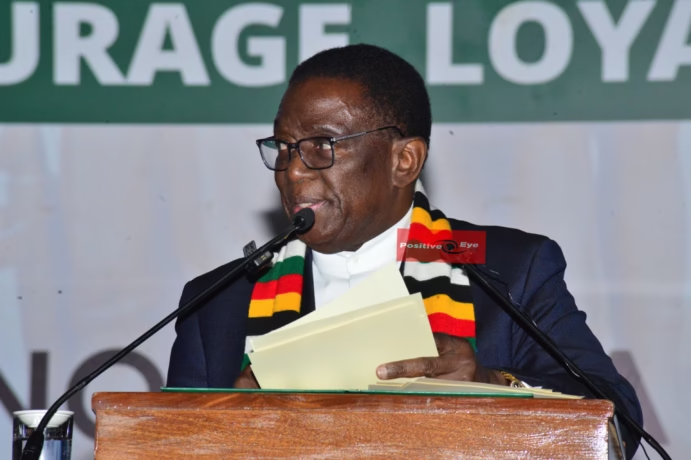
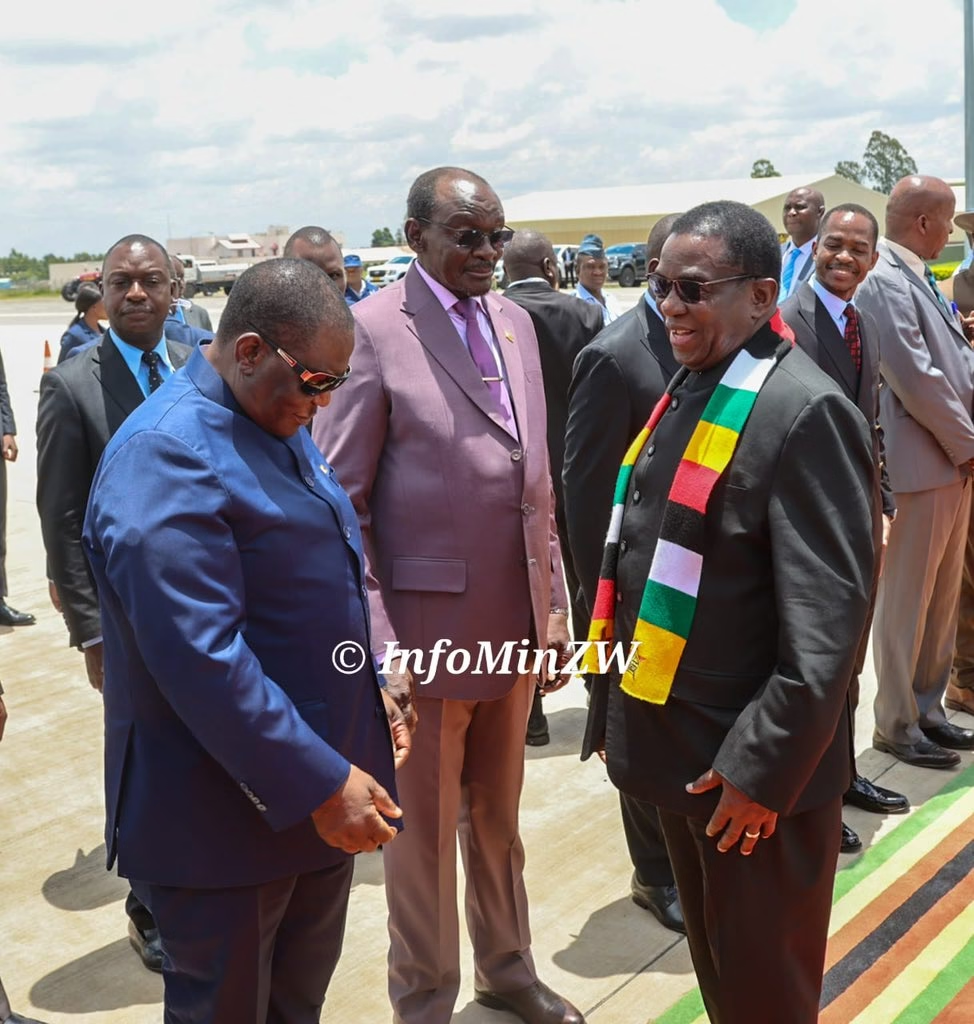
Harare — President Mnangagwa has departed for Addis Ababa, Ethiopia, where he will join fellow Heads of State and Government at the 39th African Union Summit, a high-level gathering expected to focus on sustainable water access and sanitation systems as foundations for continental development and resilience.

Rainbow Hotels — Experience Luxury Across Zimbabwe
Rainbow Hotels continues to redefine hospitality standards in Zimbabwe, offering world-class accommodation, fine dining, and modern conference facilities in Harare, Bulawayo, and Victoria Falls.
Whether for business or leisure, Rainbow Hotels delivers unmatched comfort, exceptional service, and a truly premium guest experience tailored to modern travellers.
Book NowThis year’s summit agenda reflects a strategic shift within the African Union toward basic infrastructure as a driver of macro-economic stability and long-term transformation. Water security and safe sanitation are being positioned not merely as social services, but as core pillars for achieving Agenda 2063 targets, strengthening agricultural productivity, improving public health outcomes, and enhancing climate adaptation capacity across member states.
For Zimbabwe and many other African economies, the emphasis on water systems comes at a time when climate variability, rapid urbanisation, and infrastructure gaps are placing increasing pressure on existing supply networks. Analysts note that reliable water access directly influences industrial output, energy generation, irrigation expansion, and urban settlement planning, making it a cross-cutting development issue rather than a standalone sector concern.
Current continental estimates underline the urgency of the challenge, with over 300 million Africans still lacking access to clean drinking water and approximately 700 million without adequate sanitation. These deficits carry economic costs through disease burden, reduced labour productivity, and increased vulnerability to environmental shocks. As a result, the summit is expected to push for bankable financing models, regional cooperation frameworks, and accelerated infrastructure delivery mechanisms.
The participation of President Mnangagwa places Zimbabwe within ongoing continental discussions on integrated resource management, transboundary water cooperation, and climate-resilient infrastructure investment. Observers say such platforms are increasingly important for aligning national development strategies with regional funding pipelines and technical partnerships.
Beyond declarations, expectations around the summit are centred on implementation pathways. African leaders are anticipated to move toward measurable action plans, blended financing approaches, and stronger monitoring systems to ensure that commitments translate into tangible community-level impact. There is also growing emphasis on public-private partnerships and innovation-driven solutions in water purification, recycling, and distribution efficiency.
The Addis Ababa summit is therefore being viewed not only as a diplomatic engagement, but as a policy coordination forum where development, environment, health, and economic planning intersect. Outcomes from the gathering are likely to influence infrastructure priorities, donor alignment, and regional project pipelines over the coming years.
As African states confront rising climate risks and development demands, the summit is set to test the continent’s ability to convert shared vision into coordinated execution, with water and sanitation emerging as decisive indicators of inclusive progress.