By Aldridge Dzvene
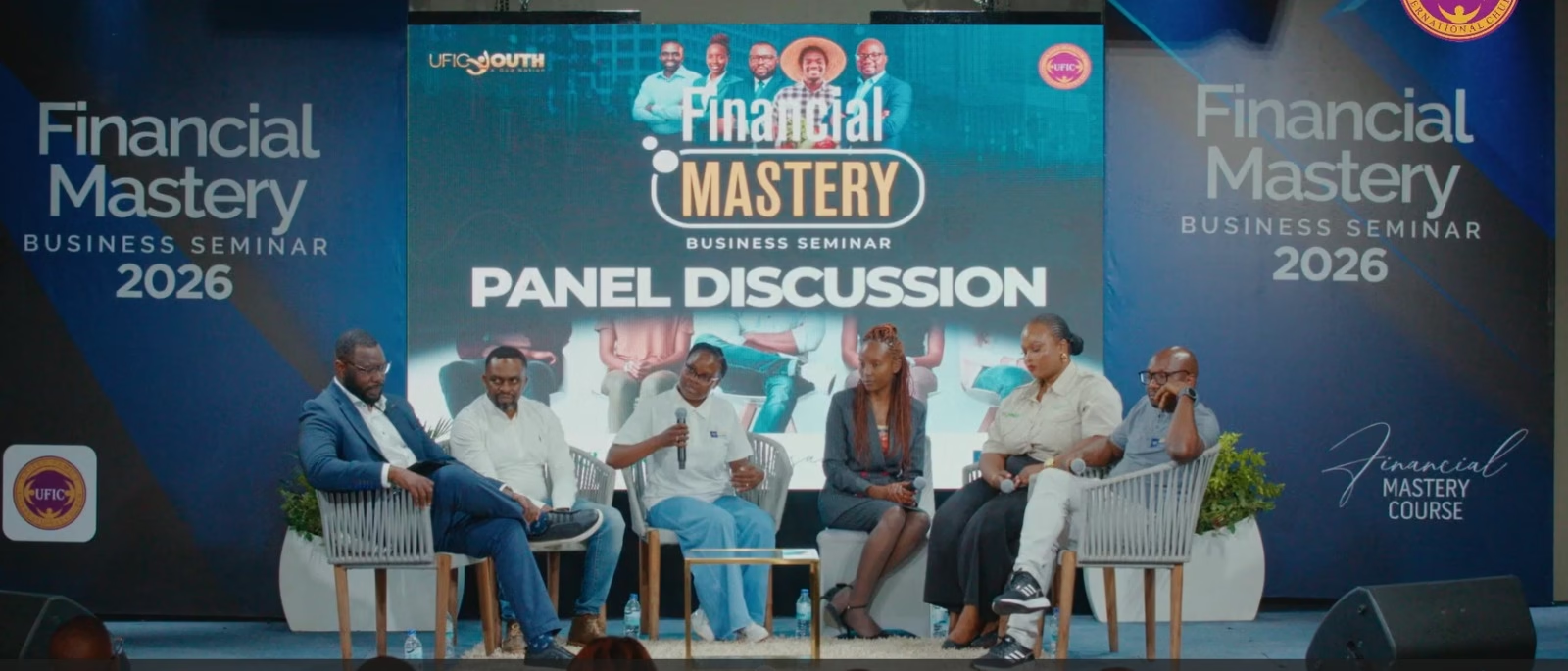
A Financial Mastery Business Seminar hosted by UFIC Youth at The Venue in Avondale last week did more than convene young entrepreneurs. It functioned as an intervention into how youth understand economic power, institutional participation, and their place within Zimbabwe’s development architecture under the 2026 National Budget. By combining policy literacy, business systems, and faith based leadership, the event highlighted the growing role of non state institutions in shaping productive economic behaviour among young people.
The immediate impact of the seminar lay in its reframing of youth enterprise. Rather than celebrating survivalist entrepreneurship, the discussions consistently emphasised productivity, structure, and long term positioning within formal economic systems. This shift is significant in an economy where informal activity absorbs large numbers of young people but delivers limited contribution to growth, employment stability, or fiscal sustainability.
Presentations at the seminar focused on the practical foundations required for youth led enterprises to move from the margins into the productive core of the economy. A session on digital services for business growth examined how technology enables efficiency, market access, transparency, and scale. Digitalisation was presented as an institutional tool rather than a trend, enabling small enterprises to integrate into value chains aligned with national productivity goals.
This was reinforced by a detailed engagement on legal formation, shareholding structures, and compliance foundations, which addressed one of the most persistent weaknesses in youth entrepreneurship. From an economic perspective, weak governance and informal structures limit access to finance, partnerships, and policy protection. Formalisation, participants were told, is not merely regulatory compliance but institutional entry into the economy.
The keynote address by Zimbabwe National Chamber of Commerce chief executive Chris Mugaga provided a policy lens through which these discussions were anchored. Speaking on opportunities in industry and commerce, Mugaga referenced a Statutory Instrument issued under the Indigenisation and Economic Empowerment Act, noting that such policy instruments generate opportunity or risk depending on how economic actors are positioned.
Chriss Mugaga urged youth to take deliberate positions within productive sectors rather than reacting to policy from the periphery. He stressed the importance of distinguishing between politics and governance, arguing that while politics is emotive and transient, governance determines systems, incentives, and market outcomes. Businesses aligned with governance structures, he said, are more likely to endure and grow.
One of the more consequential outcomes of the seminar was its emphasis on mindset transformation. A youth participant noted that the 2026 Budget’s focus on productivity and formalisation requires a shift from short term hustling to long term enterprise building. Hustling, the participant observed, prioritises immediate survival, while enterprise demands discipline, compliance, patience, and delayed gratification, qualities that align more closely with national development objectives.
Beyond economics, the seminar also engaged with social impact. Participants highlighted how lack of economic direction among youth contributes to rising drug abuse and social instability. From a development standpoint, structured enterprise creation functions as both economic participation and social stabilisation, providing purpose, accountability, and future orientation.
UFIC Youth Pastor Simba Kwaramba acknowledged Prophet and Prophetess Ruth and Emmanuel Makandiwa for fostering a platform that encourages young people to engage national development thoughtfully. In an interview he underscored the increasing recognition of churches as developmental institutions capable of shaping behaviour, values, and discipline at scale.
Historically, churches have played a central role in education, healthcare, and social cohesion. In the current economic context, their relevance extends to mindset formation and institutional readiness. By integrating economic literacy with value based leadership, faith institutions can address internal constraints to productivity that fiscal policy alone cannot resolve.
The significance of the UFIC Youth seminar lies not in its duration but in its potential continuity. Organisers indicated that the initiative is intended to evolve into a long term platform translating the 2026 National Budget into measurable youth led economic activity through mentorship, skills development, and institutional linkage.
National development is cumulative and institutional. It depends on citizens who understand systems, comply with governance frameworks, and invest for the long term. By anchoring economic engagement within a faith based institutional setting, the Avondale seminar illustrated a model through which youth can be repositioned from informal survivalism to structured participation in the national economy.
As Zimbabwe advances its development agenda, such platforms may prove critical in narrowing the persistent gap between policy ambition and economic reality.