
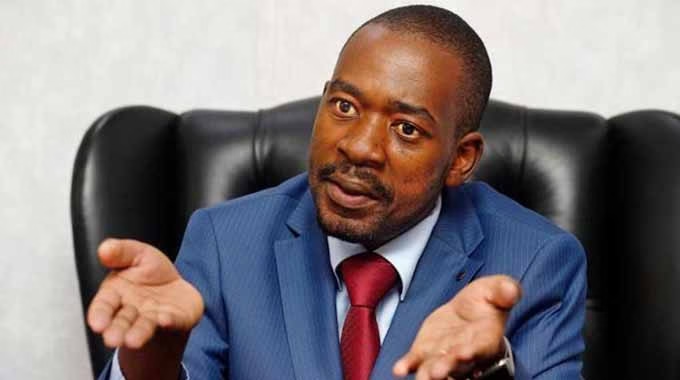
Nelson Chamisa’s announcement today that he is re-entering Zimbabwean politics, unveiling a “broad-based citizens’ movement,” is being framed as a heroic return for the people. Yet, for many observers, the speech raises more questions than it answers, exposing patterns of strategic missteps, leadership inconsistencies, and past betrayals that continue to haunt Zimbabwe’s opposition landscape.

Rainbow Hotels — Experience Luxury Across Zimbabwe
Rainbow Hotels continues to redefine hospitality standards in Zimbabwe, offering world-class accommodation, fine dining, and modern conference facilities in Harare, Bulawayo, and Victoria Falls.
Whether for business or leisure, Rainbow Hotels delivers unmatched comfort, exceptional service, and a truly premium guest experience tailored to modern travellers.
Book NowChamisa, addressing the nation from Harare, said he was back “for the citizens, for the future,” claiming the political “dance floor” had been left vacant while ordinary Zimbabweans suffered. The rhetoric is stirring, but it risks masking the reality of the vacuum he himself helped create. In early 2024, Chamisa stepped back from active politics after the chaotic aftermath of the 2023 elections and a bitter implosion within the Citizens Coalition for Change (CCC). Self-styled leaders like Sengezo Tshabangu orchestrated a wave of recalls, and the party plunged into internal disputes, court battles, and by-elections, leaving the opposition fragmented and weakened. Yet, today Chamisa presents himself as the saviour returning to fill a void, conveniently overlooking that the structural weaknesses were built under his own watch.
His insistence that this is not a political party but a “movement, like a liberation movement” is equally concerning. For a leader whose previous party imploded due to weak institutions and centralised authority, the promise of “fresh tactics, strategies, structures, and leadership” rings hollow without concrete details. Critics argue that Chamisa’s track record suggests a pattern of personalising movements around his own persona rather than fostering durable, institutionalised opposition, leaving them vulnerable to manipulation, internal sabotage, and rapid collapse.
Chamisa’s framing of the opposition “dance floor” as empty also sidesteps a more uncomfortable question: was the floor empty because no one else was willing to lead, or because his own decisions drove key leaders away? The bitter recalls, disputes over party structures, and Chamisa’s disengagement in 2024 fractured the opposition, allowing ZANU-PF to consolidate without credible challengers. Today, he casts himself as the natural leader to unite the nation, yet some former colleagues and observers see this as a return that risks repeating the mistakes of the past.
Furthermore, Chamisa’s frequent reliance on inspirational language and metaphors, dancing for the nation, movements instead of parties, highlights a recurring criticism: his focus on symbolism often comes at the expense of practical governance, strategy, and organisational accountability. While charismatic leadership can mobilise crowds, Zimbabwe’s political history shows that without solid structures, vision, and follow-through, movements centred on personality alone are fragile.
Chamisa’s return may energise some citizens, but history suggests caution. A leader whose own party imploded, whose decisions contributed to a fragmented opposition, and who steps back only to re-enter on a new, vaguely defined platform raises questions about reliability, consistency, and genuine commitment to lasting democratic change. The real test for Chamisa will not be in speeches or metaphors, but in his ability to deliver credible institutions, transparent leadership, and a unified opposition that can withstand political pressures, a challenge he has yet to master.
As Zimbabweans watch this second dance, they may hope for a revival of opposition strength. But the past reminds them: the floor is fragile, the music uncertain, and the dancer himself has sometimes stumbled in the very space he now claims to reclaim