
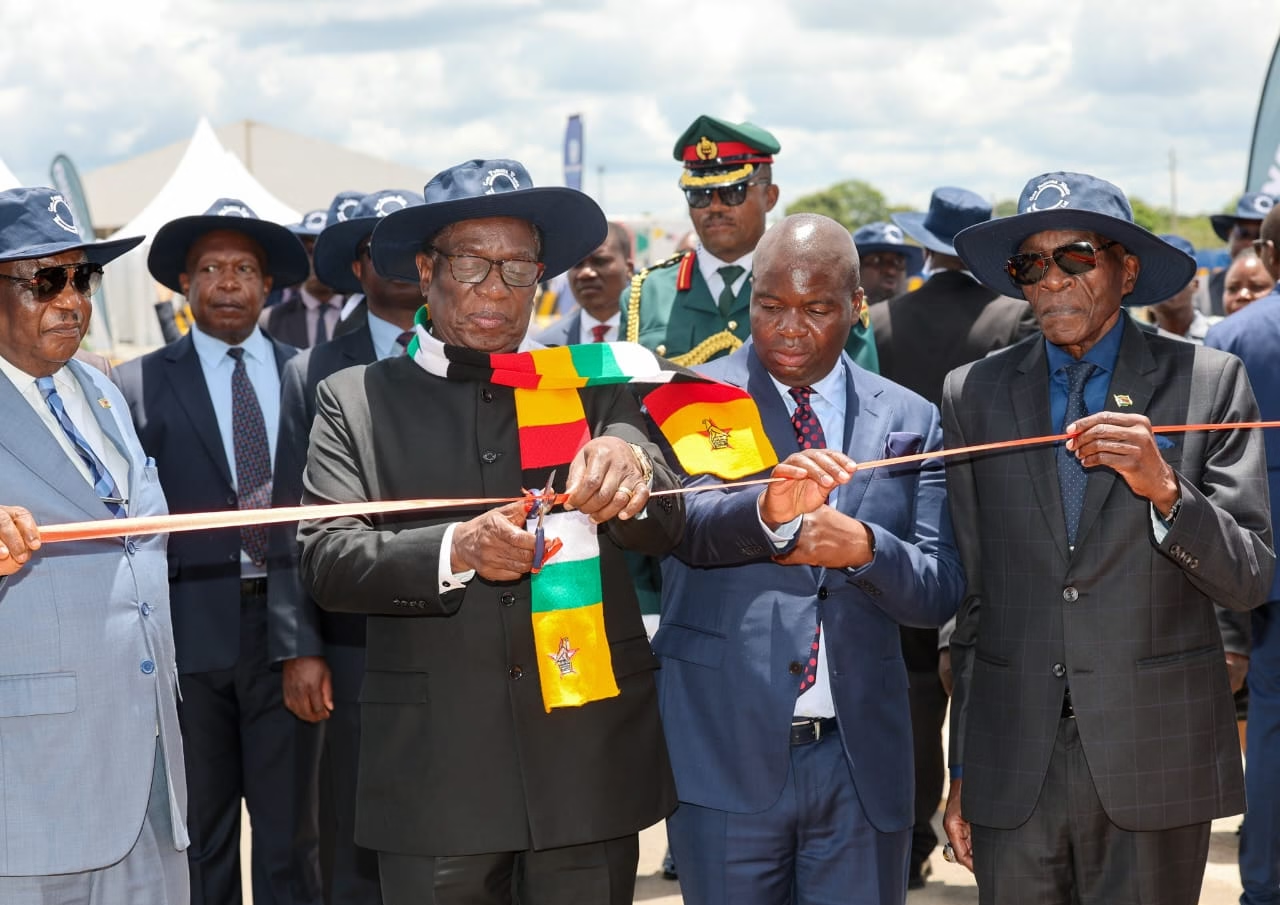
The commissioning of new waste management equipment at Geo Pomona Waste Management by President Emmerson Mnangagwa marks more than the addition of refuse collection trucks to Harare’s fleet. It signals a deliberate shift by the Second Republic toward modern, technology-driven environmental management as a foundation for sustainable urban development and green economic growth.

As Zimbabwe continues to urbanise and industrialise, waste management has emerged as a critical governance and development issue. Poor refuse handling undermines public health, degrades ecosystems, and erodes the country’s image as an investment and tourism destination. Against this backdrop, the President’s call for uniformity in waste delivery and the adoption of technologically enabled systems reflects an understanding that environmental management must evolve alongside economic expansion.
Geo Pomona’s model represents a departure from traditional dump-site operations toward integrated waste management that prioritises ecological sustainability. The partnership between the private sector, local authorities, and central government demonstrates how public-private collaboration can unlock solutions to long-standing urban challenges. By aligning operational efficiency with environmental responsibility, the project contributes to broader national objectives of clean cities, climate resilience, and green growth.
President Mnangagwa’s emphasis on tailor-made waste management models highlights the need for future-ready systems capable of cushioning the environment from the pressures of industrialisation and modernisation. As manufacturing, construction, and population density increase, unmanaged waste becomes a multiplier of environmental risk. Addressing this proactively reduces long-term costs associated with pollution, land degradation, and public health crises.
The commissioning also speaks to brand Zimbabwe. Clean cities and well-managed waste systems are increasingly viewed as indicators of good governance and development maturity. For investors, tourists, and development partners, environmental stewardship reinforces confidence in the country’s policy direction and institutional capacity.
Geo Pomona Chairman and Chief Executive Officer Dr Delish Nguwaya’s call for penalties against littering introduces an important behavioural dimension to the waste management conversation. Infrastructure alone cannot resolve environmental challenges without citizen responsibility and enforcement mechanisms. Effective waste management therefore requires a combination of modern equipment, clear regulatory frameworks, and public accountability.
In positioning waste management within the broader national development agenda, the Second Republic is reinforcing the idea that economic growth and environmental protection are not competing priorities. Instead, they are mutually reinforcing pillars of sustainable development. As municipalities are encouraged to modernise their systems, the Geo Pomona model offers a reference point for how innovation, partnership, and policy alignment can transform environmental management from a liability into a strategic asset.
Ultimately, the commissioning of the new equipment underscores a growing recognition that a clean environment is not a luxury but a prerequisite for inclusive growth, urban resilience, and national progress.