
The mining sector has been urged to deepen its commitment to responsible practices, environmental compliance and sustainable land management as Zimbabwe intensifies efforts to balance economic growth with environmental protection. As mining continues to anchor national development, the spotlight is increasingly shifting toward how extraction activities can coexist with long term ecological stewardship.
Against this backdrop, Empress Gold Mine in Mashava is emerging as a practical example of how mining operations can integrate rehabilitation and sustainability into core business processes. Since commencing operations in 2021, the mine has invested significantly in environmental management initiatives aimed at minimising ecological disruption while sustaining production.
These efforts include systematic backfilling of mined out pits, structured revegetation programmes and the construction of a slime dam to ensure safe handling of mining waste. Of the 80 hectares mined to date, 40 percent has already undergone rehabilitation, reflecting a deliberate approach to restoring land concurrently with extraction activities.
Empress Mine Director Mr Zhang Jiu Long said environmental responsibility is embedded in the company’s operational philosophy. He noted that collaboration with regulatory authorities has been central to ensuring rehabilitation efforts meet national standards, with the ultimate goal of restoring all mined out areas.
Mine Manager Mr Richman Zvabvirepi echoed these sentiments, describing environmental stewardship as a key operational pillar. He said rehabilitation is undertaken alongside mining to reduce long term degradation and protect surrounding communities, flora and fauna. With the establishment of a new processing plant, the mine now processes 1 000 tonnes per day, reinforcing the importance of ensuring that increased output does not compromise environmental integrity.
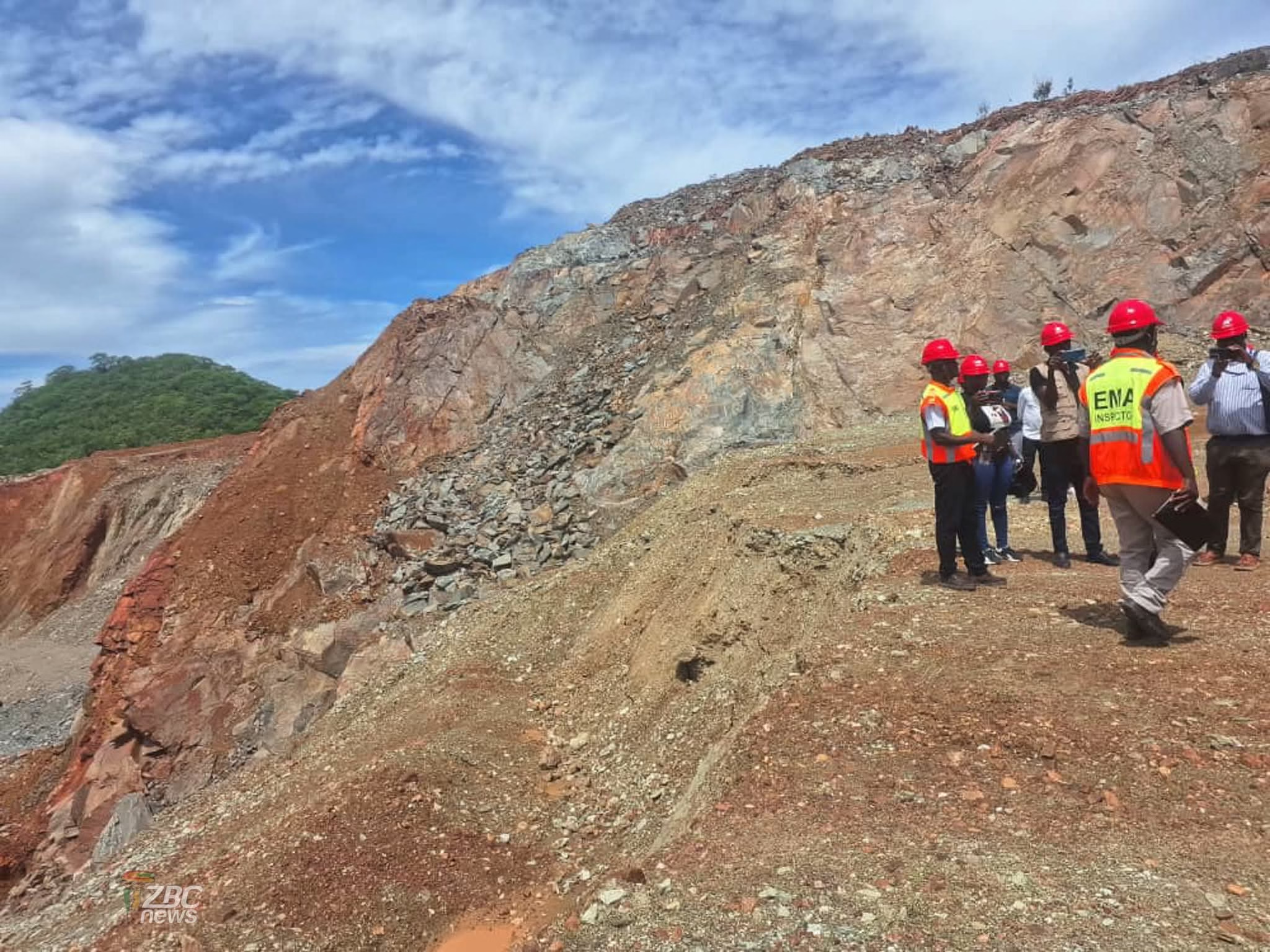
The Environmental Management Agency recently reinforced this message by organising a media tour of Empress Gold Mine, part of a broader strategy to promote responsible mining and enforce compliance with environmental laws. Journalists were taken through rehabilitation sites, waste management systems and mine water effluent treatment processes, offering insight into how regulation and practice intersect on the ground.
EMA Masvingo Provincial Manager Mr Milton Muusha said unregulated mining poses serious risks, including land degradation, pollution and biodiversity loss. He explained that under the National Development Strategy One and the forthcoming National Development Strategy Two, the Agency is intensifying oversight to ensure mining operations adopt best practices and uphold environmental accountability.
Mining remains a cornerstone of Zimbabwe’s socio economic development, contributing to employment, foreign currency earnings and industrial growth. However, the Empress Gold Mine case illustrates that sustainable mining is not only possible but necessary. Continuous monitoring, strict compliance and proactive rehabilitation are increasingly defining responsible mining, positioning environmental protection as a partner rather than an obstacle to national development.