

Under the Second Republic, Zimbabwe’s economic transformation has increasingly centred on empowering small and medium enterprises, whose creativity and resilience continue to shape the country’s development narrative. The ongoing reforms have not only improved the ease of doing business but have also opened up new frontiers for enterprise growth, particularly in manufacturing, agriculture, tourism, and services. Through targeted government interventions, SMEs are being recognised as the heartbeat of inclusive growth and a key driver of national prosperity.
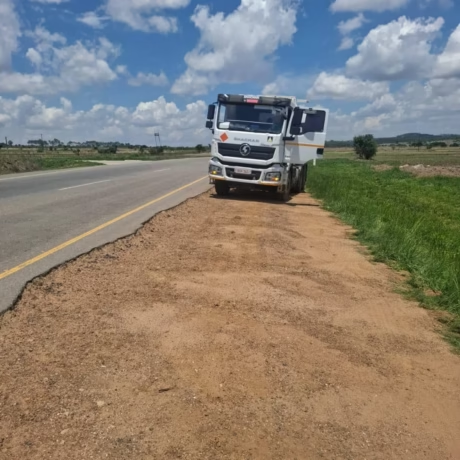
The evolving business landscape reflects the Second Republic’s deliberate strategy to decentralise economic activity and ensure that opportunities reach every corner of the country. By linking local entrepreneurs to regional and global markets, Government has expanded the economic horizon for small businesses that once operated only within local communities. The revitalisation of trade corridors such as the Mutare–Beira route has reconnected Zimbabwe to international supply chains, allowing SMEs engaged in horticulture, timber, crafts, and agro-processing to find new export destinations. This connectivity has transformed Manicaland Province into an emerging trade hub, breathing life into rural entrepreneurship and increasing household incomes through cross-border commerce.
Beyond infrastructure and trade routes, the Government has focused on building the soft pillars of enterprise growth, skills development, innovation, and access to finance. The Ministry of Women’s Affairs, Community and SME Development has been instrumental in facilitating training programmes, credit facilities, and mentorship platforms that help entrepreneurs formalise and scale their operations. Through these measures, more Zimbabweans are finding pathways from informal activity to structured business participation, ensuring that the benefits of growth are both sustainable and inclusive.
Financial inclusion continues to play a transformative role in this new era. With the integration of modern payment systems, digital banking, and mobile finance, SMEs can now access broader markets, secure working capital, and transact with greater efficiency. Such digital transformation has been vital in bridging the gap between rural and urban enterprises, while also enabling small traders to participate in regional and global value chains. The inclusion of international payment platforms such as UnionPay has enhanced trade flexibility, especially for businesses seeking partnerships and investments across borders.
The Second Republic’s vision for SMEs goes beyond survival; it is about building globally competitive enterprises that can sustain Zimbabwe’s economic momentum for generations to come. By promoting value addition and industrial linkages, the Government is ensuring that SMEs contribute meaningfully to the national industrialisation agenda. In sectors such as agriculture, mining support, tourism, and crafts, small enterprises are increasingly becoming innovation centres, producing finished goods, creating jobs, and fostering community development.
Ultimately, the empowerment of SMEs under the Second Republic represents the democratization of opportunity. It is a recognition that Zimbabwe’s true economic strength lies in the ingenuity of its people and their capacity to create, innovate, and build. As the country continues to implement Vision 2030, the emerging growth of the SME sector offers proof that inclusive development is not only possible but already underway. The renewed energy in small businesses across towns and rural communities alike captures a broader national sentiment, that Zimbabwe’s economic future is being written by its entrepreneurs, one enterprise at a time.