By Aldridge Dzvene
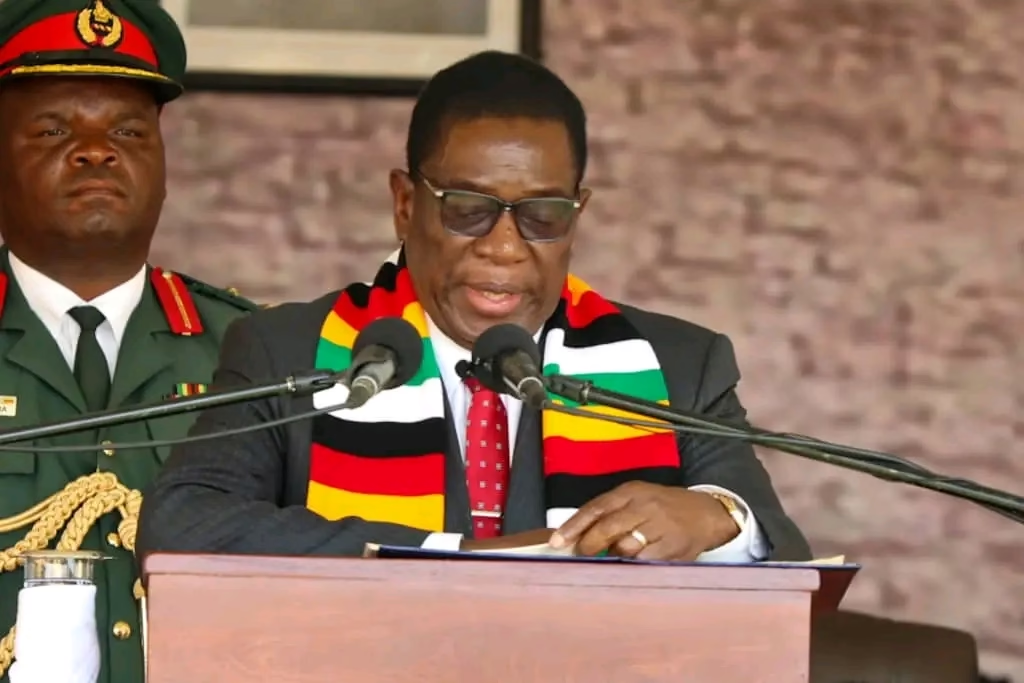
President Emmerson Mnangagwa’s recent engagements, including his visit to Bindura University of Science Education, underscore the Government’s strategic push for industrialisation and innovation as pillars of national development. By commissioning production facilities such as the PALPO Technologies plant, which manufactures laptops, tablets, and mobile phones, the President highlighted the importance of linking education, technology, and local production to drive economic transformation.
Industrialisation remains central to Zimbabwe’s Vision 2030 ambitions, as the country seeks to transition from a primarily import-dependent economy to one that generates value-added products locally. Initiatives like university-based industrial parks illustrate how the Government is leveraging knowledge institutions to build technological capacity, create employment, and nurture a new generation of innovators and entrepreneurs. Analysts argue that such efforts are critical in bridging the gap between academic research and practical economic impact, creating a sustainable ecosystem for industrial growth.
Beyond tertiary institutions, the Government’s industrialisation agenda focuses on decentralising economic activity, strengthening local manufacturing hubs, and stimulating rural economies. By integrating modern technology with domestic production, Zimbabwe aims to expand its competitiveness in regional and global markets, while also promoting inclusive growth that benefits communities nationwide. The emphasis on youth participation, skills development, and entrepreneurship ensures that industrialisation becomes not only a national priority but also a grassroots movement capable of transforming livelihoods.
President Mnangagwa’s engagements, therefore, are more than ceremonial; they signal a deliberate effort to create a culture of innovation, productivity, and industrial self-reliance. The Government’s approach integrates education, private sector partnerships, and infrastructure development, ensuring that industrialisation is sustainable and directly aligned with the national development vision.
Challenges remain, including the need for consistent investment in research and development, reliable energy supply, and functional supply chains. However, by linking industrial policy with innovation, technology, and human capital development, Zimbabwe is gradually building a resilient manufacturing base capable of driving long-term economic transformation.
As Vision 2030 unfolds, the trajectory set by President Mnangagwa’s industrialisation initiatives demonstrates that the country’s future lies in harnessing local talent, fostering technological innovation, and embedding production capabilities across all sectors. Industrialisation is no longer a concept but a practical tool for economic growth, job creation, and sustainable national development.