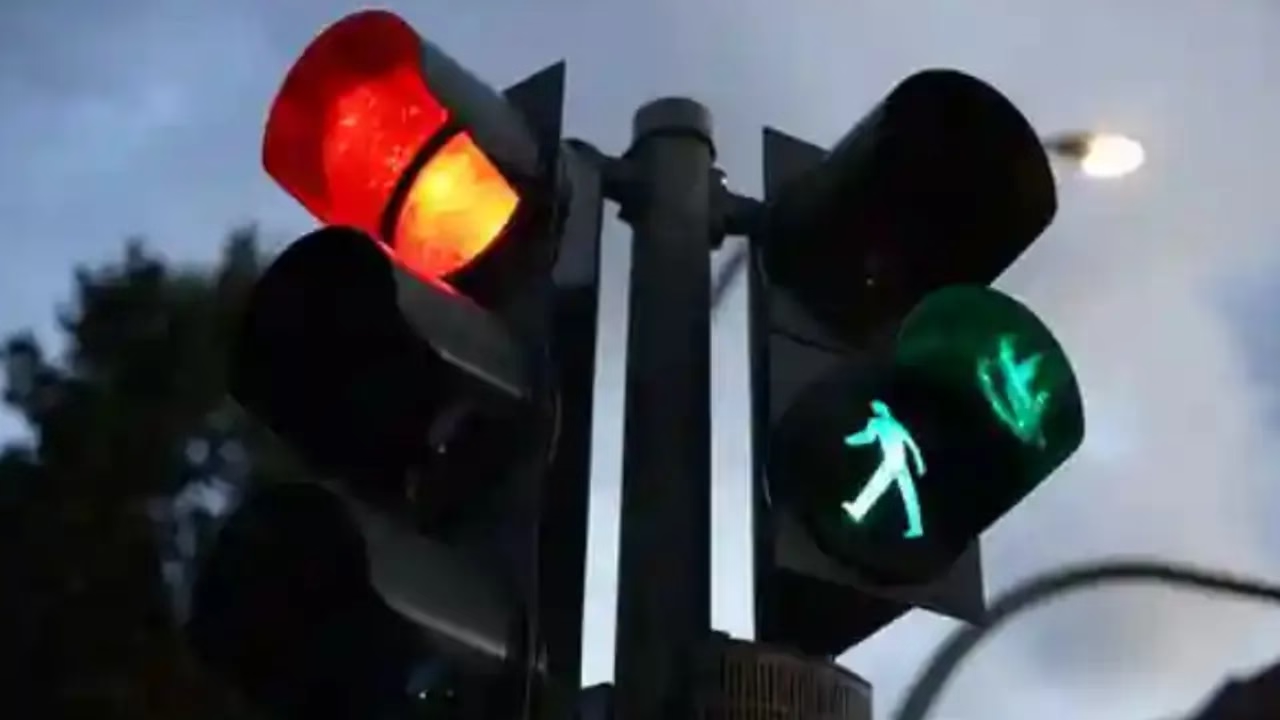
The recent sentencing of a commuter omnibus driver to over two years in prison for violating traffic regulations in Mbare has once again cast the spotlight on Zimbabwe’s troubled public transport sector. While the driver’s offences, running a red light, driving without a licence, ignoring police orders, and providing false details, may seem like an isolated case, they are symptomatic of a deeper systemic problem that continues to endanger lives daily.
Commuter omnibuses, popularly known as kombis, remain a critical component of urban mobility, particularly in Harare, Bulawayo, and other major cities where thousands rely on them for affordable transport. However, their operation is often characterised by chaos, reckless competition for passengers, and blatant disregard for road regulations. At peak hours, intersections like Simon Mazorodze and Remembrance Drive become hotspots of dangerous driving as drivers race against each other to maximise earnings.
The Mbare case reflects a culture where some drivers not only disregard the law but also operate without basic requirements such as valid licences. This undermines public trust in the safety of public transport and puts passengers, pedestrians, and other motorists at serious risk. While the two-year sentence signals a tougher judicial stance, questions remain as to whether such punitive measures alone can reform the sector.
Experts argue that enforcement must go hand in hand with systemic reforms. The Zimbabwe Republic Police regularly launches road safety campaigns, but inconsistent enforcement, corruption, and weak institutional coordination allow offenders to return to the roads quickly. Moreover, the lack of a reliable, regulated mass transit system has left commuters with few alternatives, effectively normalising dangerous kombi culture.
The economic dimension cannot be ignored. Many kombi drivers work under pressure from operators who demand high daily returns, leading them to prioritise profit over safety. With unemployment high, some drivers enter the system without proper training, further worsening road risks.
Addressing this crisis will require a multi-pronged approach. Investment in modern, regulated mass transit systems, such as the ZUPCO revival and proposed light rail projects, must be accelerated to provide safer options for commuters. At the same time, licensing regulations and driver training standards must be tightened, with technology such as surveillance cameras at intersections used to monitor compliance.
Ultimately, the sentencing of the Mbare driver should serve as a wake-up call. Without comprehensive reforms, Zimbabwe risks perpetuating a commuter transport culture where public safety is secondary to profit. The issue is not just about one reckless driver, it is about whether society can build a transport system that values human life above all else.