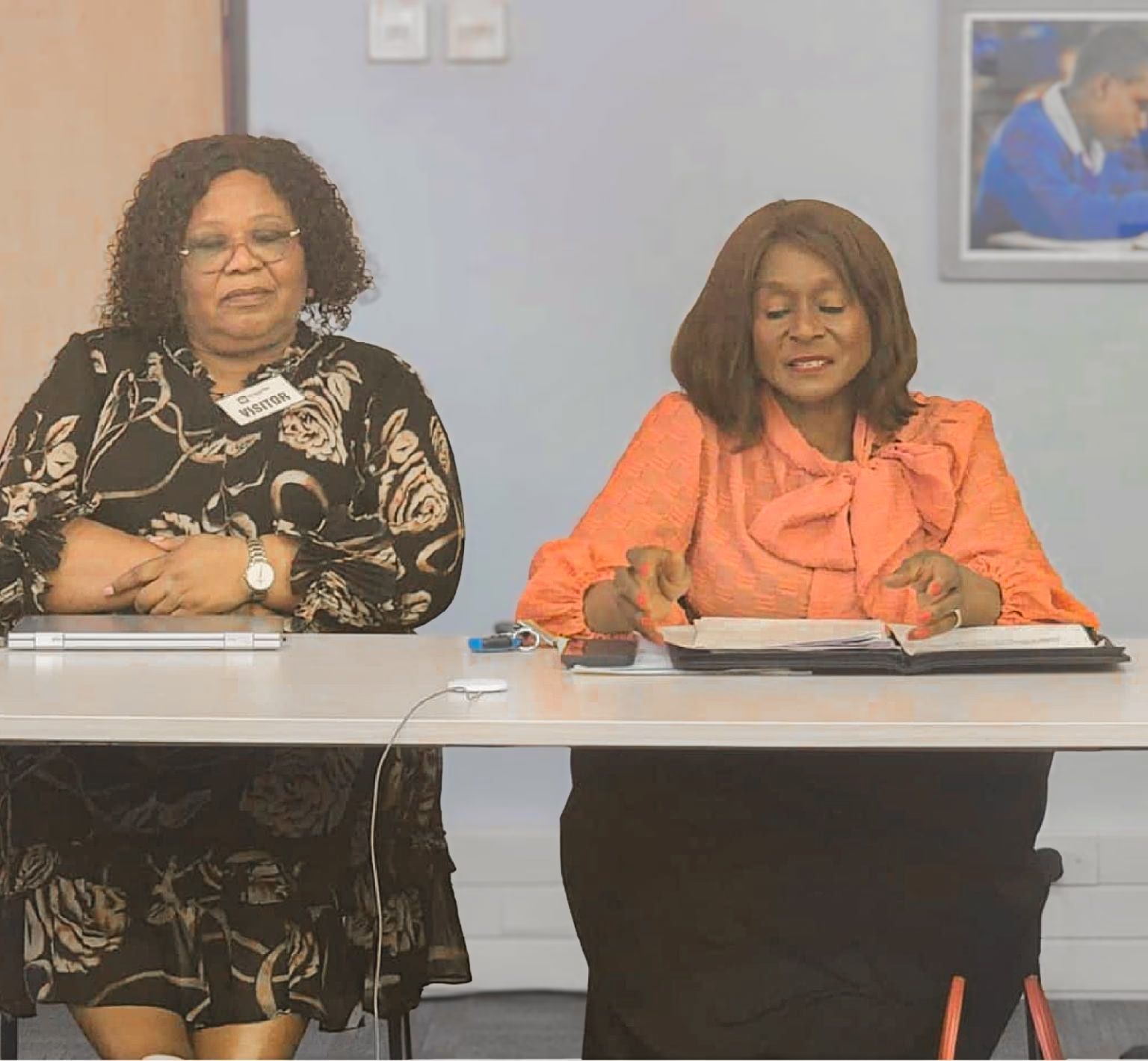
The Insurance and Pensions Commission (IPEC) in collaboration with the World Bank and FSD Africa has set in motion a transformative agenda to narrow the protection gap for Zimbabwe’s Micro, Small and Medium-sized Enterprises (MSMEs). The two-day workshop held in Harare from 4 to 5 September 2025 was not just another training session, but a decisive move towards designing insurance solutions that can safeguard the backbone of the national economy.
MSMEs in Zimbabwe account for the majority of jobs and a significant portion of household incomes, yet they remain disproportionately exposed to shocks such as fire, theft, and health emergencies. For too long, these enterprises have operated with minimal safety nets, where a single disaster could wipe out years of effort. The initiative by IPEC, supported by the World Bank and FSD Africa, recognises this fragility and seeks to create innovative financial cushions tailored to the realities of small businesses.
IPEC Commissioner Dr Grace Muradzikwa’s remarks captured the urgency of this mission. Her reference to markets repeatedly “reduced to ashes” and livelihoods devastated by fire is more than a reflection on past losses, it is a reminder of the systemic risks that require systemic solutions. Insurance, often perceived as a luxury for large corporations, is being reframed as an essential survival tool for even the smallest trader.
What makes this initiative unusual and significant is the collective architecture behind it. It brings together regulators, insurers, government ministries, and development partners, weaving a network of responsibility that ensures MSMEs are not left to fend for themselves. The partnership signals a shift towards inclusivity in financial protection, ensuring that the country’s growth engine does not collapse under the weight of unforeseen disasters.
This is more than an economic intervention, it is an act of resilience building. By insuring tomorrow’s entrepreneurs today, Zimbabwe is laying down the foundation for sustainable enterprise growth, stability in household incomes, and confidence in local economic activity. It is a recognition that true national development is measured not just in large-scale projects but in the protection of the smallest economic units that collectively carry the nation forward.