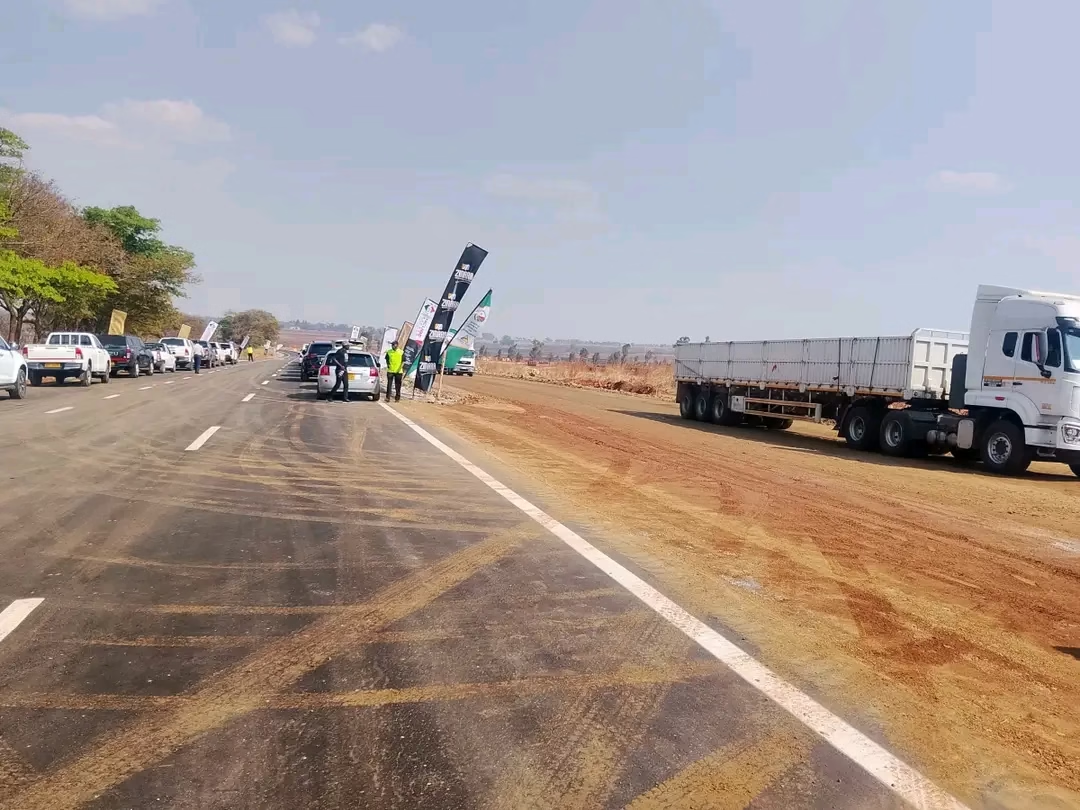
The ongoing dualisation of the Harare–Mazowe Road is not merely an engineering upgrade, it is a layered statement about Zimbabwe’s development trajectory. At surface level, the project promises safer travel, smoother traffic flow and reduced commuting costs. Yet a closer reading shows that the initiative carries broader national, economic and symbolic significance.
The first positivity lies in safety and dignity of travel. For years, the Harare–Mazowe stretch was a corridor of congestion, rising accidents and financial strain on motorists. The widening of the road speaks directly to the preservation of lives and the restoration of dignity in public transport. Reduced travel costs and less exposure to accidents reflect not just economic relief but also social justice for everyday citizens.
The second positivity is local capacity and confidence. The use of Exodus and Company as the lead contractor, with the Deputy Minister affirming faith in Zimbabwean contractors, signals a shift towards self-reliance. Infrastructure development ceases to be outsourced prestige and becomes a homegrown product of national talent, ensuring that value remains within Zimbabwe’s economy.
Third, the road is a strategic trade artery. By linking Harare to Mazowe, and ultimately to Zambia and the DRC, the project ties local commuter relief to regional economic integration. A road that eases a dollar commuter trip also underpins continental trade, feeding into the African Continental Free Trade Area vision. This dualisation therefore collapses the gap between local need and continental ambition.
Fourth, the initiative demonstrates financial seriousness. The Zimbabwe National Road Authority’s disbursement of 6.1 billion ZiG reflects not just availability of funds but deliberate prioritisation of infrastructure as a development cornerstone. This aligns with the wider national achievement of rehabilitating 50 000 kilometres of roads and 2 000 structures, figures that cannot be dismissed as marginal.
Finally, the project embodies the politics of continuity. Road rehabilitation is one of the few development programmes that physically embody government’s promise of “leaving no place behind.” Asphalt laid down in Mazowe is as much about political legitimacy as it is about engineering durability, affirming to citizens that the developmental state is present in their daily commute.
In essence, the Harare–Mazowe dualisation is more than an infrastructural facelift. It is a convergence of safety, affordability, local empowerment, regional integration and political symbolism. The road is being built in kilometres, but measured in confidence, trust and future prosperity.