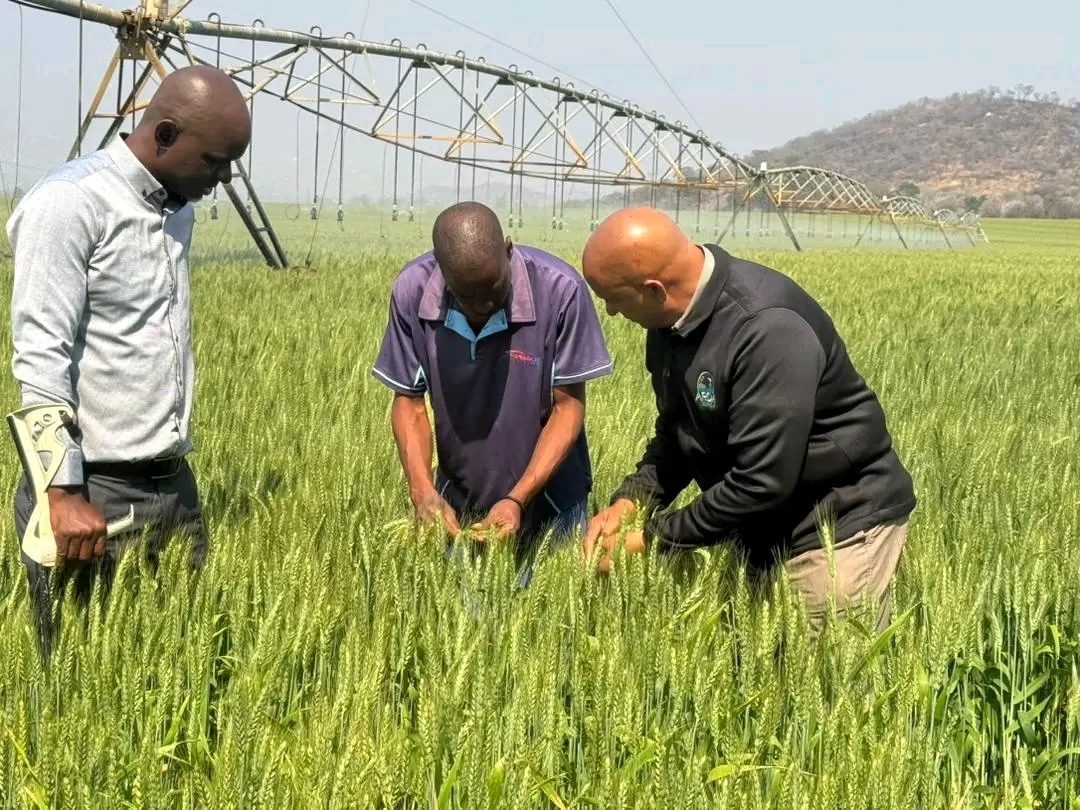
Zimbabwe’s 2025 national winter wheat crop has become more than just a harvest; it is shaping up to be a statement of national resilience and agricultural transformation. With the crop flourishing across the country, the nation is looking at the real possibility of hitting a record-breaking output that could redefine its grain security outlook.
At the heart of this progress is the Agriculture and Rural Development Authority (ARDA), the strategic parastatal tasked by Government to secure food reserves. Through its contract farming model, ARDA has mobilised more than 60 000 hectares of winter wheat, a milestone now expected to produce over 300 000 tonnes. This is not just about hectares planted; it is about confidence restored in Zimbabwe’s capacity to feed itself.

Rainbow Hotels — Experience Luxury Across Zimbabwe
Rainbow Hotels continues to redefine hospitality standards in Zimbabwe, offering world-class accommodation, fine dining, and modern conference facilities in Harare, Bulawayo, and Victoria Falls.
Whether for business or leisure, Rainbow Hotels delivers unmatched comfort, exceptional service, and a truly premium guest experience tailored to modern travellers.
Book NowFarmers on the ground have echoed the optimism. They speak of timely input provision, improved management, and the discipline of planting on time. “We have the best crop ever,” remarked farm manager Lovemore Watch, while another, Cydwell Hungwe, projected yields as high as seven tonnes per hectare. These are not isolated cases, but signs of a systemic breakthrough in production.
The figures themselves are telling. ARDA’s Board Chairperson, Mr. Ivan Craig, outlined that the wheat crop is only part of a wider grain programme that also includes 60 000 hectares of maize under irrigation and 40 000 hectares of sorghum. Together, ARDA is targeting more than 850 000 tonnes of grain, a volume that, if realised, will go a long way in shielding the nation from the volatility of global food markets.
What makes this season’s outlook remarkable is the context. Zimbabwe, like much of the region, has faced challenges from climate change, erratic rainfall, and currency pressures. Yet, against these odds, the current winter wheat crop demonstrates how structured planning, Government intervention, and farmer commitment can combine to deliver national gains. It also underlines the value of policies like contract farming, which bridge resource gaps and ensure production is aligned with national priorities.
However, the task is not yet complete. As experts point out, the crop still needs to be harvested efficiently before the rains set in. This places responsibility on farmers to prepare their machinery, particularly combine harvesters, to avoid post-harvest losses. A bumper harvest lost at this stage would not only undo months of hard work but would also delay Zimbabwe’s journey to wheat self-sufficiency.
The 2025 winter wheat crop is therefore more than just another agricultural season. It is a barometer of what is possible when institutions like ARDA, farmers, and Government align their efforts under a shared vision. If the projected yields materialise, Zimbabwe will not only secure its strategic reserves but also boost confidence in its capacity to withstand external shocks.
This is the story of a crop that could cement Zimbabwe’s transition from perennial grain importer to a nation capable of sustaining itself, a story where agriculture stands tall as the anchor of economic growth and food sovereignty.