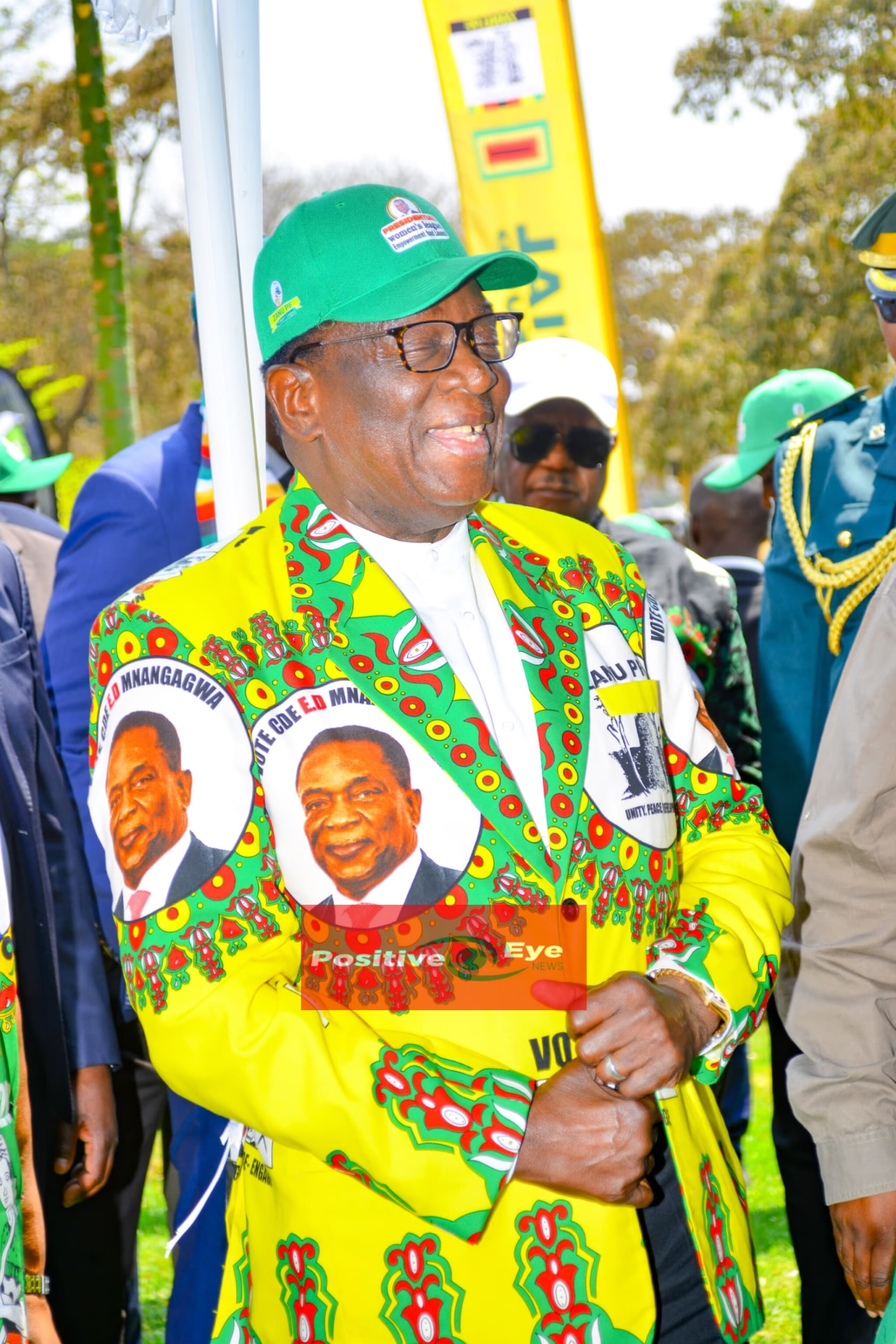
The Presidential Women’s Empowerment Fund launched by President Mnangagwa is not just another financial package, it is a recalibration of Zimbabwe’s economic and social order. At its core, it signals the recognition that national transformation cannot succeed if women remain at the margins. What is striking is how the initiative blends economics with identity, positioning women as wealth creators, community stabilisers and carriers of cultural resilience.
The positivity of the fund lies first in its structural depth. Unlike once-off grants that fade after distribution, this mechanism ties finance to training, discipline, accountability and sustainability. Women are not only resourced but also entrusted with the responsibility to manage, grow and reinvest, making empowerment cyclical rather than temporary.

Rainbow Hotels — Experience Luxury Across Zimbabwe
Rainbow Hotels continues to redefine hospitality standards in Zimbabwe, offering world-class accommodation, fine dining, and modern conference facilities in Harare, Bulawayo, and Victoria Falls.
Whether for business or leisure, Rainbow Hotels delivers unmatched comfort, exceptional service, and a truly premium guest experience tailored to modern travellers.
Book NowAnother positive is its deliberate dismantling of stereotypes. By boldly rejecting the myth that women are not entitled to wealth, the fund rewires national consciousness, affirming that women are legitimate participants in wealth creation and not just supporters of male-led households. This symbolic shift could ripple into cultural and generational change.
The initiative’s export vision also stands out. Linking women-led enterprises to SADC and COMESA markets elevates them beyond survivalist handcrafts to regional players, ensuring empowerment is not inward-looking but outward-reaching. This has the potential to build industries that fly the Made in Zimbabwe banner across borders.
Crucially, the empowerment fund is integrated into a continuum. It follows youth and war veterans’ programmes, creating an inclusive arc of national empowerment that draws strength from every demographic. This continuity avoids the piecemeal approach of the past and speaks to a coordinated strategy towards Vision 2030.
But perhaps the deepest positivity is its revolutionary inclusivity. By urging the Women’s League to ensure broad-based selection, the programme resists elite capture, ensuring that the women in rural wards, urban townships and remote villages are equally within reach. It redefines empowerment not as a privilege but as a right.
In sum, the initiative is more than financial intervention, it is an ideological reset. It transforms women from being the hidden backbone of the economy to becoming visible drivers of growth, unity and national resilience. This is why it is unusual, it goes beyond support to recognition, beyond funding to power, beyond rhetoric to transformation.