
By Aldridge Dzvene
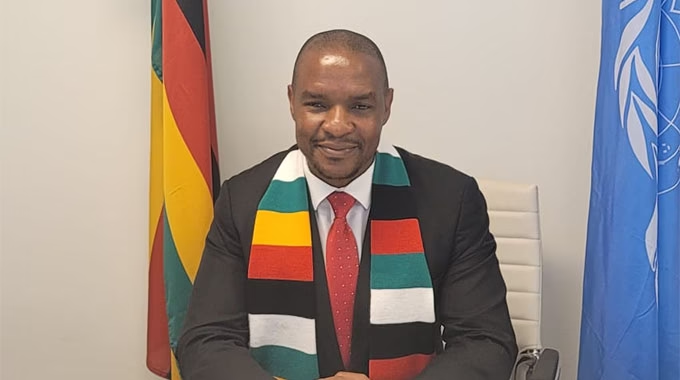
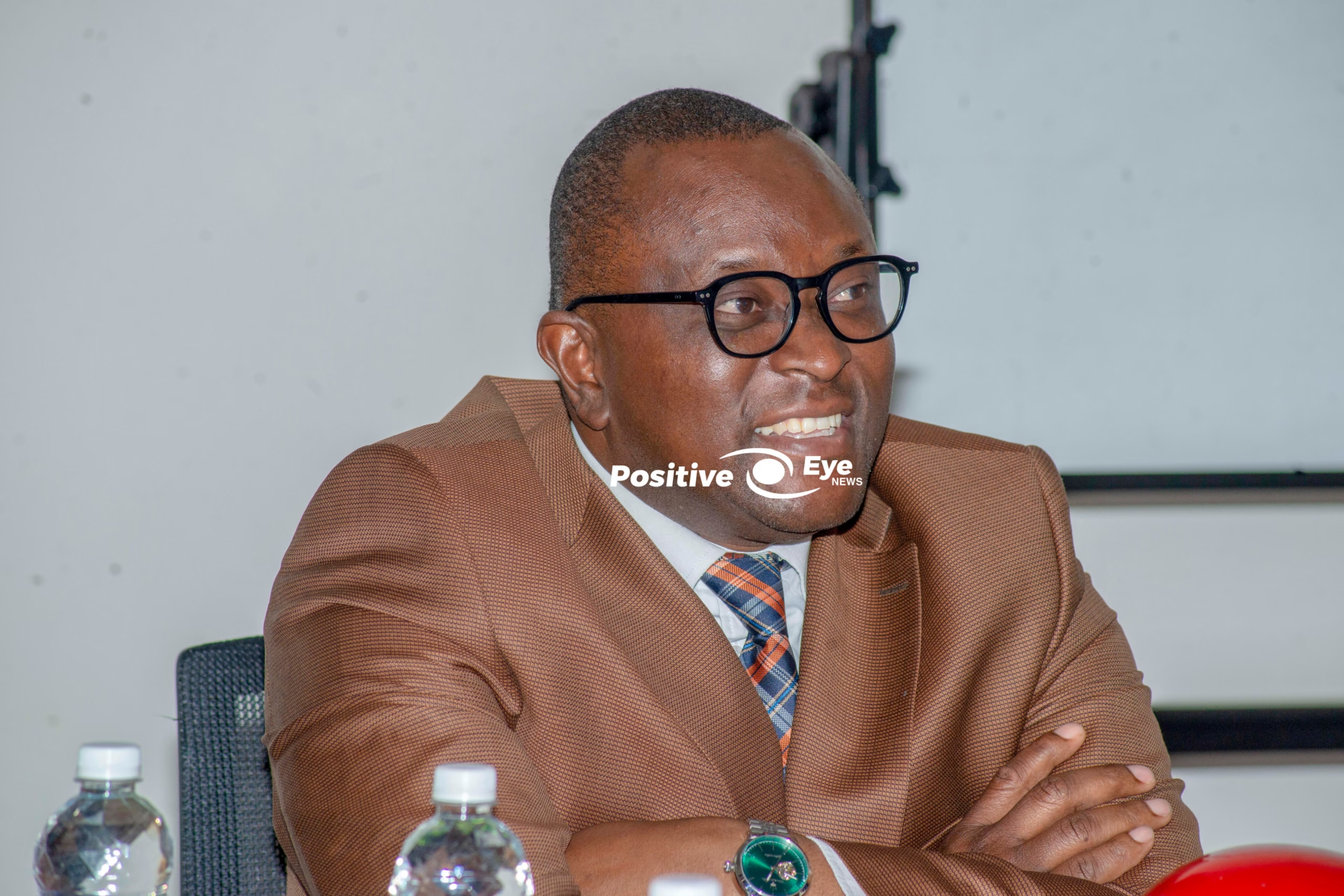
Zimbabwe is positioning itself for accelerated economic growth through a series of strategic domestic reforms and active regional and international engagements. In a decisive move to attract investment, the Government has undertaken a comprehensive review of licensing fees, permits, and levies in the tourism sector, targeting accommodation, hospitality, catering, tour guide and operator services, boating, and vehicle rentals. Information, Publicity and Broadcasting Services Minister, Dr. Jenfan Muswere, highlighted that the exercise aimed to remove duplications, eliminate unjustifiable charges, and reduce excessively high fees, aligning with ongoing ease-of-doing-business reforms designed to increase competitiveness and expand opportunities for both local and international investors. Finance Minister, Professor Mthuli Ncube, underscored that these reforms are critical in driving growth, enhancing the sector’s contribution to the economy, and creating a more predictable and investor-friendly environment.
The reforms coincide with Zimbabwe’s growing diplomatic presence on the regional and continental stage. Cabinet noted the Joint SADC/EAC Virtual Summit of Heads of State and Government held on 13 August 2025 to address the situation in the Democratic Republic of Congo (DRC). The Summit endorsed enabling documents for five high-level facilitators, the Terms of Reference for the African Union Mediator, and consolidated frameworks for inclusive mediation processes and resource mobilisation. The appointment of H.E. Dr. Mokgweetsi Masisi, former President of Botswana, to the Panel of Facilitators, highlighted the high-level commitment to peace and stability in the region, demonstrating Zimbabwe’s proactive engagement in conflict resolution and regional security initiatives.
Further cementing Zimbabwe’s regional leadership, Cabinet received the Report on the 45th Ordinary Summit of SADC Heads of State and Government held in Madagascar on 17 August 2025. President Emmerson Mnangagwa handed over the SADC Chairmanship to H.E. Andry Rajoelina of Madagascar, while South Africa assumed the incoming Chair, and Malawi and Eswatini took leadership roles in the SADC Organ on Politics, Defence and Security Cooperation. The Summit reviewed performance across SADC’s Regional Indicative Strategic Development Plan, directing fast-tracking of the North-South Economic Corridor and the Maritime Corridor Strategy to enhance trade, connectivity, and regional integration. Key agreements, including the SADC Protocols on Trafficking in Persons, Statistics, Energy, and Finance, were signed, reinforcing the bloc’s commitment to governance, industrialisation, and economic resilience.
Zimbabwe’s international profile was further strengthened through President Mnangagwa’s attendance at the Tokyo International Conference on African Development (TICAD 9) in Yokohama, Japan, from 19 to 22 August 2025. Engaging directly with Japanese leadership and multilateral institutions, including Prime Minister Shigeru Ishiba, the World Food Programme, and the United Nations Development Programme, the President advanced Zimbabwe’s national development priorities, emphasizing agriculture, technology, mining, and health sectors. Discussions led to tangible commitments, including potential Japanese investment of US$5.5 billion for private sector expansion, US$1.5 billion for impact investments and skills development in Artificial Intelligence, and US$550 million to the GAVI Vaccine Alliance. Notably, Zimbabwe’s National Geospatial and Space Agency (ZINGSA) signed a Memorandum of Understanding with Japan’s Cross-U platform to collaborate on space business and technology transfer, underscoring the country’s strategic pivot from donor dependency to mutually beneficial trade, investment, and public-private partnerships.
Combined, the tourism reforms and the President’s active regional and international engagements signal Zimbabwe’s multi-pronged approach to economic growth, investment facilitation, and continental leadership. By easing domestic business regulations while leveraging diplomacy and strategic partnerships, the country is not only creating an enabling environment for investment but also asserting its influence in shaping regional stability, industrialisation, and sustainable development.