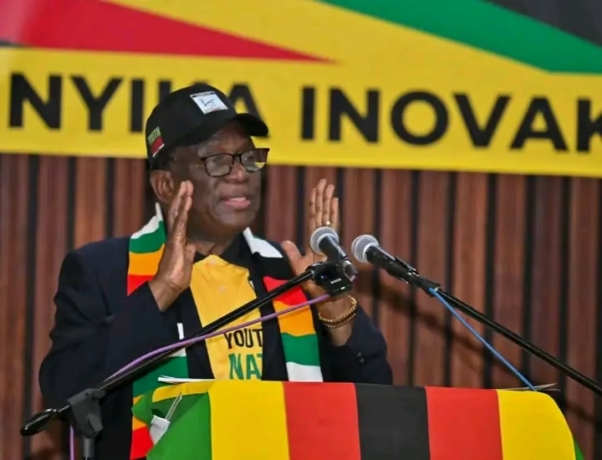
President Emmerson Mnangagwa’s working visit to Japan has taken a diplomatic and developmental tone, marked by engagements with the diaspora community and high-level meetings with business executives and political leaders. The central message throughout his interactions was clear, Zimbabwe is open for business, anchored by strong strides in agriculture, a commitment to self-reliance, and a drive toward sustainable industrialization.
In his address to Zimbabweans living in Japan, the President provided a comprehensive update on the nation’s socio-economic trajectory, with special emphasis on agriculture and food security. What stood out was his declaration that Zimbabwe is now wheat self-sufficient, a significant departure from the years of dependency on imports. “We used to import wheat, but now we have a surplus,” he noted with pride. This achievement aligns with the broader objectives of Vision 2030 and the National Development Strategy 1 (NDS1), which prioritize food security, rural industrialization, and inclusive growth.
The President’s emphasis on prudent fiscal management and debt aversion also signals a shift in Zimbabwe’s economic approach. Citing Finance Minister Professor Mthuli Ncube’s efforts, he underscored the Second Republic’s reluctance to pile up foreign debt, choosing instead to leverage the country’s vast natural resources. This philosophy of “living within our means” not only promotes economic sovereignty but also inspires confidence in international investors wary of Zimbabwe’s past credit history.
One such investor is Toyota Tsusho, whose top executives met with the President to explore possibilities of expanding their footprint in Zimbabwe. The potential establishment of a vehicle assembly plant under Zimbabwe’s new semi-knockdown kit (SKD) duty exemption policy could be a game-changer. It reflects a pragmatic shift in policy where investment is incentivized in exchange for value addition and job creation, fundamental tenets of modern industrialization.
Equally important was the meeting with the Governor of Mie Prefecture, Ichimi Katsuyuki, who reaffirmed Japan’s interest in Zimbabwean petalite, a key raw material in ceramic production. This engagement underlines Zimbabwe’s growing role in the global critical minerals supply chain. It also suggests that Zimbabwe is not merely exporting raw materials but becoming a strategic partner in global industrial processes.
The President’s call to the diaspora community to stay connected and contribute to national development was a compelling appeal for unity. In a globalized world, diaspora remittances, skills, and investments are vital to complementing domestic efforts. His assurance, “We will never neglect you as diasporans”, resonated as both a diplomatic gesture and a strategic outreach.
Overall, President Mnangagwa’s Japan visit reaffirms the Second Republic’s focus on agricultural transformation, industrial growth, and economic diplomacy. From wheat fields to vehicle plants, from minerals to manufacturing, Zimbabwe is mapping a development path that balances internal resilience with global partnerships. The visit demonstrates that re-engagement is not just about diplomacy, it is about trade, trust, and tangible outcomes.
As Zimbabwe positions itself on the global stage, it must now ensure that the momentum built through such high-level engagements translates into actionable projects, employment opportunities, and inclusive development on the ground.