Zimbabwe has taken a significant step towards fortifying its economic foundations through the digitalisation of its domestic revenue collection systems, a strategy now central to the country’s ambitions under the National Development Strategy 2 (NDS2). Unveiled during the eighth Annual General Meeting of the Zimbabwe Revenue Authority (ZIMRA) in Harare, this digital roadmap signals a deeper commitment to transforming public finance administration while fostering greater national self-reliance.
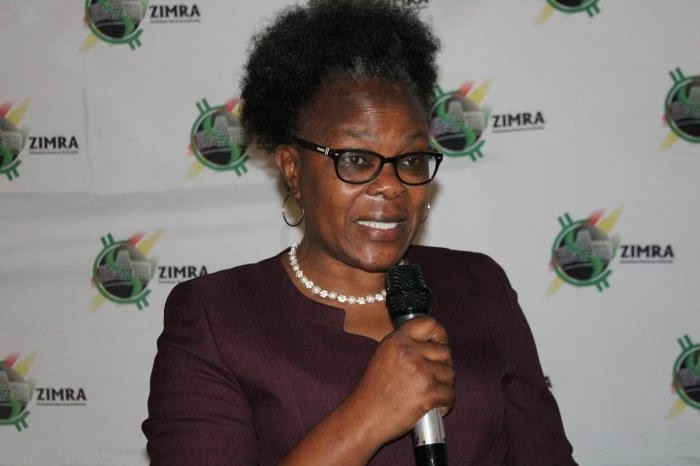
The Commissioner General of ZIMRA, Ms Regina Chinamasa, highlighted that embracing technology is no longer an aspirational goal, but a strategic imperative if the country is to meaningfully broaden its revenue base. As the economy evolves, she said, there is a growing need to ensure that more firms, informal players, and individuals are effectively captured within the tax net, reducing reliance on outdated manual systems and expanding national fiscal space.
The shift towards digitalisation comes at a time when traditional funding from development partners is increasingly uncertain. In this context, local policymakers are intensifying efforts to strengthen internal revenue streams. Parliamentary Portfolio Committee Chairperson on Budget, Finance, and Economic Development, Honourable Energy Mutodi, noted that domestic resource mobilisation is not merely about collecting more taxes, but about making the system more transparent, fair, and efficient. “If we are to fund infrastructure, education, health care, and economic transformation, we must depend more on what we can generate ourselves,” he said, calling for full implementation of the digital roadmap.
ZIMRA’s digital strategy is designed to close leakages, improve real-time monitoring of transactions, and raise voluntary compliance, which remains low in some sectors. It is also meant to reduce opportunities for corruption, promote accountability, and position the tax authority as a forward-thinking institution capable of serving a dynamic economy. Importantly, this transition is not only expected to improve tax collection but also to enhance public trust in fiscal institutions, an essential ingredient for long-term development.
With ZIMRA consistently exceeding its collection targets in recent years, stakeholders believe the groundwork is already in place for deeper reforms. The anticipated benefits of digitalisation are broad, from faster taxpayer services to more accurate forecasting for national budgeting. For small businesses and emerging enterprises, a transparent and accessible digital tax interface may also reduce the administrative burden and foster greater formalisation.
Beyond revenue, the broader policy direction reinforces Zimbabwe’s commitment to financial independence. Rather than waiting on donor support, the government is anchoring its development vision on internal strength and smart governance. This renewed fiscal confidence, if sustained, could be the turning point in Zimbabwe’s journey towards building a more inclusive and industrialised economy by 2030.
In the final analysis, the push for digitalisation is not just a technical adjustment, but a bold political and economic statement. It repositions Zimbabwe as a state determined to write its own development story, by investing in the systems, technology, and institutional trust needed to sustain progress from within.